Open Nav

Choosing between pcb assembly services and in-house production is less about finding a universally superior option and more about matching Manufacturing Strategy to product stage, volume, capital availability, and quality requirements. For many hardware teams, the real question is not “which is better,” but “which model reduces risk at this point in the product lifecycle.”
pcb assembly services, often called Pcba Services, cover Component Sourcing, Solder Paste Printing, Smt Placement, Through-hole Assembly, inspection, testing, and final packaging. In-house production means building these capabilities internally. Each model has clear advantages and trade-offs for startups, industrial manufacturers, medical device developers, automotive suppliers, and high-volume consumer electronics brands.
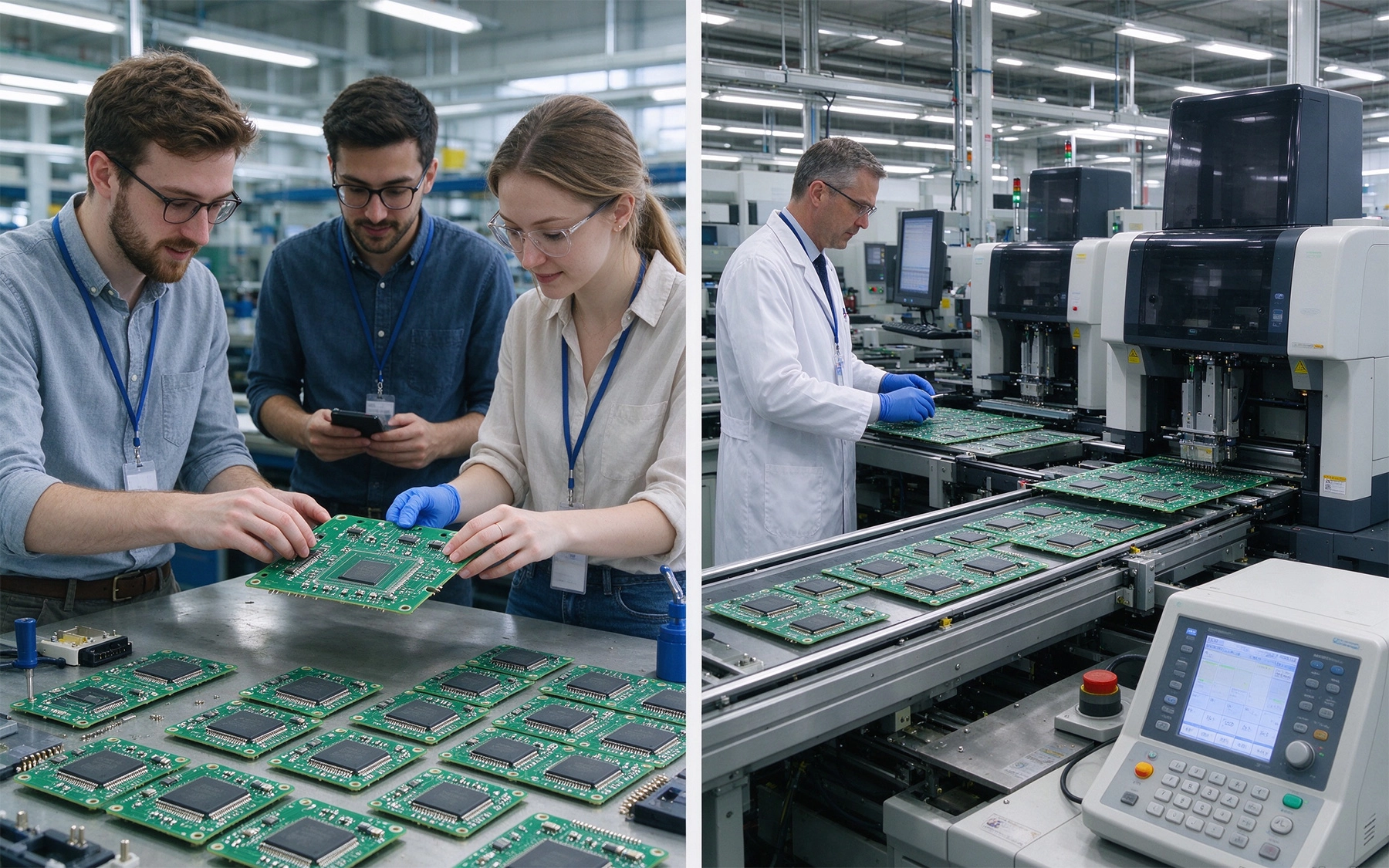
A full-service Pcba provider typically manages more than just component placement. The scope often includes:
The value of an external assembly partner increases when the internal team lacks SMT equipment, qualified operators, or established supply-chain relationships. It also becomes attractive when product demand fluctuates or when Engineering Resources are better spent on design, firmware, validation, and market development.
In-house production is not automatically inefficient. For certain companies, it provides control, speed, and cost advantages that external suppliers cannot easily match.
When a product has stable demand, long production life, and predictable volumes, in-house assembly can reduce unit cost over time. The initial investment in printers, pick-and-place machines, reflow ovens, AOI systems, and test fixtures can be amortized across large production runs.
Companies developing defense electronics, proprietary industrial controllers, or highly differentiated hardware may prefer in-house assembly to protect intellectual property. Internal production also reduces exposure to supplier capacity constraints or cross-border logistics risks.
Engineering teams that build many prototypes each week can benefit from in-house assembly. Quick rework, immediate design changes, and direct communication between hardware engineers and assembly operators can shorten iteration cycles. This is especially valuable during EVT, DVT, and early PVT stages.
If a product requires unusual materials, custom thermal profiles, specialized adhesives, or tightly controlled handling, in-house production may provide better process ownership. However, this only works if the internal team has sufficient process engineering depth.
For most small and mid-sized hardware companies, external Pcba Services offer faster time to market and lower fixed costs.
Building a capable SMT line requires significant investment. A professional Pcba supplier already owns high-precision printers, placement machines, reflow systems, X-ray inspection, AOI, and test equipment. Buyers can convert capital expenditure into variable production cost.
Component sourcing is one of the most time-consuming parts of Pcb Assembly. Established assembly partners usually have relationships with distributors, brokers, and component manufacturers. They can help manage shortages, alternates, lead times, and counterfeit-risk screening.
External assembly services make it easier to scale from prototypes to pilot runs and then to mass production. A good supplier can add lines, shifts, or test capacity without requiring the customer to purchase new equipment.
Many PCBA providers already operate under ISO 9001, Iso 13485, Iatf 16949, or AS9100 frameworks. For medical, automotive, or aerospace projects, using a certified partner can reduce qualification effort compared with building an internal quality system from scratch.
Outsourcing assembly also introduces risks that must be managed.
These risks can be reduced through clear documentation, approved vendor lists, signed NDAs, detailed test specifications, first-article inspection reports, and regular production audits.
In-house assembly is not a low-effort path. It requires sustained investment in equipment, people, and process management.
Many companies underestimate the cost of maintaining process stability. SMT is not only about placing components. It requires control of Solder Paste storage, Stencil Design, reflow profiling, moisture-sensitive device handling, Solder Joint Inspection, and continuous defect analysis.
A useful way to compare both models is to separate fixed costs from variable costs.
| Cost Factor | Pcb Assembly Services | In-House Production |
|---|---|---|
| Equipment investment | Low | High |
| Engineering setup cost | Shared with supplier | Fully internal |
| Unit cost at low volume | Usually lower | Usually higher |
| Unit cost at high volume | Can be higher | Can be lower |
| Supply Chain management | Supplier-supported | Fully internal |
| Quality system cost | Partly included | Fully internal |
| Scalability | Fast | Slower |
This framework shows why many companies start with external PCBA services and only consider in-house production after volumes, margins, and product stability justify the investment.
External PCBA services are usually the better choice. Prototypes require flexibility, fast turnaround, and small batch capability. Buying full SMT equipment for low-volume prototypes rarely makes financial sense.
Both models can work here. If the company already has internal assembly capability, pilot runs can help refine test procedures and process windows. If not, a qualified PCBA partner can support pilot production while the internal team focuses on design validation.
Mass production favors the model with the lowest Total Cost Of Ownership. For very high-volume consumer products, in-house assembly may be justified. For industrial, medical, automotive, or mixed-volume products, external assembly often remains more efficient.
Medical, automotive, aerospace, and industrial safety products require strong traceability, documentation, and change control. In these cases, the decision depends less on cost and more on whether the internal team can meet certification requirements consistently.
Many successful hardware companies do not choose one model permanently. A common hybrid strategy is:
This approach balances flexibility with control. It also reduces the risk of over-investing in equipment before product-market fit is proven.
Ask these questions before deciding:
If most answers point to low volume, high variability, limited capital, or fast iteration, Pcb assembly services are usually the better starting point. If the answers point to high volume, stable design, strong internal engineering, and strict process ownership, in-house production may be worth evaluating.
Pcb assembly services and in-house production serve different strategic needs. External PCBA providers reduce capital risk, accelerate time to market, and offer scalable capacity. In-house production provides deeper control, potential long-term cost savings, and stronger protection for sensitive processes. For most companies, the optimal solution is not a permanent binary choice but a phased strategy that evolves with product maturity, volume, and quality requirements.
It depends on volume. For prototypes and low to medium volumes, outsourcing is usually cheaper because it avoids large equipment and staffing costs. For very high-volume stable products, in-house assembly can reduce unit cost over time.
Yes. Startups often benefit the most from PCBA services because they can focus on product development while relying on the supplier for sourcing, assembly, and testing.
Consider moving in-house when production volume is high and predictable, the design is stable, internal process capability is strong, and the Total Cost Of Ownership is lower than outsourcing.
The biggest risk is underutilized capacity. SMT equipment, operators, and quality systems require continuous production to remain cost-effective.
The biggest risk is loss of direct control. Poor communication, weak documentation, or inadequate supplier qualification can lead to quality issues, delays, or component substitution problems.
Frequently Asked Questions About Our PCB Assembly ProcessJuly/25/2026
Requesting a Quote: A Step-by-Step Walkthrough for New ClientsSeptember/17/2026
The Ultimate Guide to PCB Assembly Services in 2026September/24/2026
What to Expect from PCB Assembly Shenzhen SuppliersOctober/14/2026
Meet the Team: Expertise Behind Our High-Yield Production LinesSeptember/02/2026
Customer Success Stories: Real Projects Delivered by Our TeamJuly/17/2026
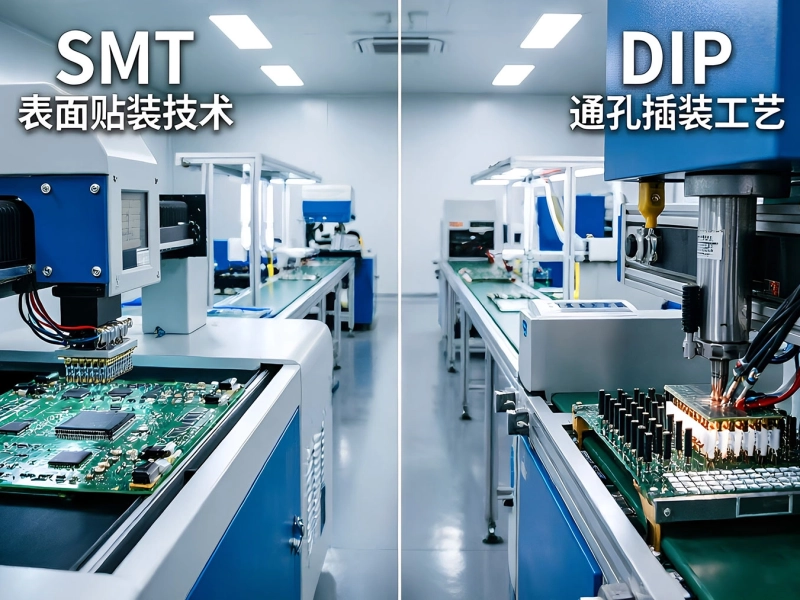
Comprehensive Guide to Our SMT and DIP CapabilitiesJune/09/2026
Welcome to Our PCB Assembly Services Hub: Your Resource CenterMay/22/2026