

Picture this: your product design is finalized, your funding round closed, and your investors are asking when you'll ship. You have three months to get first units out the door. Now picture the alternative—you spend two of those months chasing component availability, negotiating with distributors, coordinating separate fabrication and assembly vendors, and debugging a quality issue that arises because nobody felt responsible for the whole picture. That's not a hypothetical scenario. That's what happens to hardware companies that choose fragmented procurement over Turnkey PCB Assembly. And it's a choice that costs more than just time.
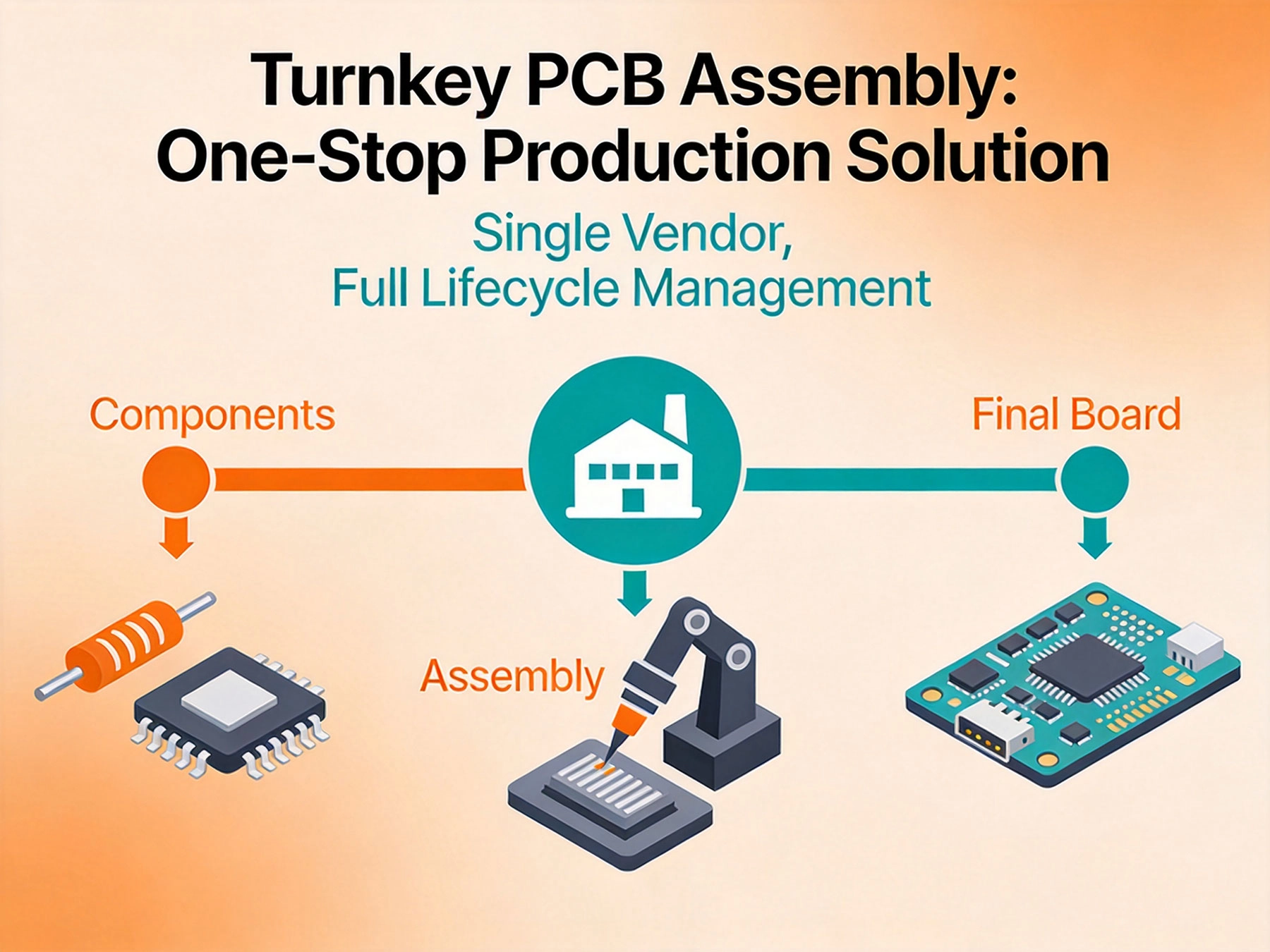
Turnkey PCB Assembly means one vendor takes complete ownership of your project—from sourcing every component on your Bill Of Materials, through Bare Board fabrication, to full SMT and Through-hole Assembly, inspection, testing, and delivery of finished boards. You provide the design files. They deliver the finished product.
The opposite of turnkey is partial or consigned assembly, where you procure components yourself and ask a manufacturer to assemble boards using your parts. This model has its place—particularly for prototypes using expensive or long-lead components you already have on hand—but it introduces complexity, risk, and coordination overhead that most product teams underestimate until they're deep in the weeds.
Turnkey doesn't mean you lose control. You still specify every component in your BOM. You still define quality requirements, test protocols, and Acceptance Criteria. What changes is who manages the logistics of getting those specifications into a finished, working board in your hands. And that change, as we'll see, is substantial.
When you're racing to launch, time is the most valuable resource you have. Turnkey pcb assembly eliminates the longest delays in traditional procurement: Component Sourcing and incoming inspection.
In the partial assembly model, you source components from distributors, wait for delivery, perform incoming quality inspection, ship parts to your assembler, and wait for them to receive and verify receipt. Each of these steps adds days or weeks. Turnkey collapses this entire chain. Your turnkey provider has established relationships with major distributors, maintains component stock for common parts, and can begin procurement the moment your BOM is confirmed.
The practical impact: a turnkey project that takes 15 to 20 business days from BOM confirmation to finished board delivery might stretch to 30 to 40 days in a partial assembly model—even when the assembly itself takes the same amount of time. When your launch window is fixed, that difference is the difference between hitting it and missing it.
This speed advantage compounds in iterative development. If your NPI cycle involves building 10 boards, testing, revising, and building 10 more, the turnkey model keeps each cycle short. The partial model adds weeks to every iteration, stretching your development timeline by months.
Individual companies—particularly startups building a few hundred to a few thousand boards—lack the purchasing leverage of established EMS providers. Turnkey assemblers aggregate purchasing across many customers, giving them volume discounts with major distributors that individual buyers can't access.
Beyond volume pricing, turnkey providers maintain inventory relationships that allow them to source components at better lead times and prices than individual buyers can negotiate. They've built these relationships over years and decades, and they pass some of that value back to customers through better component pricing.
There's also a less obvious cost saving: the engineering and procurement time that your team spends chasing components, negotiating with distributors, and managing incoming inspections is real cost. In the partial model, you're paying your engineers to do procurement work. In the turnkey model, that time is redirected to design and validation—the work that actually requires your team's expertise.
When a component goes obsolete or long-lead mid-project in a partial assembly model, your team spends days finding alternatives, verifying compatibility, and reordering. In a turnkey relationship, your provider absorbs this complexity. They have distributor relationships to find alternatives fast, and the accountability for finding a solution sits with them—not your already-overloaded engineering team.
This is the benefit that most directly affects product quality and reliability. When something goes wrong with a Turnkey Assembly, there's one vendor to call. One team investigates. One organization takes responsibility for the root cause and implements a fix.
In the partial assembly model, accountability fragments. If a board fails test, did the failure come from a component defect, a board fabrication issue, or an assembly problem? Your component vendor blames the assembler. Your assembler blames the board fab. Your board fab suggests the component might have been damaged in shipping. You pay for the investigation, the finger-pointing, and the delay while everyone sorts out who's responsible.
Turnkey eliminates this dynamic entirely. Your provider owns the full build. They have visibility into component quality, board fabrication, and assembly process simultaneously. When a problem emerges, they investigate the entire chain and fix it. You report the symptom. They find and resolve the cause.
This accountability extends through the entire quality process. Traceability from the component lot used, through the assembly run, to the finished board and its test results—all held by one vendor who can produce that documentation on demand, for any board, at any time.
Managing a partial assembly Supply Chain means managing multiple vendor relationships simultaneously: board fabricator, component distributors, assembly shop, test provider, and possibly a logistics company for shipping between them. Each relationship has its own terms, lead times, quality requirements, and communication rhythms.
For a large company with dedicated procurement and Supply Chain teams, this might be manageable. For a startup or small hardware team where engineers are doing procurement in addition to design work, it's a significant burden—and a distraction from the technical work that actually builds your competitive advantage.
Turnkey collapses all of these relationships into one. One contract. One invoice. One point of contact who knows your project. One set of quality requirements to communicate. One team tracking your order through the entire process and updating you on status. For teams without dedicated supply chain staff, this simplicity is transformative.
Component obsolescence is a fact of Electronics Manufacturing. Chips get discontinued. Passives go NRND (Not Recommended for New Design). Connectors get revised. If you're managing your own supply chain, each obsolescence event demands engineering time to find alternatives, verify replacements, and update your BOM.
Turnkey providers manage this as part of their service. They track component lifecycle status, flag approaching EOL (End of Life) events, and proactively suggest alternatives before your project is affected. They maintain buffer stock for components used across multiple customer programs, reducing your exposure to spot-market pricing spikes during shortages.
During the 2021–2023 semiconductor shortage, companies with turnkey relationships fared significantly better than those sourcing components independently. Turnkey providers had priority allocation from their distributor partners and the engineering depth to find pin-compatible alternatives quickly. Companies managing their own Component Procurement during that period spent months chasing parts that turnkey customers received as a matter of course.
| Factor | Turnkey Assembly | Partial / Consigned Assembly |
|---|---|---|
| Component Sourcing | Handled by provider with distributor relationships | Customer procures and ships to assembler |
| Quality accountability | Single vendor owns entire build | Fragmented — multiple vendors, finger-pointing risk |
| Lead time | Typically 15–20 business days from BOM confirmation | 30–40+ days due to procurement and shipping delays |
| Obsolescence management | Provider monitors and proactively suggests alternatives | Customer manages independently |
| Cost structure | Single invoice, volume-optimized pricing | Multiple invoices, individual component pricing |
| Engineering overhead | Minimal — provider handles logistics | Significant — procurement, incoming QC, coordination |
| Traceability | End-to-end lot traceability from one vendor | Traceability split across vendors, harder to assemble |
| Shortage resilience | Provider-level allocation priority, proactive alternatives | Customer competes in spot market |
Understanding how a turnkey engagement works in practice helps you evaluate providers and manage the relationship effectively:
"Switching to turnkey assembly cut our NPI cycle time from 42 days to 18 days. We used to spend three weeks just getting components sourced and shipped to our assembler. Now we upload the BOM, confirm the quote, and wait for finished boards. Our engineering team got back two months of calendar time in the first year alone. That time went into designing the next product."
— CTO, Medical Wearable Startup, Boston
Not all turnkey providers deliver the same experience. Here's what to ask before committing:
It's true that turnkey pricing bundles component procurement into the service. But turnkey providers' volume pricing and distributor relationships typically offset this. When you factor in the engineering time saved, the faster lead times, and the reduced risk of shortage-driven price spikes, turnkey often comes out cheaper on a total cost basis.
You specify every component in your BOM. The turnkey provider sources those exact parts—or, if a part is unavailable or approaching obsolescence, they flag it and propose alternatives for your approval. You're always in control of what goes on your board. The provider handles the logistics of getting it there.
Turnkey services are available across volume ranges. Many providers specialize in low-to-medium volume—prototypes, pilot builds, and production runs of tens to hundreds of units. Turnkey economics improve at higher volumes, but the speed and simplicity advantages apply at any volume level.
Some assemblers offer consigned or partial assembly where they procure some components. But the depth of turnkey service—proactive obsolescence monitoring, distributor volume pricing, full Supply Chain Management—is different from what a basic assembly shop provides.
If you're currently using a partial assembly model and want to explore turnkey for your next project:
Hardware companies that choose turnkey pcb assembly aren't just outsourcing procurement—they're buying time, reducing risk, and freeing their engineering teams to do the work that actually builds their competitive advantage. The speed advantage gets products to market faster. The accountability advantage reduces quality surprises. The simplicity advantage lets small teams operate at scale without building large procurement organizations.
In an industry where speed-to-market and design quality are the primary competitive levers, turnkey Pcb Assembly has become a strategic choice, not just a procurement decision. The companies that understand this—and choose their Manufacturing partners accordingly—are the ones hitting their launch windows, scaling their production smoothly, and building products that actually ship.
Turnkey Pcb Assembly removes the complexity, risk, and coordination overhead from getting your hardware from design to finished product. Whether you're building your first prototype, launching a new product, or scaling an existing design to volume, a turnkey partner gives you one accountable vendor, faster cycles, and more time to focus on what your team does best—designing products that matter.
From BOM confirmation to finished board delivery, 15 to 20 business days for standard multilayer assemblies is typical for experienced turnkey providers. Complex boards—high layer counts, advanced packages like fine-pitch BGAs, RF impedance-controlled designs—may take 20 to 30 business days. Component procurement is typically the longest variable; if components are in stock at the provider's distributors, the full cycle runs at fab and assembly speed. Long-lead components can extend timelines significantly, which is why turnkey providers work proactively to identify and resolve availability issues before they affect your schedule.
This varies by provider. Some turnkey services specialize in low-volume work and accept orders as small as 5 to 10 boards. Others are optimized for medium-to-high volume and have minimums of 50 to 100 units. If you need low-volume turnkey assembly, look for providers with explicit prototype or NPI programs—they exist specifically to serve this market and will have minimums calibrated accordingly.
Most turnkey providers will accommodate mixed models—some customer-supplied components, some provider-procured. However, this introduces complexity: the provider can't fully guarantee quality or turnaround times for components they didn't source. If you have specific reasons for supplying some components directly—existing inventory, particular qualification requirements, or cost considerations—discuss this with your provider upfront and understand the tradeoffs involved.
Experienced turnkey providers monitor component availability proactively. When an availability issue is flagged, they typically propose an alternative—either a pin-compatible part from a different manufacturer, a newer version of the same part, or a functionally equivalent component. The best providers get your approval before substituting. Ask about their substitution process before committing to understand how changes are handled.
Component pricing in turnkey models is usually volume-optimized—the provider's aggregate purchasing across all their customers gives them better distributor pricing than individual buyers typically access. When you add in the engineering time saved, the faster lead times, and the reduced risk of shortage-driven delays, turnkey often delivers lower Total Cost Of Ownership than partial assembly. The exception is extremely high-volume production where large companies with dedicated procurement teams can achieve scale advantages—but this describes a small fraction of the market.
Understanding the Basics of SMT PCB Assembly China: A 2026 GuideOctober/13/2026
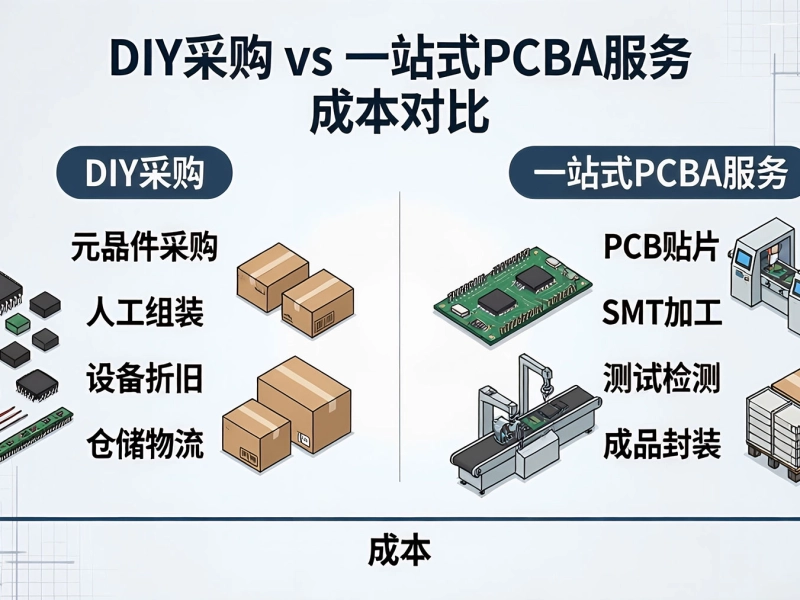
The Hidden Costs of DIY Sourcing vs. Turnkey PCBA ServicesJune/08/2026

How to Read a Quote for Low Volume PCB AssemblyOctober/12/2026
Scaling from 10 Prototypes to 10,000 Units: A Turnkey PCBA Success StoryJuly/24/2026
How to Prepare Your BOM for PCB Assembly and ManufacturingOctober/15/2026

How Turnkey Providers Streamline Component Procurement and LogisticsJune/18/2026
Managing Moisture Sensitivity Levels (MSL) for BGA and QFN PackagesAugust/15/2026

Risk Mitigation: How Turnkey Services Handle Obsolete ComponentsJuly/16/2026