Open Nav


Electronic systems deployed in challenging conditions face threats that would quickly destroy standard commercial assemblies. From oil rigs to satellites, from automotive engine compartments to underwater sensor networks, electronics must operate reliably despite exposure to moisture, vibration, temperature extremes, chemical exposure, and physical abuse. Meeting these demands requires specialized assembly solutions that go far beyond conventional Pcb Manufacturing.
This article examines the technologies, materials, and design approaches that enable electronics to thrive in hostile environments. Understanding these solutions helps engineers specify appropriate protections, select qualified assembly partners, and design products that maintain reliability throughout their operational life.
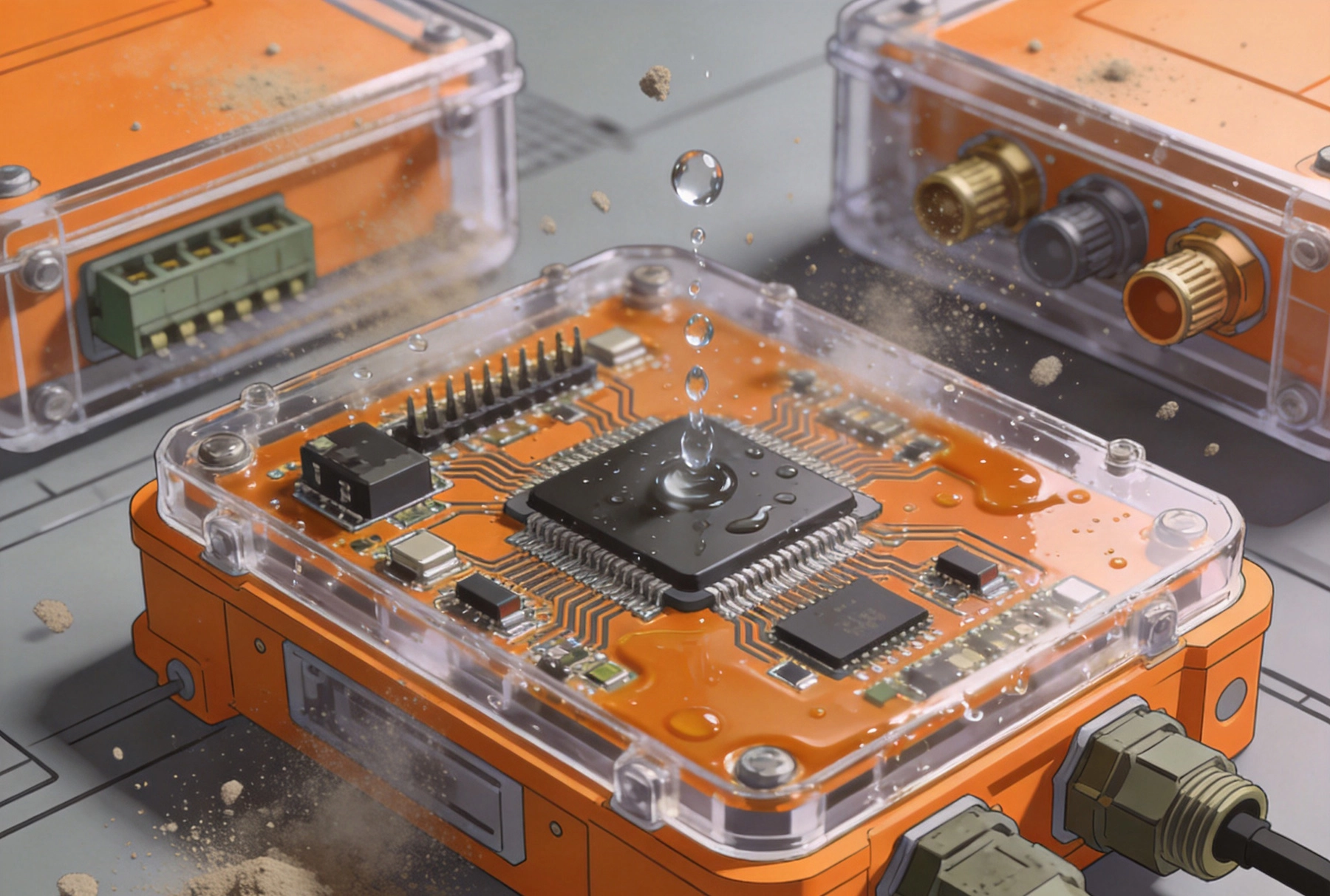
Harsh environments challenge electronics through multiple simultaneous stressors that interact in complex ways. Temperature extremes cause materials to expand and contract at different rates, creating mechanical fatigue in solder joints and interfaces. Moisture penetrates封装 gaps and initiates corrosion processes that degrade conductivity over time. Vibration and shock stress mechanical connections and can dislodge components from boards. Chemical exposure attacks materials ranging from plastic enclosures to metallic conductors.
The severity and combination of these factors defines the protection requirements for any specific application. A consumer product designed for occasional outdoor use faces different challenges than military equipment specified for desert warfare or medical devices implanted in human bodies. Accurate environment classification is the essential first step toward appropriate protection design.
Various standards bodies have developed specifications that define environmental severity levels and corresponding test requirements. MIL-STD-810, developed for military equipment, outlines testing across temperature, humidity, vibration, shock, and other environmental factors. The IPC-6012 standard addresses board reliability for demanding applications. Automotive Electronics reference AEC-Q standards that specify qualification testing for components and assemblies.
Understanding which standards apply to your application ensures consistency with industry expectations. Customers in defense, aerospace, and automotive sectors often require specific certifications as prerequisites for business engagement. Early alignment with applicable standards prevents costly redesigns late in development cycles.
Conformal Coating deposits a thin protective layer over assembled circuit boards, conforming to the board topology to seal components and traces. This coating provides a barrier against moisture, dust, and chemical contamination while adding minimal weight and volume. Several coating materials serve different application requirements.
Acrylic coatings offer basic protection with excellent moisture resistance and easy repairability. They cure quickly and can be removed with common solvents when rework is necessary. Silicone coatings withstand higher temperatures and maintain flexibility across wide temperature ranges. Polyurethane coatings provide superior chemical resistance for industrial environments. Parylene coatings, applied through vapor deposition, create extremely uniform thin films ideal for aerospace and medical applications where weight is critical.
Coating application methods include brushing, spraying, dipping, and vapor deposition. Brushing and spraying suit selective coating where specific areas require protection while others must remain uncoated for test points or connectors. Dipping provides complete coverage for boards that can tolerate coating on all surfaces. Each method requires careful process control to ensure consistent coating thickness and complete coverage of critical areas.
Masking protects areas that must remain uncoated, including connectors, switches, and test points. Mask materials include liquid latex, tape, and specialized elastomeric boots. Proper masking prevents coating from wicking into protected areas and ensures clean edges between coated and uncoated zones. Quality inspection after coating verifies complete coverage without voids or defects that would compromise protection.
Potting completely surrounds an assembly in a solid or gel compound, providing superior protection compared to Conformal Coating. This approach seals the entire unit against moisture ingress and provides mechanical isolation from vibration and shock. Potting compounds range from rigid epoxies to flexible silicones, each offering different protection characteristics.
Rigid potting compounds provide maximum physical protection but can stress components during thermal cycling due to mismatch in thermal expansion coefficients. Flexible silicones accommodate thermal movement and absorb shock effectively but offer less resistance to pressure in deep subsea applications. Gel compounds fill voids while remaining soft, protecting delicate components without creating rigid constraints.
Potting compounds affect thermal performance significantly. Most potting materials have thermal conductivity far lower than metal, creating thermal barriers that trap heat inside the assembly. This effect becomes critical for power electronics where heat dissipation determines component longevity and performance.
Thermal potting compounds containing metallic or ceramic fillers improve conductivity while maintaining protection benefits. These materials cost more than standard compounds but enable potting of high-power assemblies that would overheat without enhanced heat spreading. Designing for thermal potting requires attention to heat paths from components through the potting material to the enclosure or mounting surface.
Connectors represent common failure points in harsh environment electronics, providing pathways for moisture and contamination to reach sensitive circuitry. Ingress protection (IP) ratings defined in IEC 60529 specify protection levels against solid objects and liquids. A connector rated IP67 provides complete dust protection and immersion in water up to one meter depth.
Selecting connectors with appropriate IP ratings for your environment ensures that entry points maintain seal integrity throughout product life. Connectors rated for extreme conditions often incorporate sealing gaskets, dielectric grease, and robust locking mechanisms that resist vibration-induced loosening. Mated connector assemblies should meet higher ratings than individual connectors to account for interface variations.
Electronic enclosures employ various sealing strategies depending on environmental severity and service requirements. Gasket seals using elastomeric materials provide reliable sealing for access panels and cover plates. These gaskets compress between surfaces to create barriers against moisture and particulates. Gasket design requires attention to compression set—the permanent deformation that occurs over time and temperature exposure.
Hermetic seals provide the highest protection levels for critical applications. These metal or glass-to-metal seals prevent any gas or liquid transmission across the boundary. Hermetic sealing is expensive but essential for applications including aerospace, medical implants, and underwater equipment where failure consequences are severe. Finding qualified suppliers for hermetic enclosures requires investigation of specialized Manufacturing capabilities.
Vibration stresses electronic assemblies through repeated acceleration that fatigues solder joints, loosens fasteners, and induces cracks in components and circuit traces. Vibration protection typically employs mechanical isolation that prevents external vibration from reaching sensitive electronics. Shock protection addresses sudden high-acceleration events that can dislodge components or damage solder joints.
Isolation mounts using elastomeric elements or spring systems attenuate vibration transmission. These mounts have resonant frequencies that determine their effectiveness—vibration frequencies above the mount resonance are attenuated, while lower frequencies may be amplified. Selecting appropriate mounts requires understanding the vibration spectrum present in the application environment.
Within assemblies, board-level techniques reduce vibration stress on components and solder joints. Edge guides and clamping systems constrain board movement within acceptable limits. Adhesive staking bonds components to boards, preventing individual parts from vibrating independently of the substrate. These techniques are particularly important for large heavy components like electrolytic capacitors that have significant mass and can generate high accelerations under vibration.
Selecting components rated for high vibration environments provides additional margin. Automotive-grade components undergo vibration testing to AEC-Q200 standards that verify solder joint integrity under representative conditions. Military-grade components meeting MIL-PRF-38535 undergo similar qualification testing. Component selection directly impacts assembly survivability in vibration-intensive applications.
Electronics operating in high-temperature environments face material limitations that constrain assembly options. Standard solder alloys melt at temperatures that may be exceeded in the application, requiring high-temperature solders or alternative joining methods. Plastics used for connectors and enclosures soften and lose mechanical strength at elevated temperatures. Semiconductor junction temperatures must remain within ratings despite elevated ambient conditions.
High-temperature solders including gold-based and silver-based alloys provide joints that withstand temperatures exceeding 250°C. These solders require different processing conditions than standard tin-lead or lead-free alloys and cost significantly more. For extreme temperature applications, alternative joining methods including sintering and diffusion bonding provide joints that maintain integrity at temperatures well beyond solder capabilities.
Low-temperature environments create different challenges than high-temperature operation. Standard components may not be rated for cryogenic temperatures, and materials behave differently as temperatures approach absolute zero. Flexible materials become brittle, and thermal mismatches amplify during temperature cycling to cryogenic temperatures.
Specialized cryogenic electronics employ components rated for low-temperature operation and careful material selection to ensure reliable function. Many semiconductor devices actually perform better at cryogenic temperatures, but interconnection materials and packaging require careful qualification. Space applications particularly must handle both cryogenic operation in shadowed conditions and elevated temperatures when exposed to solar radiation.
Chemical exposure from industrial environments, fuel systems, or cleaning processes can degrade electronic materials rapidly. Plastics used for enclosures and connectors may swell, crack, or lose strength when exposed to incompatible chemicals. Metallic surfaces corrode, increasing resistance and potentially failing completely. Even seemingly minor chemical exposure can initiate failure mechanisms that progress after exposure ends.
Material compatibility charts identify resistant material combinations for specific chemical environments. These charts require careful interpretation, as compatibility depends on chemical concentration, temperature, and exposure duration. Testing representative material samples in actual environmental conditions provides the most reliable compatibility assessment for critical applications.
Board-level surface finishes provide some resistance to environmental exposure. HASL, ENIG, and OSP finishes each offer different corrosion resistance characteristics. For severely corrosive environments, additional protection through conformal coating or potting becomes necessary regardless of surface finish selection.
Metallic components benefit from appropriate platings that resist corrosion while maintaining conductivity. Gold plating provides excellent corrosion resistance for contact surfaces but costs significantly. Tin-based platings offer good performance at lower cost but may form whiskers that cause short circuits. Nickel underplates improve durability for many platings by preventing copper diffusion.
Product qualification for harsh environments employs accelerated testing that compresses time to expose failure modes that would occur over years of field operation. Temperature cycling, humidity exposure, vibration testing, and combined environment testing reveal design weaknesses before production deployment. The acceleration factors applied to test results require careful validation to ensure correlation with actual field performance.
IPC-9701 describes test methods for surface mount solder joint fatigue under temperature cycling conditions. MIL-STD-883 provides comprehensive testing for microelectronics in military applications. Automotive Electronics reference AEC-Q100 through AEC-Q400 specifications covering components, boards, and full assemblies. Following established test protocols ensures consistent qualification results that customers and regulators expect.
Testing that reveals failures provides opportunities to improve designs before production. Systematic failure analysis identifies root causes that point toward corrective actions. Often, failures that appear similar in manifestation have different root causes requiring different solutions. Accurate root cause identification prevents wasted effort addressing symptoms rather than causes.
Design iteration following testing continues until the design demonstrates adequate reliability. This process may require several cycles, particularly for new product architectures without historical performance data. Building in margin beyond minimum requirements provides insurance against unexpected failure modes and field condition variations.
Specialized assembly solutions for harsh environment electronics encompass materials, processes, and design approaches that extend electronic system capabilities into challenging domains. Conformal coating, potting, sealed enclosures, and vibration protection address the primary failure mechanisms that limit conventional electronics in hostile conditions. Careful material selection and qualification testing ensure that protective measures perform as intended throughout product life.
Designing for harsh environments requires balancing protection requirements against cost, weight, and serviceability constraints. Not every application demands maximum protection—matching protection levels to actual environmental severity prevents over-engineering while ensuring adequate reliability. Working with qualified assembly partners experienced in harsh environment products accelerates development and reduces qualification risk.
The harsh environment electronics market continues growing as electronics penetrate new application domains. From electric vehicles to industrial IoT to space systems, the demand for reliable electronics in challenging conditions drives continued innovation in assembly solutions. Staying current with evolving protection technologies ensures competitive products that perform reliably where they are needed most.
The Science of Solder Paste Printing: Stencil Design Best PracticesJune/17/2026

The Growing Importance of Traceability and Blockchain in PCBAAugust/12/2026
The Evolution of Digital Twins in PCB Assembly Process ControlJuly/13/2026
Understanding the True Cost Drivers in Modern Electronics ManufacturingJuly/20/2026
What is Turnkey PCB Assembly? A Beginner's GuideSeptember/23/2026
Why High-Reliability PCB Assembly is Critical for Medical DevicesJune/02/2026

Flexible and Rigid-Flex PCBs: Meeting the Demand for WearablesJuly/21/2026
Supply Chain Resilience: Lessons Learned for PCB Assembly BuyersAugust/06/2026