Open Nav


Something has shifted in how electronics get built. Five or ten years ago, most hardware teams managed their supply chain themselves—sourcing bare boards from one supplier, components from distributors, and then sending everything to an assembly house. It worked, but it was complicated. Today, more teams are choosing Turnkey PCB Assembly, where a single provider handles everything from board fabrication through Component Procurement to final assembly and test.
This isn't just a trend driven by convenience. The shift toward turnkey services reflects genuine changes in the electronics industry: shorter product lifecycles, more complex board designs, tighter component markets, and smaller engineering teams doing more with less. Turnkey services address each of these pressures in ways that the traditional fragmented approach cannot.
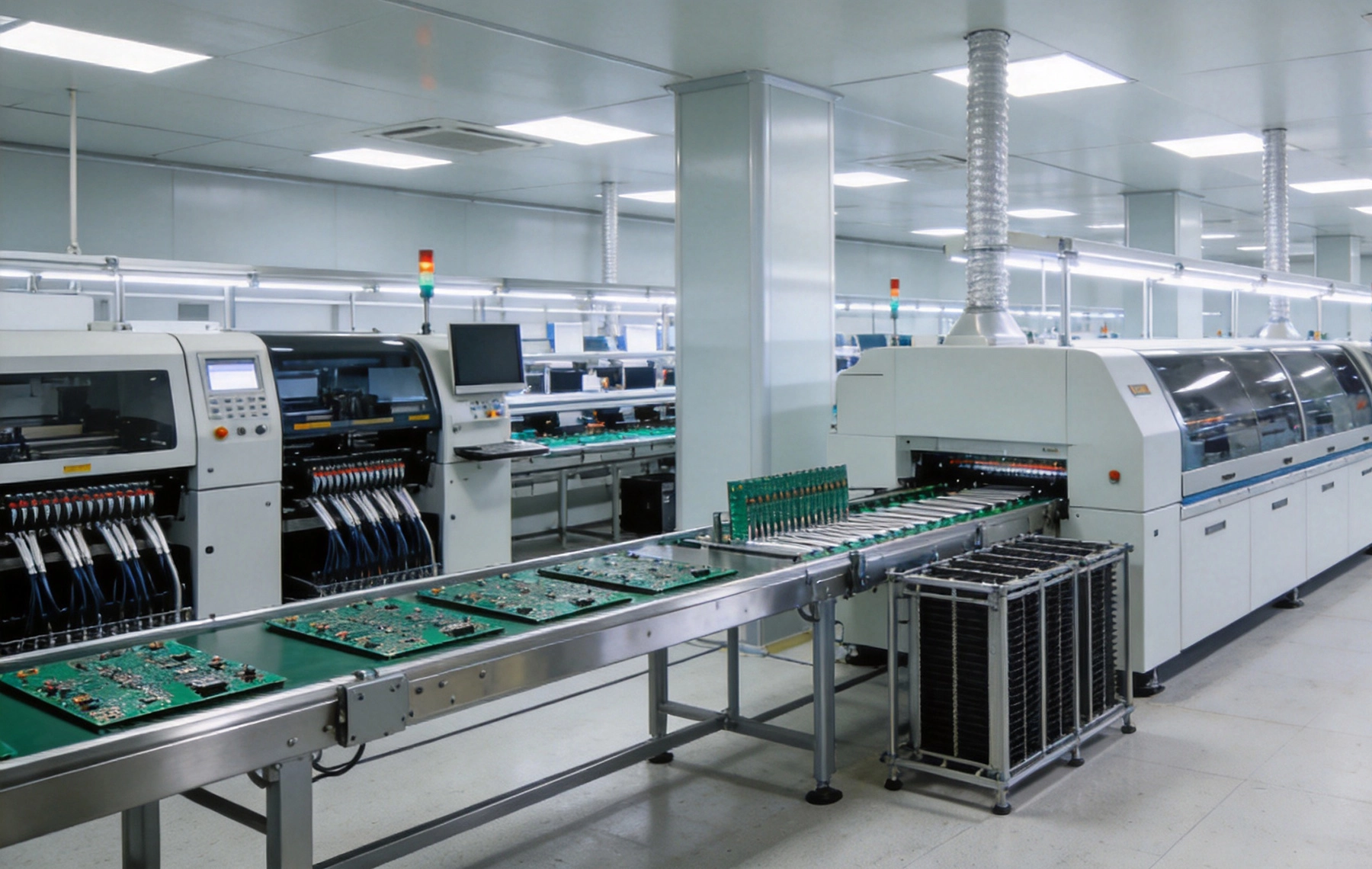
In the traditional consignment model, you—the buyer—manage every link in the chain. You find a fabrication house, negotiate pricing, and place the order. You source every component on your Bill Of Materials, often from multiple distributors, managing lead times and minimum order quantities. You coordinate shipping boards and components to the assembly house, track arrival dates, and hope everything arrives in sync.
This worked when products had longer development cycles, component availability was more predictable, and engineering teams had dedicated procurement staff. Today, the landscape looks different. Component lead times stretch unpredictably. Design cycles compress. Small teams without dedicated supply chain expertise try to manage complexity that used to require full-time specialists.
The real cost of managing a fragmented supply chain isn't just time—though that's significant. It's the risk of miscommunication, the delays when one piece arrives late, and the finger-pointing when quality issues arise. Was the defect caused by the Bare Board, the components, or the assembly process? When three different suppliers are involved, answering that question becomes a political exercise as much as a technical one.
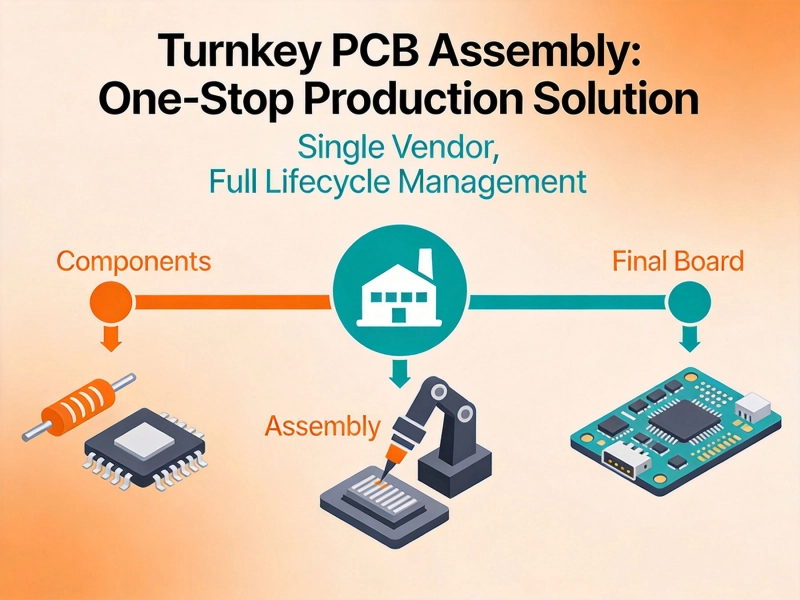
Turnkey PCB Assembly means one provider takes your design files and Bill Of Materials, then delivers finished, tested boards. You turn the key; the product works. In practice, this means the provider handles:
PCB Fabrication—ordering or producing the bare boards to your specifications. Component Procurement—sourcing every part on your bill of materials, managing alternatives and substitutions when needed. Assembly—placing components, soldering, and performing inspection. Testing—verifying electrical functionality according to agreed criteria. Logistics—packaging and shipping finished boards to your requirements.
The provider becomes your single point of contact, your single invoice, and your single point of accountability. This simplification alone drives much of the turnkey model's appeal, but the benefits go deeper than administrative convenience.
Managing component procurement is one of the most tedious and error-prone aspects of Electronics Production. A typical bill of materials might contain 50 to 200 unique parts, each with specific manufacturer part numbers, acceptable alternatives, and packaging requirements. Sourcing all of these—checking availability, comparing prices, managing orders from multiple distributors—consumes significant engineering or procurement time.
Turnkey providers handle this as part of their service. They maintain relationships with component distributors, buy in volumes that span multiple customers, and have systems to track availability and manage alternatives. What takes your team days of effort gets handled as routine by a provider who does it constantly.
But here's the nuance: good turnkey providers don't just find parts—they find the right parts. They understand that component substitution isn't just about matching the basic specifications. A replacement capacitor with the same capacitance and voltage rating might have different ESR, different temperature characteristics, or different reliability performance. Experienced procurement teams know which parameters matter for each component type and which substitutions are genuinely equivalent.
Component obsolescence is a growing problem in electronics. Parts get discontinued with little warning, especially older logic devices, specific analog ICs, and connectors. When a key component on your board becomes unavailable mid-production, you face a choice: redesign around an alternative (expensive and time-consuming) or find remaining stock (increasingly unreliable).
Turnkey providers with broad visibility across multiple customers and projects often see obsolescence trends earlier than individual buyers. They can flag at-risk components before they become crises, suggest qualified alternatives proactively, and manage transition planning that preserves your production schedule. This forward-looking capability has real value that's hard to replicate when you're managing procurement yourself.
Speed matters in modern electronics. Being first to market with a new product can define market share for years. Being six months late might mean the opportunity has passed entirely. Turnkey services compress timelines in several ways.
Parallel processing: Instead of waiting for bare boards to arrive before ordering components, a turnkey provider can fabricate boards and procure components simultaneously. The board arrives, the components are already in stock, and assembly starts immediately. In the traditional model, these steps are often sequential, adding weeks to the overall timeline.
Reduced coordination overhead: Every handoff between suppliers adds time—time for shipping, time for incoming inspection, time for communicating specifications. Eliminating handoffs between fabrication and assembly eliminates the associated delays.
Experienced Dfm Review: Turnkey providers see many designs and can identify manufacturability problems quickly. Catching a DFM issue during quote review—before any material is ordered or any board is built—saves the weeks that would be lost to a prototype failure followed by redesign.
Perhaps the most underappreciated benefit of turnkey service is clear accountability. When you use separate suppliers for fabrication, components, and assembly, quality problems become difficult to assign. The assembler blames the Bare Board. The fabricator says the board met specification. The component distributor claims the parts were fine. You're left in the middle, trying to diagnose a problem while your suppliers deflect responsibility.
With turnkey service, there's one provider and one answer: they built it, they fix it. This doesn't eliminate quality problems—nothing does—but it makes resolution faster and less adversarial. The provider has every incentive to identify root causes and implement corrective actions because they can't shift blame elsewhere.
This accountability extends to warranty coverage. Turnkey providers typically warrant the complete assembled board, not just their portion of the work. If a solder joint fails because of a board plating issue, the turnkey provider resolves it. In the fragmented model, you might need to prove which supplier caused the defect before getting any resolution.
The perception that turnkey services cost more than managing the supply chain yourself is common—and sometimes accurate at the per-board level. Turnkey providers charge for the procurement and coordination they perform, and their margins reflect the value they add. If you compare only the per-board price, turnkey may look more expensive.
But per-board price isn't the full cost. Consider the labor your team spends on procurement, coordination, and supplier management. Consider the cost of delays when components arrive late or boards need rework due to communication errors. Consider the opportunity cost of engineering time spent on Supply Chain Management instead of product development.
When you account for total cost—the fully loaded cost of getting working boards delivered on time—turnkey services often compare favorably to the fragmented approach, especially for small and medium-volume production where the overhead of self-management is hardest to amortize.
Turnkey providers aggregate demand across many customers. They buy components in volumes that earn better pricing than you'd achieve alone. They fabricate boards on production lines that run continuously, achieving utilization rates that keep unit costs down. These volume advantages get passed through, at least partially, in their pricing.
For very high-volume production, the economics might favor managing your own supply chain—the margins are thin enough that self-management saves real money. But for the volumes that most hardware companies actually produce—hundreds to low thousands of units—turnkey pricing is competitive even before accounting for the overhead savings.
Good turnkey providers offer more than Manufacturing execution. They provide design support that improves outcomes. This support takes several forms:
Dfm Review during quoting: Before committing to production, experienced providers review your design for manufacturability issues. They might suggest alternative component packages that place more reliably, trace modifications that improve yield, or stackup changes that reduce warpage. These suggestions come from production experience—seeing what works and what doesn't across many designs.
BOM optimization: The provider's procurement team might identify components that are difficult to source, expensive in low quantities, or approaching obsolescence. They can suggest alternatives that are more readily available, less expensive, or both—often before you've placed an order.
Test strategy development: For production boards, the provider can recommend appropriate test approaches based on your board complexity and quality requirements. This might include AOI, X-ray, ICT, or functional testing, each with different cost and coverage tradeoffs. Their experience across many products helps them recommend the right level of testing for your situation.
Turnkey isn't universally the best choice—no approach is. But certain scenarios benefit particularly from the turnkey model:
Small and medium-volume production, where the overhead of managing multiple suppliers is hardest to justify. Startups and small companies without dedicated procurement expertise. Products with aggressive timelines where coordination delays are costly. Designs using components with volatile availability. Projects where the engineering team should be focused on product development, not Supply Chain Management. Production runs where consistent quality matters more than shaving pennies from per-board cost.
There are situations where turnkey might not be the optimal choice:
Very high-volume production where marginal cost savings from self-management are significant. Designs using proprietary or highly specialized components that you must source yourself. Projects where you need direct control over specific component manufacturers or lot traceability. Situations where you already have established, optimized supplier relationships that work well.
Some providers offer partial turnkey arrangements—handling fabrication and assembly while you supply specific components. This hybrid approach captures some of the turnkey benefits while preserving control over the parts that matter most to you.
Not all turnkey providers are equal. The quality of service depends on the provider's capabilities, communication, and commitment to your success. When evaluating potential partners:
Assess their technical capabilities relative to your design complexity. A provider who excels at simple boards might struggle with your HDI design. Look at their track record with similar projects. Ask for references from customers producing boards at comparable complexity and volume. Evaluate their communication quality during the quoting process. If they ask thoughtful questions about your design, that's a good sign. If they just return a price with no discussion, be cautious. Understand their approach to Component Sourcing and substitution. Do they consult you before making substitutions, or do they substitute freely? Clarify warranty and support terms. What happens if boards arrive with defects? What's the resolution process and timeline?
At the per-board level, turnkey pricing may appear higher because it includes procurement and coordination costs. However, when you account for the total cost—including your team's time managing the supply chain, risk of delays, and quality resolution overhead—turnkey is often cost-competitive, especially for small and medium volumes.
Yes, most turnkey providers offer partial turnkey (or consignment) options where you supply specific components while the provider handles the rest. This is common when you have proprietary parts, specific brand requirements, or existing inventory you want to use.
Practices vary. Good providers consult you before substituting, explaining the proposed alternative and why it's equivalent. They should never substitute without notification. Clarify their substitution policy during the quoting process to avoid surprises.
Typically: Gerber Files or equivalent fabrication data, bill of materials with manufacturer part numbers, assembly files (centroid file, BOM with reference designators), and any special requirements for testing, inspection, or packaging. The more complete your documentation, the more accurate the quote.
Yes, many providers offer turnkey service starting from quantities as low as 5 to 25 boards. Prototype turnkey service typically has faster turnaround but may carry a price premium compared to production quantities. The convenience of single-source management often justifies the premium during the development phase.
Contact us to discuss your requirements.
Accelerating Time-to-Market with One-Stop PCB Assembly SolutionsJuly/07/2026

Why Prototype SMT Assembly China Is Ideal for StartupsOctober/19/2026
What to Look for in a Reliable Turnkey PCB Assembly PartnerAugust/03/2026
Understanding the Basics of SMT PCB Assembly China: A 2026 GuideOctober/13/2026
Managing Moisture Sensitivity Levels (MSL) for BGA and QFN PackagesAugust/15/2026
Why Choose Turnkey PCB Assembly for Your Next Product Launch?May/22/2026

How to Read a Quote for Low Volume PCB AssemblyOctober/12/2026
How to Prepare Your BOM for PCB Assembly and ManufacturingOctober/15/2026