Open Nav


Successful Pcb projects depend on clear communication between design engineers and Manufacturing partners. Ambiguous specifications, incomplete documentation, and misunderstood requirements create costly delays and quality problems. Well-structured downloadable resources like DFM checklists and BOM templates provide frameworks that ensure comprehensive information transfer. When design teams use standardized documentation tools, assembly partners receive consistent, complete information that enables accurate quoting, efficient production, and first-pass success. This article explores the essential resources that smooth the path from design to production.
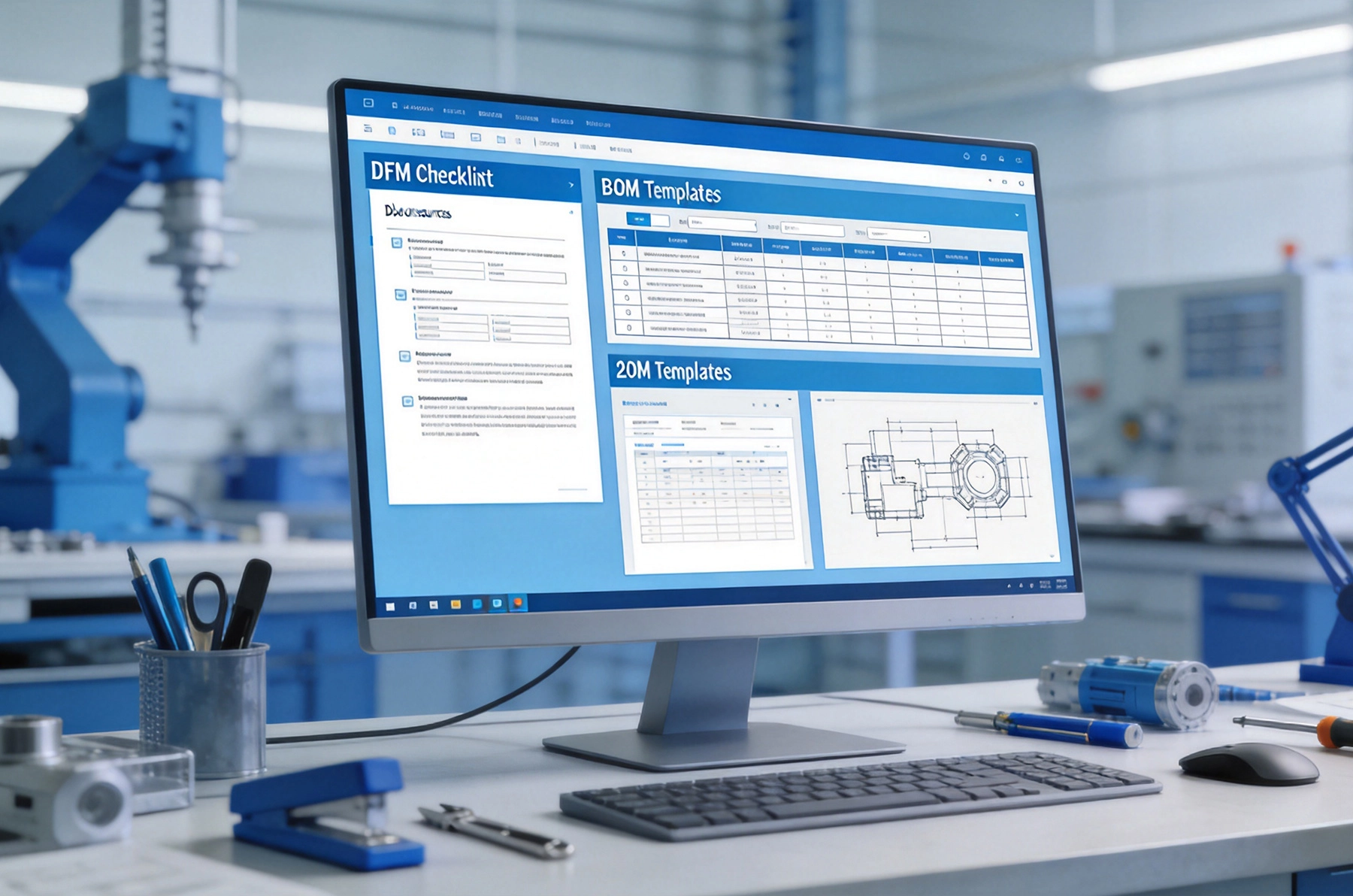
Every Pcb Design project follows a similar information flow: design files transfer to fabrication, component lists guide purchasing, and assembly instructions direct production. However, the quality of that information transfer varies dramatically between projects. Some designers provide meticulously organized documentation packages that enable smooth handoffs, while others deliver incomplete or ambiguous information that creates repeated clarification cycles. Standardized resources bridge this gap by providing templates and checklists that capture all required information systematically.
The business impact of poor documentation becomes apparent in quoting delays, production questions, and yield problems. When assembly partners must request clarification on missing information, quoting timelines extend by days or weeks. When ambiguities exist in BOM specifications, component purchasing errors occur that create material shortages. When assembly instructions lack clarity, process variations lead to inconsistent quality. Standardized resources eliminate these problems by ensuring comprehensive, consistent communication.
Effective DFM checklists address all aspects of manufacturability, from PCB Fabrication through assembly and test. A comprehensive checklist should include sections covering board geometry and layer stackup, material specifications, copper balance requirements, panelization considerations, component placement and orientation, solder mask and silkscreen specifications, and test point placement. Each checklist item should have clear Acceptance Criteria that designers can verify before submitting designs for production.
Checklist organization follows the natural progression from design to production. Begin with PCB Fabrication requirements because boards must be manufactured before assembly can occur. Follow with component-level specifications that drive sourcing and assembly processes. Conclude with test and documentation requirements that ensure verification and traceability. This logical flow prevents designers from missing critical requirements in the complex interplay between fabrication and assembly considerations.
The first section of any DFM checklist addresses Pcb fabrication fundamentals. Specify layer count, copper weight for each layer, material type, dielectric constant, and thickness requirements. These parameters directly influence fabrication capability and cost. Designers should confirm that their stackup aligns with standard fabrication materials rather than specifying non-standard combinations that require special processing and increase lead time.
Impedance control requirements need particular attention. Specify which traces require impedance control, target impedance values, and tolerance requirements. Provide impedance calculations or reference stackup dimensions that enable fabricators to verify they can meet requirements before committing to production. Vague impedance specifications like "controlled impedance to 50 ohms" without reference layer information lead to costly rework when fabricated boards fail to meet requirements.
Component placement criteria address manufacturability considerations that affect yield and reliability. Checklist items should verify component spacing requirements, especially for fine-pitch parts that require clearances for Solder Paste Printing and inspection. Component orientation consistency improves Assembly Efficiency—establish orientation standards for polarized components and verify that designs follow these conventions consistently.
Thermal considerations affect both assembly and long-term reliability. Verify that high-power components have adequate thermal relief and heat sinking capability. Check that thermal vias provide sufficient copper area for heat transfer. Ensure that components with significant power dissipation have adequate spacing from temperature-sensitive parts. These considerations prevent assembly yield problems and field failures that result from inadequate Thermal Management.
Test point accessibility determines whether functional testing can occur efficiently during production. Checklist items should verify that test points exist for all critical nodes, that test probes have adequate clearance from adjacent components, and that test point locations enable efficient probe travel during automated test. Missing test points or inaccessible test locations force manufacturers to develop workarounds that increase test time and cost.
Test point sizing matters as well. Verify that test pads provide sufficient area for reliable probe contact, typically at least 1mm in diameter for automated test probes. Check that test points connect to appropriate signal layers without being blocked by ground or power planes. Verify that high-voltage test points have adequate creepage and clearance distances to prevent arcing during test.
Comprehensive BOM templates include all data fields that contract manufacturers need for accurate Component Sourcing and assembly. At minimum, BOMs should contain part number, description, quantity per board, reference designators, manufacturer, manufacturer part number, package type, and tolerance or value specifications. These fields enable procurement teams to source components correctly and assembly teams to place components in the right locations.
Additional fields improve BOM utility for specific applications. Footprint information helps assembly planners verify that component packages match PCB land patterns. Alternate part numbers provide flexibility when primary parts become unavailable. Special handling notes flag components that require non-standard assembly processes, such as moisture-sensitive devices requiring bake-out or components with specific mounting orientation requirements.
Consistent part numbering conventions prevent ambiguity and errors during Component Sourcing. Establish conventions that encode essential part characteristics into part numbers rather than relying on separate description fields. For example, resistor part numbers might encode resistance value, tolerance, and package type (R10K-1%-0603). When part numbers follow logical conventions, procurement teams can identify alternatives and substitutes without requiring engineer intervention.
Separate internal part numbers from manufacturer part numbers in BOM templates. Internal part numbers track inventory and costing within your organization, while manufacturer part numbers enable external sourcing. Some organizations use concatenated formats that combine both numbers, but clarity improves when these elements remain separate fields. This separation allows manufacturers to focus on supplier part numbers while maintaining internal tracking capabilities.
Modern BOM templates should include component status fields that indicate lifecycle stage and availability. Fields for component status (active, not recommended for new design, last time buy, obsolete) help procurement teams identify parts that require sourcing strategies. Fields for minimum order quantities, lead times, and alternate sources support procurement planning and reduce unexpected delays.
Environmental Compliance information becomes increasingly important for products sold in regulated markets. Include fields for Rohs Compliance, REACH status, and conflict mineral declarations. These fields enable rapid response to customer compliance inquiries and prevent production delays when regulatory information is requested late in the procurement cycle.
Assembly drawings provide graphical representation of assembly requirements that supplement textual documentation. Templates should include standard title blocks, revision history, and bill of materials sections. Drawing formats should follow industry conventions like IPC-D-325 or ASME Y14.24 to ensure that assemblers interpret drawings correctly without requiring special training.
Assembly drawing content should specify special assembly processes, component orientation requirements, and inspection criteria. Notes sections should highlight any non-standard requirements that deviate from standard Ipc-a-610 acceptability criteria. When designs include custom components or assemblies, provide detailed specifications that define Acceptance Criteria beyond what Visual Inspection alone can verify.
Test specification templates ensure that functional testing requirements are communicated clearly to assembly partners. These templates should include test point lists, expected test results, pass/fail criteria, and special test equipment requirements. When tests require custom fixtures, provide fixture design specifications that enable fixture fabrication without repeated clarification cycles.
Test procedure documentation should describe test execution steps in sufficient detail that trained technicians can perform tests without requiring engineer intervention. Include power-up sequences, parameter settings, and interpretation guidelines for test results. When tests require software or firmware, provide version specifications and download instructions that enable assembly partners to load appropriate test software.
Documentation resources require maintenance as design processes and capabilities evolve. Establish version control systems that track changes to templates and checklists over time. When updating resources, maintain change logs that explain what changed and why, enabling users to understand the evolution of documentation standards. Archive previous versions to support legacy projects that may reference older specifications.
Schedule periodic reviews of documentation resources to ensure they reflect current capabilities and requirements. When design rules change, when new assembly processes become available, or when industry standards update, modify documentation resources accordingly. Engage both design and Manufacturing stakeholders in these reviews to ensure resources remain practical and comprehensive.
Even the best documentation resources fail if users do not adopt them correctly. Provide training that explains the purpose and use of each resource, including why each checklist item or data field matters. Show examples of properly completed documents and highlight common mistakes that reduce effectiveness. When users understand the rationale behind documentation requirements, they are more likely to follow them consistently.
Create feedback mechanisms that allow users to suggest improvements and report problems with existing resources. Designers and assemblers often identify missing checklist items or redundant data fields that resource developers overlook. Incorporating user feedback keeps resources relevant and improves acceptance by demonstrating that user input drives continuous improvement.
Where can I find downloadable DFM checklists and BOM templates?
Many contract manufacturers provide downloadable resources on their websites as customer service tools. Industry associations like IPC offer standardized documentation templates as part of membership benefits. Open source repositories and engineering communities share templates developed through collaborative effort. Evaluate resources for completeness and relevance to your specific needs before adopting them.
How detailed should my DFM checklist be?
Checklist detail should balance comprehensiveness against usability. Overly detailed checklists become tedious to complete and risk being treated as paperwork rather than quality tools. Under-detailed checklists miss important considerations. Target checklists of 30-50 items that cover critical design aspects without overwhelming users. Provide additional reference materials for items requiring deeper technical consideration.
What format should BOM templates use?
Spreadsheet formats like Excel or Google Sheets work well for BOM templates because they enable easy sorting, filtering, and formula calculations. However, these formats can introduce version control challenges as files are emailed back and forth. Consider using cloud-based collaboration tools that provide version history and simultaneous editing capabilities while maintaining familiar spreadsheet interfaces.
How often should I update documentation resources?
Update documentation resources when significant changes occur in design processes, manufacturing capabilities, or industry standards. Annual reviews represent a reasonable frequency for most organizations, but update sooner when major changes occur. Component lifecycle changes, new assembly technologies, or updated Ipc Standards should trigger immediate resource updates.
Should I create industry-specific templates?
Industry-specific templates provide value when your applications have unique requirements that general-purpose templates do not address. Automotive, aerospace, medical, and military applications each have specific documentation requirements that justify specialized templates. However, maintain core templates that serve all applications to avoid duplicate effort and ensure consistency across product lines.
Standardized downloadable resources like DFM checklists and BOM templates represent investments that pay dividends throughout the product development lifecycle. The time spent creating, maintaining, and implementing these resources returns through reduced quoting delays, fewer production questions, improved first-pass yields, and stronger relationships with manufacturing partners. When designers use comprehensive resources and assemblers receive complete, consistent information, the path from concept to production becomes smoother and more predictable.
Start by evaluating your current documentation practices to identify gaps where standardization would create value. Implement resources incrementally, beginning with the most impactful items like comprehensive BOM templates and fundamental DFM checklists. As teams become comfortable with these resources, expand into specialized templates for test specifications, assembly drawings, and other documentation types.
Treat documentation resources as living tools that evolve with your organization's needs. Solicit feedback, monitor effectiveness metrics, and continuously improve based on lessons learned from actual projects. The most valuable resources emerge from the practical experience of using them in real design-to-production handoffs. Your documentation library becomes a strategic asset that supports engineering excellence and manufacturing efficiency.
Comprehensive Guide to Our SMT and DIP CapabilitiesJune/09/2026

Frequently Asked Questions About Our PCB Assembly ProcessJuly/25/2026

Meet the Team: Expertise Behind Our High-Yield Production LinesSeptember/02/2026

Customer Success Stories: Real Projects Delivered by Our TeamJuly/17/2026

Our Quality Assurance Promise: AOI, X-Ray, and Functional TestingJune/26/2026
Requesting a Quote: A Step-by-Step Walkthrough for New ClientsSeptember/17/2026
Certifications That Matter: ISO, IATF, and UL Compliance ExplainedSeptember/11/2026

Welcome to Our PCB Assembly Services Hub: Your Resource CenterMay/22/2026