Open Nav


Every electronics product begins as an idea sketched on paper, progresses through hand-assembled prototypes that validate the concept, and ultimately must scale to thousands or millions of units produced reliably in a factory. The journey from Prototype To Production is where many hardware programs stumble—not because the design is wrong, but because the transition process itself is harder than it appears. Prototypes are built to demonstrate feasibility. Mass production is optimized for repeatability, yield, and cost. These are fundamentally different objectives, and bridging them requires deliberate effort that many engineering teams underestimate.
This article examines the specific challenges that emerge during prototype-to-production transitions, provides strategies for addressing them, and offers practical guidance for engineering teams preparing to scale their designs from handfuls of prototypes to stable, high-volume Manufacturing. Whether you're a startup founder preparing your first product for launch or an engineering manager at an established company launching a new platform, understanding this transition process will save you time, money, and frustration.
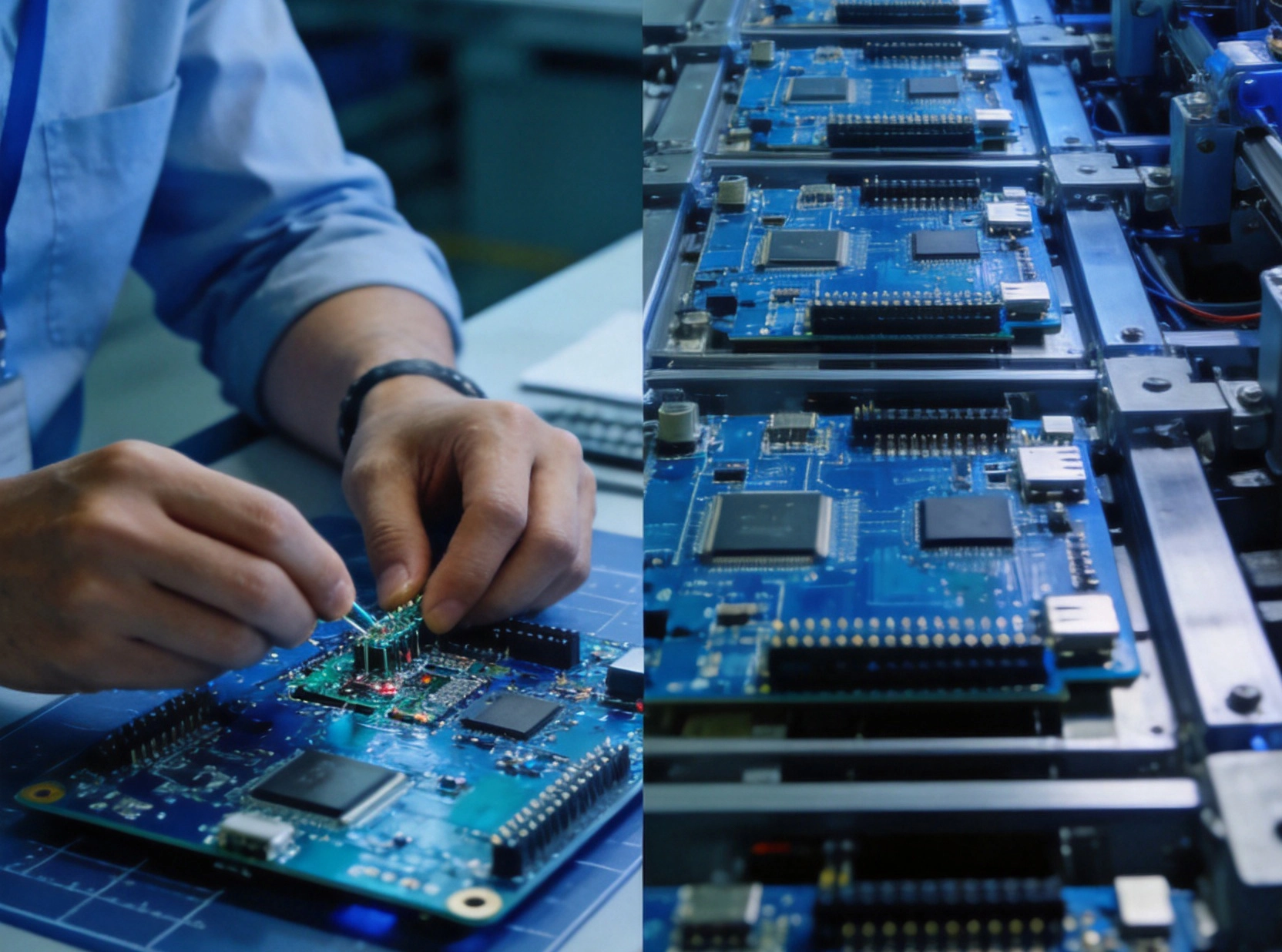
Prototypes and production builds are constructed under fundamentally different constraints, and these differences create the gap that engineering teams must deliberately bridge.
Prototype builds prioritize speed and flexibility above almost everything else. A prototype might be assembled by hand, using whatever components are immediately available, assembled on a bench rather than in a fixture, and tested by the same engineer who designed it—who knows exactly what to look for and how to work around problems. Every aspect of the prototype process is optimized for learning as quickly as possible, not for producing identical units repeatably.
Production builds prioritize repeatability and yield. Each unit must be identical to every other unit, assembled by operators who may have never seen this specific design before, using components sourced through supply chains that must be maintained over the product's lifetime. The testing strategy must catch defects without requiring engineering-level diagnosis. The cost at scale must support the product's market positioning. These requirements create design and process constraints that don't exist in prototype environments.
The gap between these two worlds isn't just about Manufacturing processes—it's about the fundamental shift from learning-oriented development to delivery-oriented production. Many engineering teams treat production as a problem to solve once the design is "finished." The most successful teams treat production readiness as a design objective that shapes decisions throughout the development process, not an afterthought to be addressed when prototypes are working.
Design For Manufacturing—the practice of designing products that can be built reliably and efficiently at target volumes—is the most important investment a development team can make before transitioning to production. DFM done well eliminates the most common causes of production failures before a single production unit is built. DFM done poorly or not at all produces production ramp delays, yield problems, and cost overruns that can threaten product viability.
DFM encompasses a broad range of design considerations. Component selection is among the most impactful: components that work perfectly in hand-assembled prototypes may be impossible to place reliably at production speeds. Fine-pitch components that an experienced assembler can hand-solder may become yield killers on a high-speed pick-and-place line. Passives that are readily available from multiple distributors may be single-source with long lead times that create supply chain fragility. Each of these component-level decisions affects production cost and reliability in ways that aren't visible in prototype builds.
Pcb layout decisions affect manufacturing cost and yield substantially. Panel utilization—the percentage of the manufacturing panel that your board occupies—directly affects the cost per board: a design that uses 40% of a panel costs roughly twice as much per unit as an identical design that uses 80% of the panel. Arrayed designs that combine multiple board units per panel multiply this effect. Fiducial Marks, panelization ties, and mouse-bite or V-score options determine whether boards can be efficiently depanelized without damaging components.
Several design patterns consistently cause production problems. Catching and correcting them during development—before production tooling is committed—is dramatically less expensive than addressing them after production has begun.
Design verification confirms that your design works. Process validation confirms that your manufacturing process reliably produces working products from that design. Both are necessary, and skipping process validation before production volume ramps is one of the most common and costly mistakes in hardware development.
First-article inspection marks the entry point to process validation. The first production-intent units built through the production process—using production materials, production equipment, and production procedures—receive exhaustive inspection and testing. Dimensional measurements verify that the Pcb fits its intended enclosure and mounting provisions. Visual Inspection checks for assembly defects that might not be caught by automated systems. Electrical testing verifies functionality. Any issues discovered during first-article inspection trigger root cause analysis and corrective action before additional units are released to production.
Process capability studies quantify how reliably the production process produces acceptable results. Measuring critical process parameters—paste volume, placement accuracy, reflow temperature, test coverage—and analyzing their statistical distribution against specification limits reveals whether the process is capable of meeting quality requirements consistently. A process with a Cpk below 1.33 produces defects at rates that make high-volume production economically painful. Process capability work before production ramp identifies these problems when there's still time to address them through equipment adjustment, procedure changes, or design modifications.
Pilot production runs—producing a modest quantity of units through the full production process—provide the ultimate validation that the system is ready for volume. Running 50 to 200 units through the complete process, tracking yield at each step, and analyzing any failures reveals problems that first-article inspection might miss. The goal isn't to find zero defects—it's to find all the defects while the consequences of finding them are still manageable. A pilot run that produces 5% defective units is far better to discover before committing to 10,000-unit production runs.
Effective production doesn't rely on inspection to catch defects after the fact—it builds quality into the process so defects don't occur in the first place. Statistical process control monitors critical process parameters in real time, detecting trends that predict upcoming problems before they manifest as defective units. When paste volume begins drifting upward, SPC triggers equipment adjustment before the drift produces bridges. When placement accuracy begins degrading, SPC flags the issue before misaligned components reach reflow.
End-of-line inspection still plays a role, but it's the backstop rather than the primary quality mechanism. When upstream processes are well-controlled, downstream inspection catches the rare exceptions rather than sorting good units from bad. This approach—quality built in rather than inspected in—is the hallmark of efficient, high-yield production operations.
A design that works perfectly but can't be built because components aren't available is a prototype, not a product. Supply chain readiness—ensuring that all components required for production are reliably available at required volumes—is a prerequisite for successful production ramp that many engineering teams overlook until they're staring at an empty production schedule.
Component availability analysis should begin during design, not after. The engineering team should verify that each component has at least two qualified sources, that those sources can deliver required volumes at target costs, and that lead times are compatible with production scheduling requirements. Components with extended lead times require buffer stock or long-lead-time purchase commitments that add cost and risk to the production plan. Identifying single-source components early provides time to qualify alternatives or negotiate supply agreements that protect production continuity.
Buffer stock planning ensures that production isn't interrupted by normal supply chain variability. Depending on component lead times and demand predictability, production buffer may range from weeks to months of supply. The engineering and operations teams must agree on buffer stock policies, fund the inventory investment, and establish reordering triggers that maintain coverage without excessive carrying costs. This planning requires collaboration between engineering, operations, and finance—siloed teams working independently produce gaps in coverage that cause production disruptions.
Alternate component qualification prepares for the day when a primary component source becomes unavailable. Qualifying alternates before they're needed—a process that can take weeks or months for components with strict performance requirements—ensures that supply disruptions don't create production shutdowns. The engineering effort to qualify alternates is modest compared to the production risk it hedges against.
The prototype exists primarily in the heads of the engineers who built it. Production requires that knowledge to be captured, documented, and transferred to manufacturing personnel who may have had no involvement in the prototype development. This knowledge transfer is a critical and often underinvested aspect of the prototype-to-production transition.
Manufacturing documentation should capture everything needed to build the product without engineering involvement. Assembly drawings specify component placement, orientation, and any special handling requirements. Bill of materials must include manufacturer part numbers, alternate part numbers, and any special sourcing instructions. Test procedures must enable production test technicians to verify functionality without design-level knowledge of the circuit. Process travelers must guide operators through build steps in sequence with appropriate check points and sign-offs.
Many companies discover that their prototype documentation is incomplete or inconsistent with the as-built prototype. This gap between documented and actual design is normal in early development—the prototype evolved through many iterations that documentation didn't track. Before production, engineering must perform a reconciliation audit: comparing what was documented against what was actually built, updating documentation to match reality, and verifying that the documentation supports production-level build requirements.
For companies using contract manufacturers, the relationship with the manufacturing partner deserves deliberate cultivation. The prototype-to-production transition is a process of building shared understanding—about the product, the company's quality expectations, the communication patterns that work, and the problem-solving approaches that resolve issues efficiently.
Early engagement with manufacturing partners during the DFM phase captures their expertise before design decisions are locked. A contract manufacturer who has built thousands of similar products sees different failure modes and has different process capabilities than the engineering team. This experience is valuable input to design decisions—but only if the manufacturing partner is engaged early enough to influence those decisions.
Regular communication during the production ramp prevents small issues from becoming large ones. A weekly production review that covers yield trends, emerging issues, and upcoming schedule changes keeps both parties aligned and enables proactive problem-solving. When issues do arise—and they always do—established communication patterns enable faster resolution than relationships where communication is episodic and transactional.
The technical aspects of prototype-to-production transition receive most of the attention, but the human and organizational dimensions matter equally. The skills required to create a working prototype—rapid iteration, comfortable with ambiguity, deep technical troubleshooting—differ from those required to stabilize production—systematic problem-solving, process discipline, cross-functional coordination. Teams that can do one often struggle with the other, and the transition period requires deliberate attention to these different demands.
Engineering leadership during prototype phase differs from production leadership. The engineer who thrives building prototypes may find production optimization work frustrating—incremental improvements to a process that "already works" feel less satisfying than the creative problem-solving of prototype development. Recognizing these different skill profiles—and staffing accordingly—prevents the motivation and retention problems that plague teams staffed entirely with prototype-oriented engineers attempting to do production work.
Building the production team before it's needed prevents the chaos of trying to staff production ramp while production is already behind schedule. Quality engineers, test engineers, supply chain specialists, and production managers each require time to understand the product, establish relationships with manufacturing partners, and develop the processes they'll own before production volume increases. Bringing these people on early—even when their full capacity isn't yet needed—pays dividends when production volume ramps.
Prototype designs are rarely optimized for production cost. The engineer building prototypes selects whatever component is available, uses generous design margins that wouldn't survive cost optimization, and builds in ways that prioritize speed over efficiency. Before production, the design deserves a thorough cost engineering review that identifies opportunities to reduce the cost of goods sold without compromising quality or reliability.
Component cost reduction targets the largest single contributor to PCB cost. Every component should be reviewed for cost reduction opportunities: can a less expensive alternative meet requirements? Can multiple components be consolidated into fewer, less expensive parts? Can standard components replace custom solutions? These reviews require engineering judgment about the boundary between acceptable cost reduction and dangerous corner-cutting, but the potential savings often amount to 15-30% of component cost.
Manufacturing cost reduction focuses on reducing the cost of building the board, independent of component costs. Panel utilization improvements, reduction of unique process steps, and elimination of special handling requirements each contribute to lower build cost. These optimizations require collaboration with the manufacturing partner to identify which changes are feasible and what cost impact they produce.
Test cost optimization ensures that testing doesn't add more to cost than the defects it catches are worth. Every test station represents equipment, programming, and operator time. Evaluating the cost and coverage of each test step—including AOI, X-ray, flying probe, functional test, and burn-in—reveals opportunities to add test coverage at low incremental cost or eliminate test steps whose coverage is redundant with other tests. The goal is maximum defect detection at minimum total test cost, not maximum testing regardless of expense.
The prototype-to-production transition is inherently risky. The further a team scales production before discovering a problem, the more expensive that problem is to fix. Effective risk management identifies the most likely failure modes and implements mitigations that reduce the impact of problems when they occur.
Staged production ramp—starting at low volume, proving the process, then gradually increasing to full volume—limits the exposure created by any individual problem. A 10% defect rate at 100-unit production is a manageable problem. The same 10% defect rate at 10,000 units is a crisis. Staged ramp provides checkpoints where progress is validated before commitment to higher volumes.
Contingency planning prepares responses to problems before they occur. What happens if first-article inspection reveals a design issue that requires layout change? What's the response if a critical component becomes unavailable mid-ramp? What if yield falls below the acceptable threshold during pilot production? Having pre-planned responses to foreseeable problems enables faster, more effective response than improvisation when stress levels are elevated.
Monitoring and escalation frameworks ensure that problems receive appropriate attention. Production yield below threshold, component shortages threatening the build schedule, or quality issues suggesting systemic problems all require escalation to decision-makers who can authorize corrective action. Defining escalation criteria and decision-making authority in advance prevents both over-reaction to minor issues and under-reaction to serious ones.
Dfm Review should begin during the design phase, not after the design is complete. Early DFM engagement—reviewing component selection, footprint design, and panelization strategy as the design develops—catches problems when design changes are still inexpensive. A formal Dfm Review at a defined milestone, such as prototype validation, then validates that the detailed design meets manufacturing requirements before production tooling is committed.
Pilot run size depends on production complexity and risk profile. For straightforward assemblies, 50-100 units may be sufficient to validate process stability. For complex assemblies with many unique components, high-reliability requirements, or first-time manufacturing partner relationships, 200-500 units provides better statistical confidence. The pilot run should be large enough to reveal any defect modes that occur at typical production rates—defects that appear in 1 of 50 units may not appear in a run of 10.
New Product Introduction (NPI) refers to the process of preparing a new product for mass production—building prototypes, validating the design, proving the process, and establishing documentation and procedures. Production refers to the ongoing manufacture of units once NPI is complete. The two phases have different objectives, cost structures, and team requirements. NPI is engineering-intensive and tolerates higher per-unit costs because volumes are low. Production is operations-intensive and demands cost optimization because volumes are high. Understanding this distinction helps companies staff and manage both phases appropriately.
Design changes during production ramp require a change control process that evaluates the change's impact on fit, form, function, quality, and schedule. Minor changes—component value adjustments, silkscreen corrections—may be implemented immediately with documentation updates. Major changes—layout modifications, component replacements—require revalidation of affected process steps and retesting of affected functions. The change control process should be defined before production ramp begins, so that when changes are needed, the response is methodical rather than chaotic.
Critical KPIs include: first-pass yield (percentage of units passing all tests without rework), test coverage (percentage of defect modes detectable by the test strategy), process capability indices (Cpk values for critical process parameters), and defect per million opportunities (DPMO) for each defect type. Tracking these metrics from pilot production through stable production reveals trends, validates process improvements, and provides early warning of emerging problems before they become production crises.
Bridging the gap between R&D prototypes and stable mass production is one of the most challenging aspects of electronics product development. It requires deliberate design decisions made with manufacturing in mind, rigorous process validation before committing to volume, careful supply chain preparation, comprehensive documentation, and effective collaboration with manufacturing partners. Teams that invest in these activities systematically find that their production ramps are faster, smoother, and less expensive than teams that treat production as an afterthought to be handled once the design is "finished."
The most successful hardware companies treat production readiness as a design objective—one that shapes decisions from the earliest stages of concept development through the final stages of product launch. They staff for the transition, engage manufacturing partners early, validate processes before scaling, and build quality into their products rather than inspecting it in after the fact. The result is products that reach market faster, cost less to produce, and maintain quality levels that build customer satisfaction and brand reputation.
The gap between prototype and production is real and significant—but it's a gap that good engineering practice can bridge reliably. The investment in bridging it properly pays dividends throughout the product's commercial life, in lower production costs, higher quality, and the competitive advantage that comes from getting great products to market ahead of less-prepared competitors.
Preparing to transition your product from Prototype To Production? Our engineering and manufacturing teams specialize in NPI, DFM, and production ramp support—helping hardware companies bridge the prototype-to-production gap reliably and efficiently.
Cost-Reduction Strategies Without Compromising PCBA QualityJuly/09/2026
Solving the Challenge of High-Density Interconnect (HDI) AssemblyMay/22/2026

Overcoming Supply Chain Shortages: Alternative Component Sourcing StrategiesMay/22/2026
Fixing Common SMT Defects: A Root Cause Analysis ApproachJune/11/2026
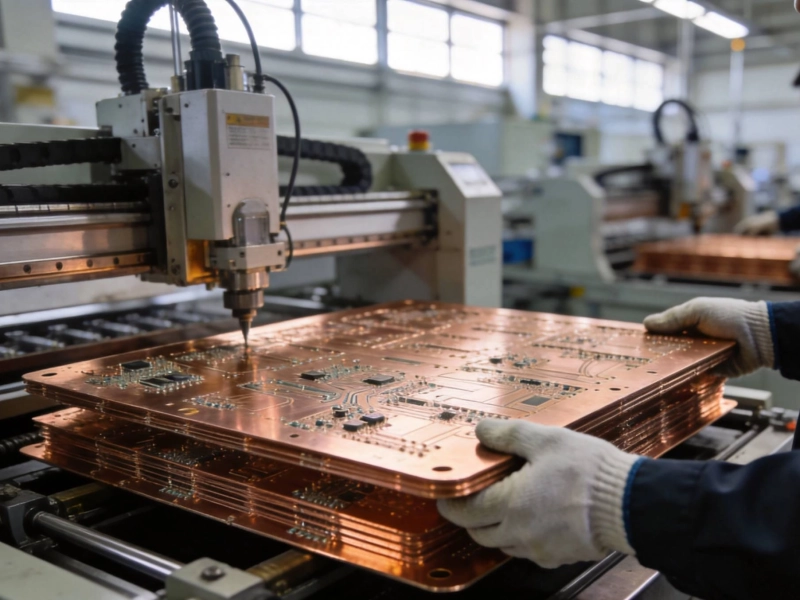
Solutions for Assembling Heavy Copper PCBs in Industrial ApplicationsJune/27/2026
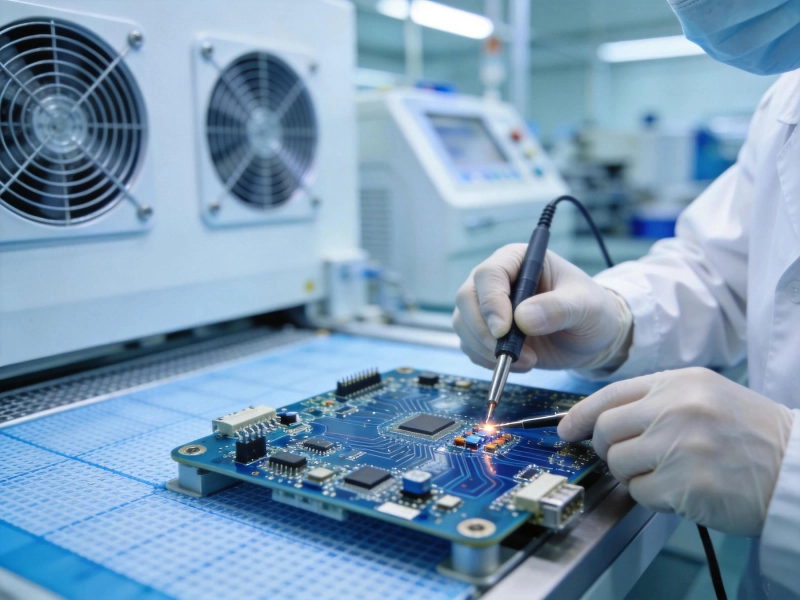
Why High-Reliability PCB Assembly is Critical for Medical DevicesMay/22/2026
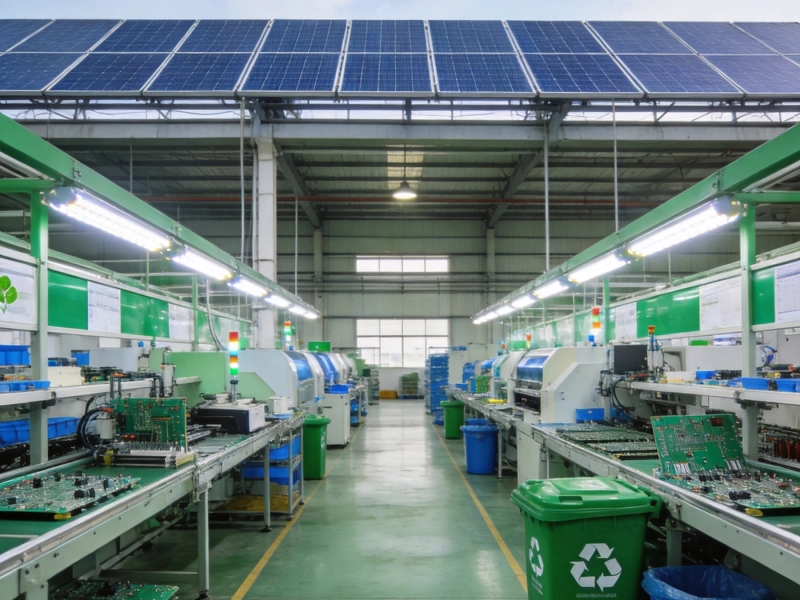
Green Manufacturing: Reducing Carbon Footprint in PCB Assembly PlantsSeptember/14/2026
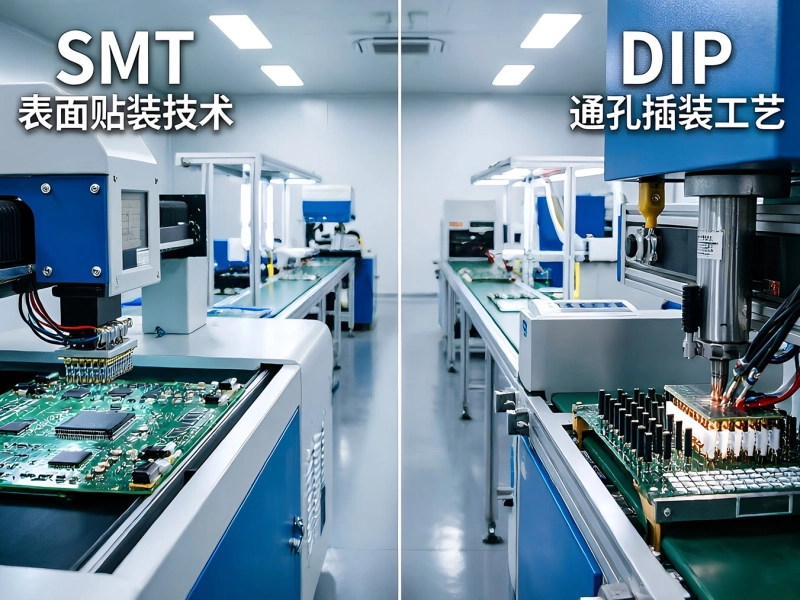
Comprehensive Guide to Our SMT and DIP CapabilitiesJune/09/2026