Open Nav


Electronic products face relentless environmental assault throughout their operational lives. Moisture infiltrates, contaminants corrode, thermal cycling stresses, and mechanical vibration takes its toll. Without appropriate protection, even the most carefully designed circuits succumb to degradation mechanisms that shorten service life and compromise reliability. Advanced cleaning and coating solutions provide the defensive layers that enable electronics to survive these harsh conditions and deliver extended operational lifetimes.
Understanding how surface preparation and protective coating technologies work together helps engineers design products that endure. From medical devices operating within human bodies to industrial controls deployed in desert heat, the principles of effective protection remain consistent—though implementation details vary with application requirements. This guide examines the technologies, processes, and considerations that enable longer product lifespans through advanced cleaning and coating solutions.
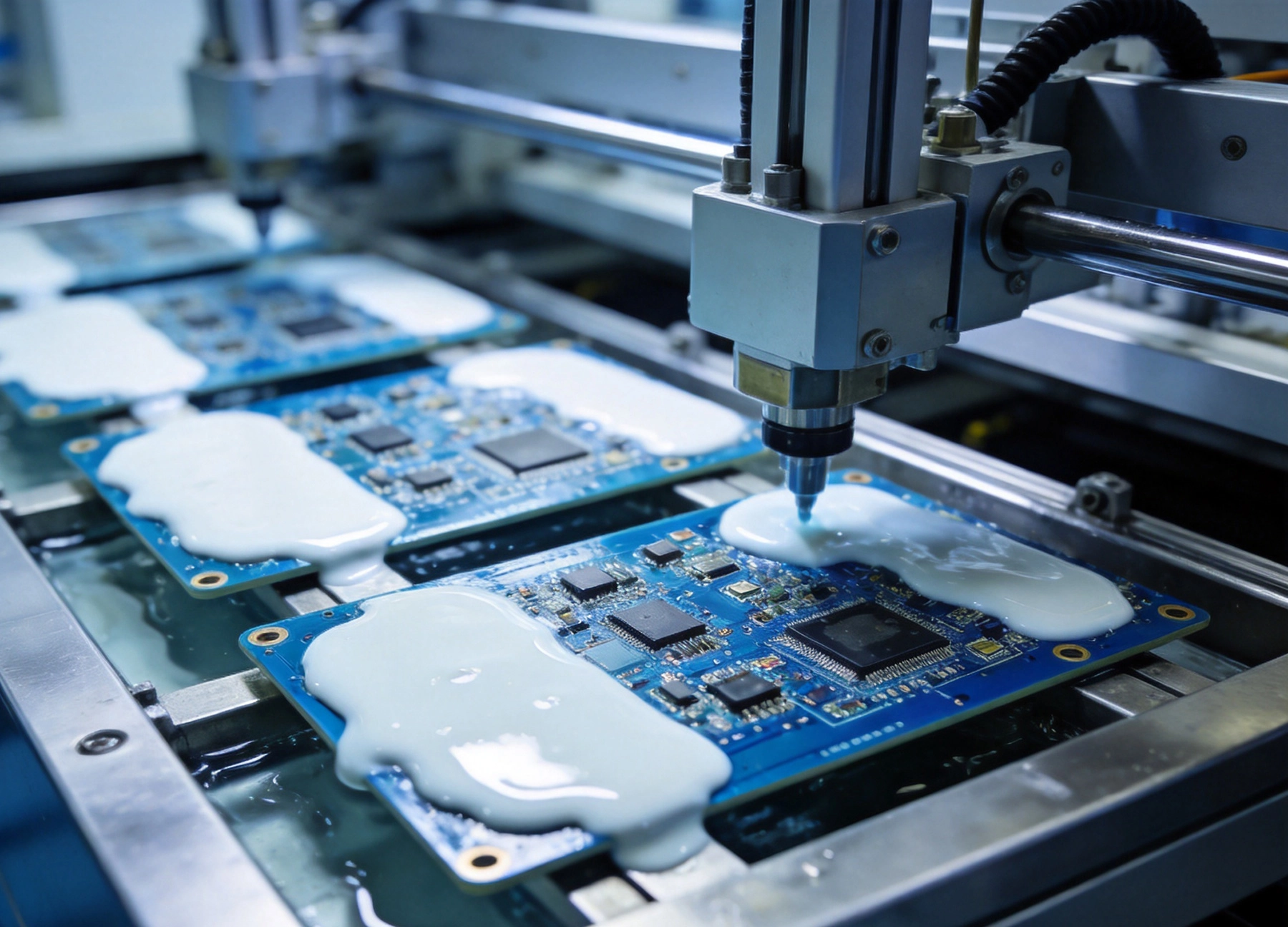
Electronic degradation follows predictable patterns driven by environmental exposure and material interactions. Understanding these mechanisms reveals why appropriate protection strategies deliver such significant lifespan improvements.
Moisture represents the most pervasive threat to electronic reliability. Water molecules penetrate enclosures through seals, vents, and permeable materials. Once inside, moisture creates electrochemical cells that drive corrosion of metal surfaces. Ionic contaminants—residues from Manufacturing, fingerprints, or environmental infiltration—accelerate these corrosion processes dramatically. Even low-level moisture exposure causes gradual degradation that manifests as premature failure months or years after installation.
Thermal cycling compounds moisture damage through mechanical stress. As temperature fluctuates, differential expansion of materials creates cyclic stress at interfaces. This mechanical action pumps moisture and contaminants deeper into assemblies, accelerating degradation. Component leads, solder joints, and connector contacts—all areas with dissimilar material interfaces—experience concentrated stress that promotes crack initiation and propagation.
Chemical contaminants from operating environments add degradation pathways beyond simple moisture damage. Industrial atmospheres contain sulfur compounds that attack silver and copper. Marine environments expose electronics to salt spray. Agricultural applications introduce ammonia and pesticides. Each contaminant category creates specific attack mechanisms that protective coatings must address.
Protective coatings create barriers that prevent environmental agents from reaching vulnerable surfaces. Effective barriers block moisture vapor transmission, resist chemical attack, and maintain protective properties throughout the product's expected service life. The key lies in selecting coatings appropriate for specific environmental challenges and applying them with sufficient coverage and adhesion.
Surface preparation determines coating effectiveness more than any other factor. Contaminants beneath coatings create localized attack sites where degradation proceeds rapidly. Proper cleaning removes all residues that could compromise adhesion or create corrosion nuclei. The combination of thorough cleaning and appropriate coating delivers protection that extends product lifespan dramatically compared to uncoated assemblies.
Effective protection begins with surfaces free of all contaminants that could compromise coating adhesion or promote degradation. Modern cleaning technologies achieve cleanliness levels impossible with traditional methods.
Plasma cleaning uses energized gases to remove organic contaminants at the molecular level. The process generates reactive species that break carbon bonds in organic residues, converting them to volatile compounds that dissipate. Plasma treatment activates surfaces simultaneously, improving coating adhesion beyond what cleaning alone achieves.
The technology excels at removing flux residues, silicone oils, and organic contaminants that persist after solvent cleaning. For assemblies with complex geometries or high component density, plasma reaches areas where liquid cleaning cannot effectively penetrate. The process leaves no residue and introduces no moisture—critical advantages for high-reliability applications.
Ultrasonic cleaning uses high-frequency sound waves to generate microscopic bubbles in cleaning solutions. The violent implosion of these bubbles creates mechanical scrubbing action that dislodges contaminants from surfaces. Megasonic cleaning operates at even higher frequencies, providing gentler but equally effective cleaning suitable for delicate components and wire bonds.
These technologies reach beneath components and into via structures where manual cleaning cannot access. The mechanical energy penetrates blind features and fills gaps that limit liquid cleaning effectiveness. For assemblies with Bga packages, Qfn devices, or other bottom-terminated components, ultrasonic or megasonic cleaning often represents the only viable method for achieving adequate cleanliness.
Deionized water cleaning provides residue-free washing that eliminates ionic contaminants without introducing new residues. The ion exchange process removes dissolved minerals and salts, preventing contamination deposits that occur when regular water evaporates. Cascade rinsing ensures complete removal of all contaminants carried from previous processing steps.
Water-based cleaning systems often incorporate ultrasonics to enhance cleaning effectiveness. The combination provides both chemical and mechanical cleaning action that removes both organic and inorganic contaminants.闭环 water systems minimize consumption while ensuring consistent cleaning quality throughout production runs.
Conformal Coating applies a protective film that conforms to assembly topology, sealing surfaces against environmental attack. Material selection and application quality determine coating effectiveness.
Acrylic conformal coatings offer an excellent balance of protection, processability, and cost. They provide good moisture resistance, excellent flexibility, and strong UV stability. Application proceeds straightforwardly through spray, dip, or brush methods. Cure times are short, enabling rapid production throughput. Reworkability is excellent—acrylic coatings dissolve in appropriate solvents, allowing component replacement without damaging underlying materials.
The primary limitation of acrylic coatings is moderate chemical resistance. Harsh chemical environments may attack acrylic films over time. Temperature capability to approximately 125°C suits most commercial applications but limits use in high-temperature environments. For general-purpose protection in benign environments, acrylic coatings provide cost-effective reliability improvement.
Silicone coatings deliver superior performance in demanding thermal environments. Their inherent flexibility maintains protective properties across wide temperature ranges, from cryogenic conditions to beyond 200°C. This flexibility also provides excellent stress relief during thermal cycling, reducing mechanical fatigue at solder joints and component interfaces.
The silicone molecular structure provides excellent moisture barrier properties while remaining permeable to some gases. This semi-permeable nature requires consideration for applications where moisture vapor pressure differentials could drive liquid water into assemblies. For most applications, silicone's moisture resistance provides adequate protection. Repairability is moderate—silicone resists solvents but can be mechanically removed when necessary.
Urethane coatings provide tough, chemically-resistant films that withstand demanding environments. Their hardness provides excellent abrasion resistance alongside Environmental Protection. Chemical resistance exceeds acrylic coatings significantly, making urethanes suitable for industrial and automotive applications involving fuel, oil, or solvent exposure.
The mechanical properties of urethane coatings transmit more stress to underlying solder joints compared to flexible silicones. This characteristic requires consideration for assemblies experiencing significant thermal cycling—stiffer coatings may not provide the stress relief that flexible alternatives offer. Urethane coatings are more challenging to rework than acrylics but can be removed with appropriate solvent systems.
Parylene coating deposits a truly conformal polymer film through vapor-phase polymerization. Unlike liquid-applied coatings, parylene flows around all surfaces uniformly, creating consistent thickness regardless of geometry. This conformal nature provides protection even on sharp edges, needle points, and internal surfaces that liquid coatings cannot reach effectively.
The vapor deposition process occurs at ambient temperature, eliminating Thermal Stress on assemblies during coating. Film thickness controls precisely from sub-micron to tens of microns, enabling protection calibrated to application requirements. Parylene provides excellent moisture and chemical barrier properties with minimal mass addition. The primary limitations are higher cost and more complex application requirements compared to liquid coatings.
Coating effectiveness depends critically on application processes and quality verification. Even excellent coating materials fail to deliver protection when poorly applied.
Spray application provides precise thickness control and good coverage across flat surfaces. Multiple thin passes build coating to target thickness while minimizing runs and sags. The process suits both manual and automated systems, enabling flexibility in production scale. Coverage on vertical surfaces and component sides requires attention to spray angle and technique.
Automated spray systems provide consistent quality across production volumes. Programmable spray patterns ensure repeatability that manual processes cannot match. For high-volume production, automated application lines achieve throughputs impossible with manual spraying while maintaining superior coating uniformity.
Dip coating provides excellent coverage on complex topographies, including assemblies with components on both sides. The immersion process coats all exposed surfaces uniformly, reaching areas that spray application may miss. Dip coating achieves good thickness control through withdrawal speed regulation and viscosity management.
Masking requirements for dip coating exceed spray application—areas that must remain uncoated require robust masking to prevent coating seepage. Connector contacts, test points, and heat sink interfaces typically require masking. The masking and demasking process adds labor content compared to spray application but may reduce total process time for certain assembly configurations.
Coating quality verification confirms that protection meets design intent. Visual Inspection under magnification identifies obvious defects like voids, delamination, or coverage gaps. UV fluorescent additives in coatings enable inspection systems to identify thin spots and pinholes invisible under ordinary lighting.
Thickness measurement confirms adequate coverage. Eddy current instruments measure coating thickness on metal surfaces non-destructively. For critical applications, cross-section analysis of sample boards verifies coating integrity at component interfaces and in via structures. These destructive tests validate process capability rather than inspect every production unit.
Protection requirements vary significantly across application environments. Matching coating systems to specific challenges optimizes both protection and cost.
Automotive applications face extreme thermal cycling, vibration, chemical exposure, and long reliability requirements. Under-hood electronics experience temperatures from -40°C to over 150°C with constant thermal cycling. Interior electronics encounter different chemical exposures from cleaning products and personal care items. Protective strategies must address both mechanical and environmental stressors while meeting 15+ year reliability targets.
Typical automotive protection combines robust cleaning, silicone or urethane Conformal Coating, and often additional encapsulation for severe environments. Accelerated life testing under automotive-specific conditions validates protection strategies before production. Compliance with automotive quality standards like Iatf 16949 ensures consistent process control.
Medical Electronics Protection requirements depend heavily on application type. Implantable devices face the most demanding conditions—continuous body temperature exposure, ionic fluids, and absolute reliability requirements over device lifetime. Surface coating for implants must be biocompatible in addition to providing Environmental Protection. Parylene coating often serves this application due to its biocompatibility and excellent barrier properties.
Diagnostic and therapeutic equipment operates in clinical environments with different challenges. Disinfection chemicals, cleaning protocols, and handling during medical procedures create exposure conditions that protective coatings must address. Material selection must consider patient safety for any coating that could release substances during use.
Industrial Electronics experience wide temperature ranges, high humidity, chemical exposure, and mechanical stress. Factory floors expose controls to machining fluids, cleaning solvents, and condensation cycles. Outdoor installations add UV exposure and precipitation. Protection strategies must address all foreseeable stressors while maintaining cost competitiveness.
Typical industrial protection uses robust cleaning followed by acrylic or urethane conformal coating. Harsher environments may require urethane or silicone coatings with additional encapsulation for severe exposure areas. Extended temperature ranges favor silicone coatings for their flexibility across temperature extremes.
Protection investment delivers returns through extended product lifespan, reduced warranty costs, and improved customer satisfaction. Understanding Total Cost Of Ownership helps justify protection investments.
Field failure costs extend far beyond product replacement. Warranty repair expenses include logistics, diagnosis, repair labor, and administrative overhead. Customer inconvenience damages brand reputation and may trigger redesign requirements. In critical applications, field failures create safety risks and liability exposure. Protection investments prevent these failure costs when properly sized to application requirements.
Failure cost analysis quantifies protection value by comparing failure probability with and without protection. Field return data from similar products provides baseline failure rates. Protection effectiveness estimates translate into expected failure reduction. The resulting cost-benefit analysis justifies protection investments proportionate to actual failure costs.
Protection process costs include materials, equipment, labor, and quality verification. Optimizing processes minimizes protection cost while maintaining effectiveness. Material selection balances performance against cost—higher-performance coatings cost more but may enable thinner application or simpler surface preparation. Equipment investment trades off against labor costs and throughput requirements.
Process capability determines protection consistency. Processes operating near specification limits produce variable protection that may occasionally fail to meet requirements. Investment in process control—improved equipment, better monitoring, tighter process windows—reduces variation and protects against inadequate protection delivery.
Advanced cleaning and coating solutions provide essential protection that extends product lifespan in demanding applications. Understanding degradation mechanisms reveals why protection investments deliver significant returns through reduced field failures and improved reliability. Modern cleaning technologies achieve cleanliness levels that enable coating effectiveness, while conformal coating materials address specific environmental challenges from benign to extreme.
Application-specific protection strategies match coating systems to actual environmental requirements. Automotive, medical, and industrial applications each require tailored approaches that address their specific stressors while meeting cost and reliability targets. Quality Control during application ensures protection effectiveness across production volumes.
For product engineers designing for reliability, integrating protection considerations early in development enables optimal protection strategies. Surface preparation requirements influence component selection and layout. Coating compatibility affects material choices throughout the assembly. Early planning for protection enables designs that achieve extended lifespans cost-effectively.
Surface preparation determines coating effectiveness more than any other factor. Contaminants beneath coatings create localized attack sites where degradation proceeds rapidly. Thorough cleaning using appropriate technologies—plasma, ultrasonic, or deionized water systems—removes residues that compromise adhesion and create corrosion nuclei. Even the best coating materials fail when applied to inadequately prepared surfaces.
Parylene deposits truly conformal films through vapor-phase polymerization, achieving uniform coverage regardless of geometry. Liquid coatings flow differently on complex topographies, potentially leaving thin spots or voids. Parylene applies at ambient temperature, eliminating Thermal Stress. However, parylene costs more and requires more complex application equipment. For extreme environments or critical applications, parylene often justifies its premium. For standard commercial applications, liquid coatings typically provide adequate protection at lower cost.
Yes, selective coating is common and often preferable to full-board coating. Areas requiring access—connectors, heat sinks, test points—remain uncoated. Selective application uses masking to protect specific areas during coating or applies coating only where needed using precision dispensing systems. This approach reduces material cost while maintaining protection where required.
Silicone conformal coatings maintain protective properties from below -60°C to beyond 200°C, depending on specific formulation. This wide temperature range makes silicone ideal for applications experiencing extreme thermal cycling or high-temperature operation. The flexible silicone matrix maintains integrity through thermal expansion and contraction that would crack more rigid coatings.
Production coating quality verification typically combines Visual Inspection, thickness measurement, and sometimes electrical testing. Visual inspection under magnification identifies obvious defects. Thickness measurement using eddy current instruments confirms adequate coverage on production assemblies. For critical applications, sample cross-section analysis validates coating integrity at component interfaces. UV fluorescent additives in coatings enable automated inspection systems to identify pinholes and thin spots.
Solving the Challenge of High-Density Interconnect (HDI) AssemblyMay/22/2026
Downloadable Resources: DFM Checklists and BOM TemplatesAugust/03/2026
How Turnkey Providers Streamline Component Procurement and LogisticsJune/18/2026
Scaling from 10 Prototypes to 10,000 Units: A Turnkey PCBA Success StoryJuly/24/2026
Predictive Maintenance in SMT Lines: Preventing Defects Before They HappenAugust/07/2026
Custom Box Build Assembly: Integrating Mechanics and Electronics SeamlesslySeptember/03/2026
Thermal Relief Design: Balancing Heat Dissipation and SolderabilityJuly/23/2026
Top 5 PCB Assembly Trends Shaping the Industry in 2026May/22/2026