Open Nav


Modern Electronics Manufacturing relies heavily on advanced surface mount packages like Ball Grid Array (BGA) and Quad Flat No-Lead (QFN) components. While these packages enable higher density and improved electrical performance, they introduce unique handling challenges related to moisture sensitivity. Improper management of Moisture Sensitivity Levels (Msl) can lead to catastrophic failures during Reflow Soldering, including the infamous "popcorn" effect, delamination, and internal cracking.
Understanding and properly managing Msl requirements isn't just a best practice—it's essential for ensuring reliable Pcb Assembly, particularly for high-reliability applications in automotive, medical, aerospace, and industrial sectors. This comprehensive guide explores everything you need to know about MSL management for BGA and QFN packages.
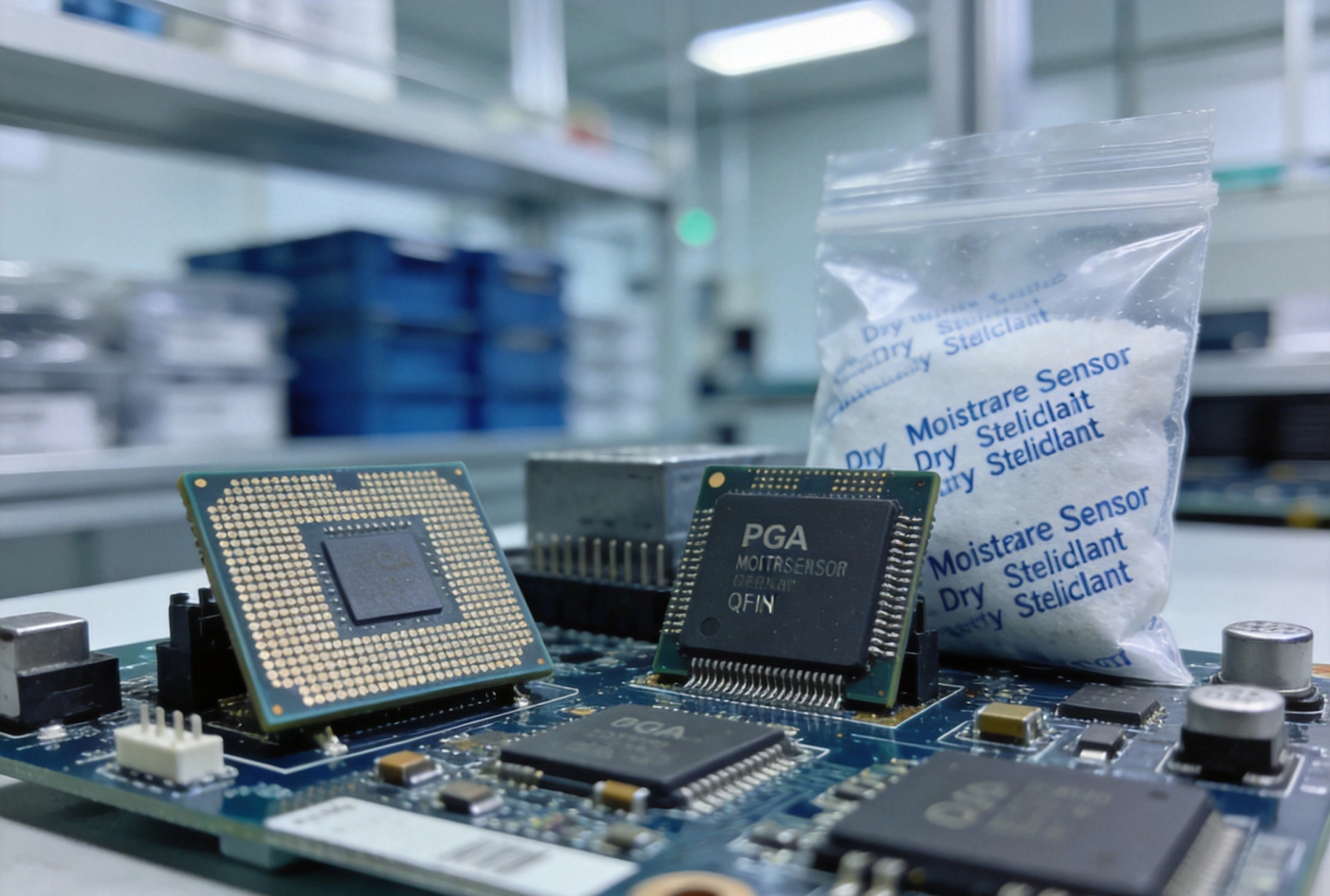
Plastic semiconductor packages, including the molding compounds used in BGA and QFN devices, are hygroscopic—they absorb moisture from the surrounding environment. While this moisture poses no immediate threat at room temperature, it becomes dangerous during the high-temperature Reflow Soldering process.
When moisture-laden packages enter a reflow oven, several damaging phenomena can occur:
These defects may not be immediately visible but result in early field failures, intermittent operation, or complete device malfunction.
The moisture sensitivity of a package depends on several factors:
BGA and QFN packages are particularly susceptible because their compact form factors often use thin molding compounds and large die areas, creating ideal conditions for moisture-related damage.
The Joint Electron Device Engineering Council (JEDEC) established the J-STD-020 and J-STD-033 standards to classify and manage moisture sensitivity. These standards define eight MSL categories, with Level 1 being the least sensitive and Level 6 requiring special handling protocols.
| MSL Level | Floor Life at 30°C/60% RH | Storage Requirements |
|---|---|---|
| Level 1 | Unlimited | ≤30°C/85% RH |
| Level 2 | 1 year | ≤30°C/60% RH or desiccant |
| Level 2a | 4 weeks | ≤30°C/60% RH or desiccant |
| Level 3 | 168 hours (7 days) | ≤30°C/60% RH or desiccant |
| Level 4 | 72 hours (3 days) | ≤30°C/60% RH or desiccant |
| Level 5 | 48 hours (2 days) | ≤30°C/60% RH or desiccant |
| Level 5a | 24 hours (1 day) | ≤30°C/60% RH or desiccant |
| Level 6 | Must bake before use | Immediate use after bake |
Most modern BGA and QFN packages fall into MSL 3 through MSL 5a categories, reflecting their sensitivity to moisture absorption. High-density BGAs with fine pitches (0.8mm and below) and thin-profile QFNs are typically MSL 3 or higher.
Package trends show increasing moisture sensitivity as the industry moves toward:
Always consult the manufacturer's datasheet for specific MSL ratings, as identical-looking packages from different suppliers may have different classifications.
Moisture-sensitive components ship in protective packaging designed to maintain low internal humidity. A standard dry pack includes:
Proper storage before component use extends shelf life and maintains floor life:
The HIC provides visual indication of moisture exposure:
If the HIC shows pink at the 10% or lower indicator, components must be baked before reflow soldering.
Once a moisture barrier bag is opened, the floor life countdown begins. Effective tracking requires:
JEDEC J-STD-033 provides algorithms for calculating equivalent floor life at different environmental conditions. For example, MSL 3 components have 168 hours at 30°C/60% RH, but only 72 hours at 30°C/70% RH.
Many assembly facilities maintain low-humidity environments to extend floor life:
Storing opened components in dry cabinets at <5% RH essentially stops the floor life clock, allowing extended usage periods without baking.
Baking removes absorbed moisture and resets floor life. Baking is necessary when:
JEDEC J-STD-033 specifies two primary baking methods:
Method 1: High-Temperature Bake
Method 2: Low-Temperature Bake
While baking restores floor life, it introduces other concerns:
After baking, components should be used promptly or stored in dry conditions to prevent re-absorption.
Establish procedures for handling moisture-sensitive components upon receipt:
When preparing components for production:
Modern Manufacturing execution systems (MES) can automate MSL tracking:
Ball Grid Array packages present unique MSL management challenges:
BGA packages require strict adherence to MSL protocols, particularly for high-reliability applications.
Quad Flat No-Lead packages have their own moisture sensitivity factors:
For automotive, medical, aerospace, and military applications:
Post-reflow inspection may reveal moisture damage indicators:
X-ray inspection may reveal internal delamination or bond wire damage not visible externally.
When moisture-related failures occur, investigate:
Proper management of Moisture Sensitivity Levels for BGA and QFN packages is fundamental to reliable Electronics Manufacturing. The combination of appropriate storage, careful floor life tracking, and proper baking procedures when needed prevents costly defects and ensures product reliability.
While MSL management adds complexity to assembly operations, the consequences of neglect—field failures, warranty costs, and damaged reputation—far outweigh the investment in proper handling procedures. By implementing robust MSL protocols and training personnel on moisture sensitivity risks, manufacturers protect both their products and their customers.
As package technology continues evolving toward thinner profiles and higher densities, moisture sensitivity management will only increase in importance. Staying current with JEDEC standards, maintaining proper equipment, and fostering a culture of careful component handling ensures Manufacturing success in an increasingly complex technical environment.
Our facility maintains strict JEDEC-compliant moisture sensitivity protocols for all BGA and QFN components. From controlled storage to precise baking procedures, we ensure your high-density assemblies meet the highest reliability standards. Contact us to discuss your project requirements.
Reflowing moisture-saturated components risks popcorn effect, delamination, and internal damage. The component may appear normal but could fail prematurely in the field. Always bake components that have exceeded floor life before reflow.
Refrigeration alone doesn't prevent moisture absorption and may actually increase condensation risk when components are removed. For floor life extension, use dry storage cabinets maintained at <5% RH.
Baking ovens require temperature uniformity (±5°C) and, for low-temperature baking, humidity control (<5% RH). Calibrate ovens regularly and verify temperature distribution across the chamber.
Yes, lead-free reflow profiles typically reach higher peak temperatures (245-260°C vs. 220-235°C for tin-lead), increasing moisture-related stress. MSL management is even more critical with lead-free processes.
Standard silica gel desiccants in component bags are typically single-use. Once exposed to ambient humidity, they become saturated and cannot provide adequate protection. Use fresh desiccant when repackaging components.

Risk Mitigation: How Turnkey Services Handle Obsolete ComponentsJuly/16/2026
Why Choose Turnkey PCB Assembly for Your Next Product Launch?May/22/2026

Accelerating Time-to-Market with One-Stop PCB Assembly SolutionsJuly/07/2026

How Turnkey Providers Streamline Component Procurement and LogisticsJune/18/2026

What to Look for in a Reliable Turnkey PCB Assembly PartnerAugust/03/2026
The Hidden Costs of DIY Sourcing vs. Turnkey PCBA ServicesJune/08/2026

Scaling from 10 Prototypes to 10,000 Units: A Turnkey PCBA Success StoryJuly/24/2026
Specialized Assembly Solutions for Harsh Environment ElectronicsJuly/18/2026