Open Nav


The pcb assembly industry didn't stand still waiting for the world to catch up. While supply chains were still sorting themselves out from 2020's disruptions, manufacturers were already building smarter factories, training AI models on millions of solder joint images, and fundamentally rethinking where and how assembled boards get made. By 2026, the results of that quiet transformation are impossible to ignore. Five distinct trends have emerged as the defining forces reshaping the industry—and the companies that understand them are pulling ahead.
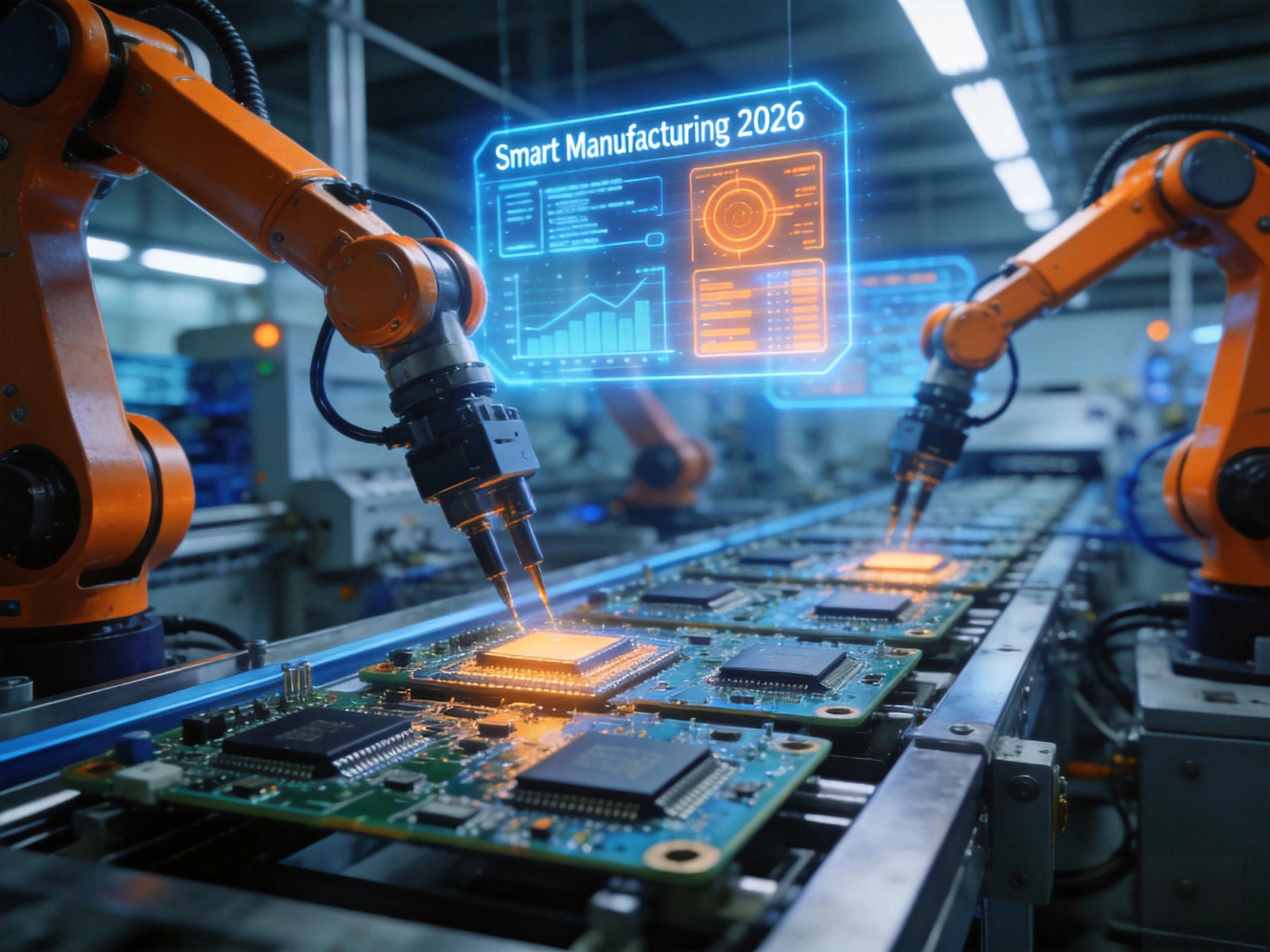
Whether you're a hardware designer choosing assembly partners, a procurement lead mapping supply chains, or an executive setting Manufacturing Strategy, these five trends represent the forces that will determine who thrives and who struggles through the rest of the decade. Let's dig into each one.
From human eyes to machine vision — the quality inspection revolution is here
Walk into a competitive Pcba facility today and you'll find Automated Optical Inspection (AOI) systems running deep learning models rather than simple rule-based algorithms. The difference isn't incremental—it's transformational.
Traditional AOI flagged defects using pre-programmed rules: is the solder joint within this geometric tolerance? Is the component aligned within this offset threshold? These systems worked reasonably well for standard packages but struggled badly with complex assemblies—fine-pitch BGAs, 0201 passives, and boards with irregular solder profiles. False reject rates ran high, and real defects still slipped through.
AI-driven inspection changes the game. By training on millions of actual solder joint images—good and bad—Machine Learning models learn to distinguish subtle patterns that rule-based systems miss entirely. A slightly irregular fillet that looks vaguely suspicious to a human inspector gets scored as acceptable or defective based on learned patterns, not arbitrary geometry thresholds. The result: false reject rates drop by 60–75%, and defect escape rates fall by 40% or more at leading facilities.
But AI's reach in 2026 extends well beyond inspection bays. Top manufacturers are using Machine Learning to predict pick-and-place feeder wear before a misplaced component happens, to optimize reflow oven temperature profiles in real time, and to identify process drift patterns that would take human engineers weeks to spot. The factory floor in 2026 is becoming a data environment where decisions that once required years of human experience are increasingly automated.
"We went from 97.4% first-pass yield to 99.1% in eighteen months after deploying AI inspection across our SMT lines. The interesting part isn't the yield number—it's that our rework labor costs dropped by nearly half, our engineering team stopped spending Fridays debugging phantom defects, and our customer returns related to solder issues fell off a cliff."
— Operations Director, Ems Provider, Northern Vietnam
For buyers and specifiers, the practical implication is straightforward: ask your PCBA providers what AI and machine learning capabilities they have deployed. The gap between factories running legacy AOI and those running AI-assisted inspection is now wider than it's ever been—and it shows up in measurable differences in defect rates, rework costs, and ultimately your product's field reliability.
As products shrink, Pcb complexity keeps climbing — and shops that can't keep up are getting left behind
Ask any consumer electronics hardware team what their biggest assembly challenge is in 2026 and you'll hear a variation of the same answer: components are getting smaller and denser faster than our Manufacturing partners can keep up. It's not an exaggeration—it's a structural shift that's permanently raised the bar for what "capable" means in PCBA.
BGAs with 0.4mm and 0.3mm ball pitches are now standard in smartphones, wearables, and automotive modules—not exotic exceptions. High-density Interconnect (HDI) boards with 10, 12, or even 20 layers are appearing in products that previously would have used simple 4 or 6-layer designs. RF and mmWave assemblies for 5G applications require controlled impedance tolerances measured in fractions of a percent, not the ±10% that was acceptable five years ago.
This complexity explosion is reshaping the competitive landscape among PCBA shops. Facilities that invested in laser drilling, advanced lamination, precision impedance testing, and RF measurement equipment are thriving—they can handle the boards that mid-tier shops simply can't. Meanwhile, shops competing purely on price for standard multilayer work are facing relentless margin pressure as that work migrates to lower-cost regions.
In 2020, you could reasonably assume most competent PCBA shops could handle your design. In 2026, that's no longer true. Boards that would have been considered advanced three years ago are now the minimum complexity in most product categories. The cost of choosing a Manufacturing partner based on price rather than technical capability is higher than it's ever been—and the failure mode (discovering they can't build your board at the wrong moment) is increasingly common.
For design and procurement teams, the trend demands a more rigorous approach to partner qualification. Equipment lists matter. Ask specifically about laser drilling capability, minimum trace and space tolerances, impedance control processes, and RF test equipment. Qualification builds—running a small pilot batch before committing to volume—are no longer a precaution; they're standard practice for any design pushing technical boundaries.
The China-centric model is giving way to a genuinely global Supply Chain — and 2026 is the inflection point
The "China Plus One" strategy that was widely discussed as a future trend five years ago is table stakes in 2026. But the reality on the ground has evolved well beyond the initial concept. Companies aren't just adding one alternative region as a hedge—they're building genuinely multi-regional supply chains with two, three, or sometimes four active production geographies.
What's driving this isn't just geopolitics or tariff exposure. It's the demonstrated vulnerability of single-region supply chains during COVID, the recognition that logistics resilience has real value, and the fact that alternative manufacturing regions have genuinely matured. Vietnam, Thailand, Malaysia, India, and Mexico now offer PCBA capabilities that would have been considered surprisingly capable a decade ago—and at meaningfully lower labor and logistics costs.
| Region | Best For | 2026 Growth Driver |
|---|---|---|
| Vietnam | Mid-complexity consumer, IoT, industrial | Fastest growth, major EMS investment |
| Thailand | Automotive, industrial, mature products | Automotive cluster, government incentives |
| Mexico | Nearshoring for US market, cost-sensitive | USMCA trade benefits, US OEM proximity |
| India | Domestic India-market electronics | PLI government incentives, growing capacity |
| Eastern Europe | EU market, automotive, industrial | EU proximity, competitive labor costs |
The cost picture has also clarified. Geographic diversification adds typically 8–15% to unit costs in the most commonly used models. But companies that experienced the 2021–2023 disruptions have done the math differently: they now compare the premium for diversification against the cost of the next major disruption—which has consistently proven to be far higher. The calculus has shifted in favor of resilience.
A practical consequence: PCBA buyers in 2026 need regional sourcing strategies as a baseline competency. This means understanding not just which regions can build your product, but which specific manufacturers have the capabilities you need, what their lead times look like, and how to qualify them. It's more work than the single-source model—but the companies doing it are sleeping better at night.
Carbon reporting, circular economy, and Green Manufacturing are becoming procurement requirements
Two years ago, Sustainability in PCBA largely meant having your RoHS documentation ready and maybe an Iso 14001 certificate on the wall. In 2026, that's no longer enough. The landscape has shifted from voluntary green initiatives to mandatory requirements flowing down from tier-1 OEMs—and the pressure is intensifying fast.
Carbon Footprint reporting is entering procurement qualification. Automotive OEMs, major consumer electronics brands, and industrial conglomerates are increasingly requiring their EMS partners and PCBA suppliers to provide Scope 1 and Scope 2 carbon emission data. Some are tying annual purchase volumes to carbon reduction commitments. For PCBA manufacturers, this means investments in energy efficiency, Renewable Energy procurement, and measurement infrastructure are becoming prerequisites for landing major accounts.
Circular economy capabilities are emerging as a differentiator. Extended Producer Responsibility (EPR) regulations are spreading globally. The EU's updated WEEE directive, plus emerging frameworks in North America and Asia, are creating legal obligations for end-of-life electronics processing. PCBA manufacturers who have built take-back programs, recycling partnerships, and responsible chemical management are increasingly preferred by customers who face their own EPR obligations.
Material transparency requirements are tightening. Reach Compliance, conflict mineral reporting, and supply chain chemical disclosure requirements are becoming more demanding. Manufacturers who haven't invested in supply chain traceability systems are finding themselves unable to serve European and North American customers in regulated industries.
"Our top three customers—two automotive OEMs and one industrial company—all asked us for carbon data in 2025. One of them tied our annual volume commitment to submitting a carbon reduction roadmap. That would have been unthinkable five years ago. It's just part of doing business now."
— Quality Director, PCBA Manufacturer, Johor, Malaysia
For buyers, Sustainability capabilities need to be part of supplier evaluation—not an afterthought. Ask about energy sources, waste management programs, chemical compliance documentation, and whether they can support your own sustainability reporting requirements. The manufacturers investing proactively in these areas are building capabilities that will become table-stakes requirements within the next two to three years.
The connected factory is here — and it's changing the economics of Electronics Manufacturing
The phrase "Smart Factory" gets used a lot, often in ways that obscure more than they clarify. In PCBA specifically, the Smart Factory transformation in 2026 has a concrete meaning: factories where every piece of equipment is networked, where production data flows in real time, and where digital models of the physical process enable decisions that were previously impossible.
The most impactful application is the digital twin—a virtual replica of the production line that updates in real time from sensor data. Leading PCBA manufacturers in 2026 are running digital twins of their SMT lines, allowing process engineers to simulate the impact of a New Product Introduction on their line balance, predict bottlenecks before they occur, and optimize feeder configurations without touching physical equipment. The result: faster ramp-up on new products, fewer unplanned stoppages, and better overall equipment effectiveness (OEE).
Beyond digital twins, the connected factory enables:
The competitive implications are significant. Manufacturers who have built this infrastructure are delivering shorter lead times, more consistent quality, and better responsiveness to changes in customer demand. Manufacturers who haven't are finding it increasingly difficult to compete for quality-focused customers—even if their base technical capabilities are solid.
Ask potential PCBA partners about their factory connectivity and data systems. Can they provide real-time production visibility? Do they have API access or portal-based tracking? How do they handle traceability data? The factories that have invested in this infrastructure are not just more efficient—they're more trustworthy partners, because their process is visible and auditable in ways that traditional manufacturing simply cannot match.
These five trends don't operate in isolation—they're reinforcing each other. AI-powered quality systems are more effective in connected factories with real-time data. Advanced packaging capabilities require manufacturers with the equipment and engineering expertise that only comes from sustained investment. Sustainability programs benefit from the same data infrastructure that enables digital twins. Geographic diversification becomes more valuable when each region's facilities are running at smart factory levels of quality and efficiency.
The companies pulling ahead in 2026 are the ones treating these trends as interconnected strategic priorities rather than isolated operational decisions. They're qualifying manufacturing partners across multiple regions, evaluating technical capabilities with rigor, asking about AI deployment and data systems, and building sustainability requirements into their procurement processes.
The companies falling behind are the ones still making sourcing decisions primarily on unit price, assuming their existing suppliers will handle whatever complexity they throw at them, and treating Supply Chain Resilience as something to address "if we have time."
The gap between those two approaches is widening. Fast.
The trends reshaping PCBA manufacturing in 2026 are clear and they're not reversing. AI Quality Control, advanced packaging, geographic diversification, sustainability requirements, and smart factory infrastructure are the forces shaping who wins and who struggles over the rest of the decade. The companies that understand these trends—and act on them deliberately—are building durable competitive advantages. Those that don't are making increasingly risky bets. The time to act is now.
It depends on where your biggest vulnerabilities are, but geographic diversification and manufacturing partner technical qualification tend to deliver the highest leverage for most companies. If you're single-source in one region, that geographic risk is probably your most urgent priority. If you have multiple regions but aren't rigorously vetting technical capabilities, the AI and advanced packaging trends are likely your biggest exposure. Start with whatever your data tells you is the biggest gap.
Yes—the performance gap is substantial and well-documented at this point. AI systems typically reduce false rejects by 60–75%, catch more real defects, and improve consistency by eliminating the variability that comes from human inspection subjectivity. The key qualifier: the AI needs to be trained on data relevant to your specific products and components. A model trained on automotive boards may not perform well on consumer IoT assemblies. Ask your provider about what their models were trained on.
Ask specific questions: What is your minimum micro-via size? What is your controlled impedance tolerance on RF boards? What equipment do you use for fine-pitch Bga inspection (X-ray is the right answer)? Can you show me a qualification build report for a board similar in complexity to mine? Do you have any Iatf 16949, Iso 13485, or AS9100 certifications if relevant to my industry? The answers—and the willingness to share supporting documentation—tell you a lot about whether their claimed capabilities match reality.
For most medium-complexity products with volumes in the hundreds to low thousands per month, yes—geographic diversification typically makes economic sense even at a 10–15% cost premium, when you factor in Supply Chain Resilience value. The breakeven calculation gets tighter for high-volume, price-sensitive products where margins are thin. But even in those cases, nearshoring for a portion of your volume as a hedge typically makes financial sense. The key is doing the full cost analysis, including logistics, inventory carrying costs, and disruption risk—not just unit price.
Almost certainly yes. The regulatory trajectory in Europe and North America points toward expanding carbon reporting mandates, more stringent chemical compliance requirements, and growing EPR obligations. The commercial pressure from tier-1 OEMs is also intensifying. Companies that build sustainability capabilities proactively now are positioning themselves to meet these requirements as they tighten. Those that wait are likely to find themselves scrambling to catch up—or losing access to customers for whom these requirements are prerequisites.
Embedded Component Technology: The Future of Ultra-Compact BoardsJuly/29/2026
AI-Driven Manufacturing: How Smart Factories are Improving PCBA YieldJuly/02/2026

Advanced Thermal Management Solutions for High-Power AI ChipsSeptember/07/2026

Flexible and Rigid-Flex PCBs: Meeting the Demand for WearablesJuly/21/2026
Handling 01005 Components and Micro BGAsJune/03/2026

The Growing Importance of Traceability and Blockchain in PCBAAugust/12/2026
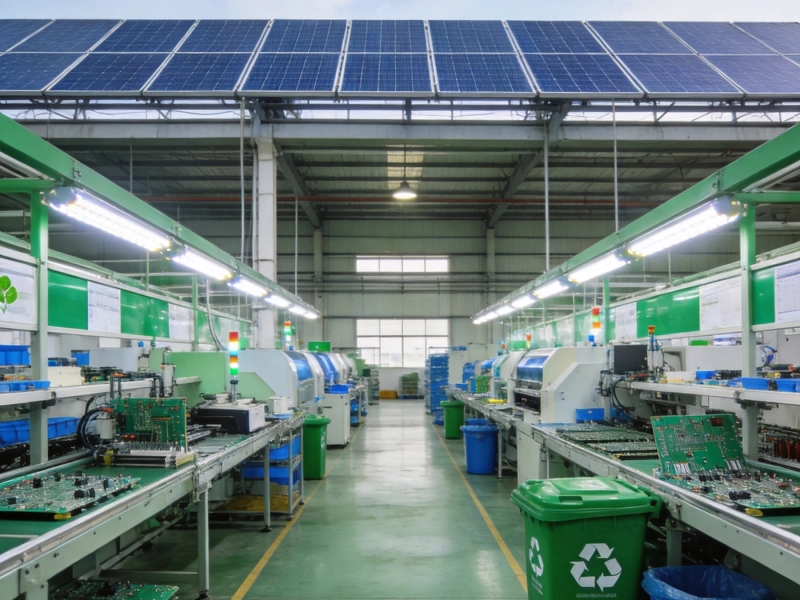
Green Manufacturing: Reducing Carbon Footprint in PCB Assembly PlantsSeptember/14/2026
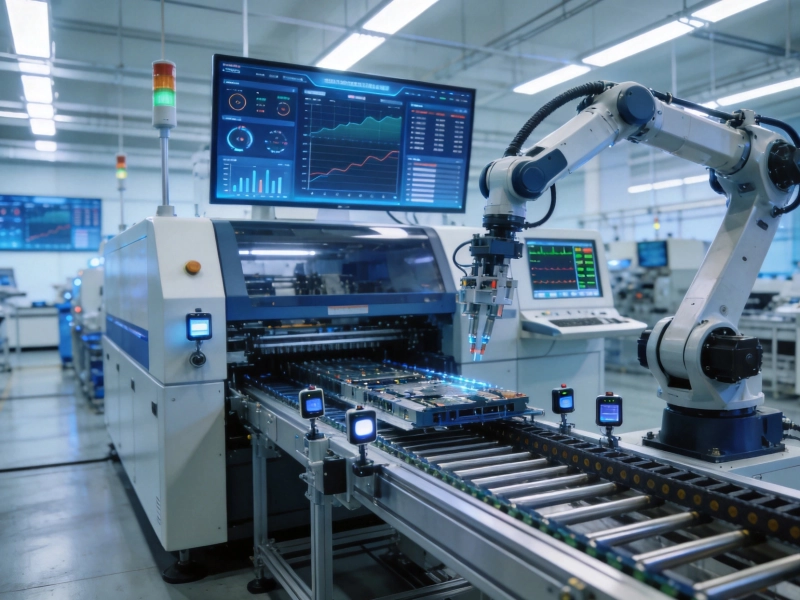
Predictive Maintenance in SMT Lines: Preventing Defects Before They HappenAugust/07/2026