Open Nav


When you're sourcing pcb assembly from a Chinese manufacturer, quality standards might feel like one of those things you know you should understand but keep putting off. You have a product to ship, timelines to meet, and honestly, you've trusted your assembly partner to handle the technical details. That approach can work up to a point, but understanding the difference between IPC Class 2 and Class 3 standards could save you from field failures, customer complaints, and expensive respots.
The Ipc Standards define acceptable quality levels for electronic assemblies, and the class you specify determines what your manufacturer will inspect, how they'll measure success, and what defect rates are considered acceptable. For products manufactured in China, most assembly shops are set up to handle both classes, but they will build to whatever standard you specify—and if you don't specify one, they might default to something that doesn't match your actual requirements.
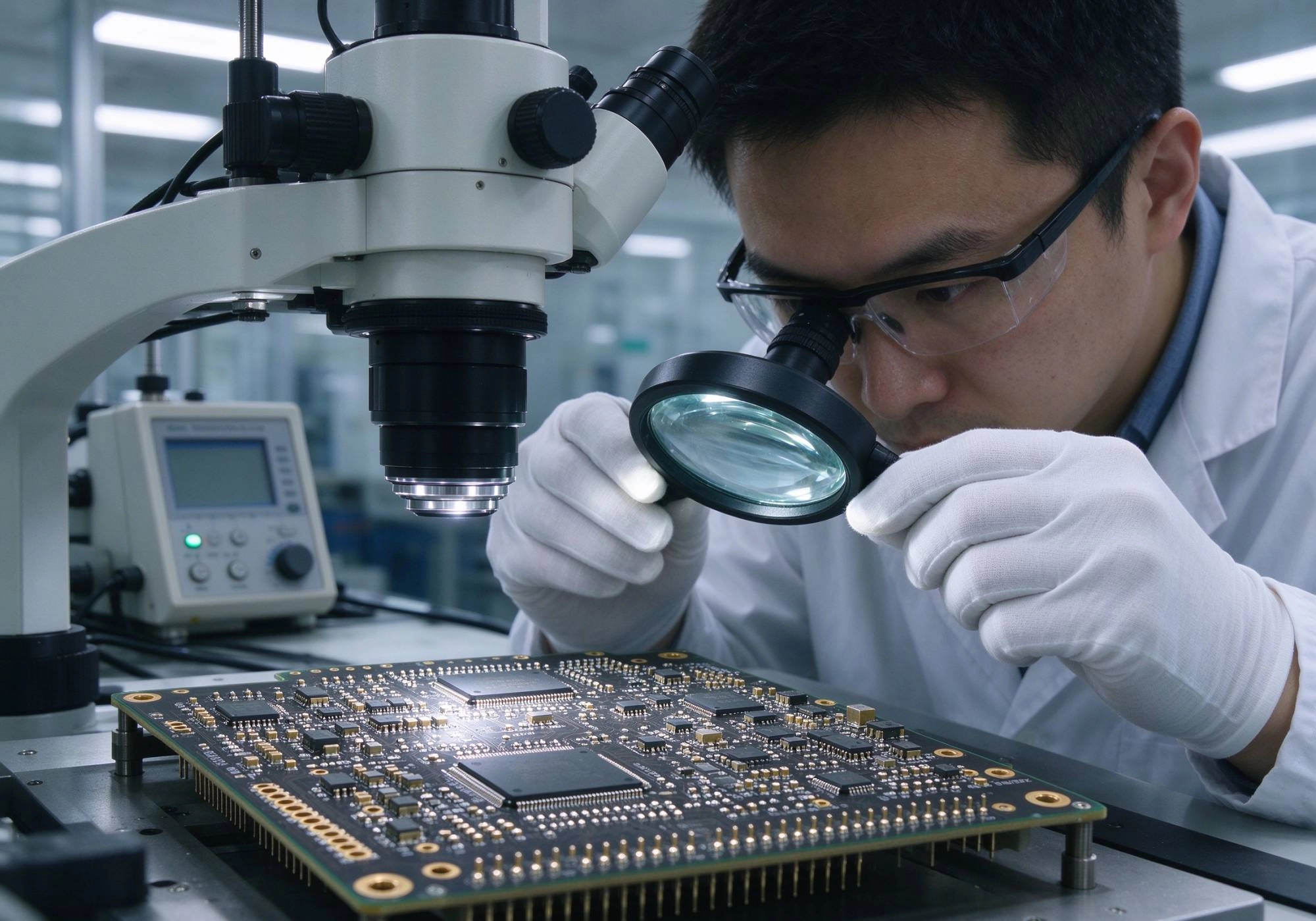
IPC is the trade organization that develops standards for the electronics industry. Their standards for pcb assembly cover everything from component placement to soldering quality to documentation requirements. The class distinctions in Ipc-a-610, the most commonly referenced standard for assembly acceptability, define three levels of product quality expectation.
These classes aren't arbitrary—they reflect the different service environments and reliability expectations for different types of products. Understanding which class applies to your product helps you communicate clearly with your assembly partner and ensures you're not overpaying for requirements you don't need or, worse, accepting lower quality than your application demands.
Class 2 covers electronic products where continued performance and extended life are required, but where service is not mandatory. These are products that should work reliably, but if they fail, it's inconvenient rather than catastrophic. Consumer electronics, communications equipment, and office machines typically fall into this category.
Under Class 2, the acceptable quality level (AQL) is more lenient than Class 3. This doesn't mean Class 2 assemblies are poorly made—quite the opposite. Class 2 products still undergo rigorous inspection, but the standard accepts some minor imperfections that wouldn't be acceptable in higher-reliability applications.
For example, a component that is slightly skewed within specified tolerances might be acceptable under Class 2 but would require rejection under Class 3. The solder joint might have a minor void or slight discoloration that would pass Class 2 inspection but fail Class 3.
Think about the electronics around your home or office. Your laptop, your router, your TV, your phone charger—most of these are built to Class 2 standards. They're designed to work reliably for years, but they're not mission-critical systems where failure could cause harm.
If you're building a consumer product, a communications device, computer peripherals, or most types of test equipment, Class 2 standards are probably appropriate for your application. You get good quality without paying for the extra inspection and process control that Class 3 requires.
Class 3 covers electronic products where continued performance or performance on demand is critical. These are products where failure could result in injury, significant property damage, or mission failure. Aerospace systems, medical devices, military equipment, and automotive safety systems fall squarely into Class 3 territory.
Class 3 assemblies are held to much tighter tolerances. The acceptable criteria for component placement, solder joint formation, and overall Assembly Quality are all more stringent. Every solder joint must meet precise standards for wetting, fillet shape, and void content.
Process control requirements are also more demanding for Class 3. Your manufacturer needs to demonstrate tighter control over their assembly processes, with more documentation and tighter process capability metrics. This translates to more inspection, more testing, and more process control—which all add to the cost of production.
If your product falls into regulated industries like medical devices, aerospace, or automotive safety systems, Class 3 compliance may be mandated by the applicable regulations. Even if regulations don't explicitly require IPC Class 3, the reliability expectations for these applications typically demand the higher standards anyway.
Beyond regulatory requirements, some companies choose Class 3 for their own quality reasons. A company with a strong brand reputation for reliability might build everything to Class 3 standards even for consumer products, accepting the higher cost in exchange for lower field failure rates and better customer satisfaction.
Understanding the practical differences between these two classes helps you make an informed decision about which standard to specify for your product.
Component placement tolerances are tighter for Class 3. For most surface mount components, Class 2 allows a certain degree of rotation and offset that would be rejected under Class 3. The exact numbers depend on the component type and body size, but the general principle is that Class 3 components must be placed more precisely.
This matters most for fine-pitch components like Bga, Qfn, or fine-pitch QFP packages where precise placement affects solder joint reliability. For components with larger leads and pads, the placement differences between classes matter less practically.
The criteria for acceptable solder joints differ notably between classes. Class 3 requires complete wetting and proper fillet formation with no visible defects. Class 2 accepts some minor imperfections like small voids, slight de-wetting, or less-than-perfect fillet shapes as long as the joint is still functional.
For high-reliability applications, even small solder joint imperfections matter because they can propagate into cracks during thermal cycling or vibration. The stricter Class 3 criteria help ensure solder joints have adequate mechanical strength and reliability over the product's expected lifetime.
Class 3 typically requires more extensive documentation of the assembly process. This includes detailed process records, inspection logs, and complete traceability from finished assembly back to component lots and production records. If a problem emerges, you need to be able to trace exactly what happened during production.
Class 2 documentation requirements are less stringent, which can simplify your quality records but might also mean less information available if problems arise. The right balance depends on your product's reliability requirements and your own Quality Management system expectations.
The sampling plans for inspection differ between classes. Class 3 uses more rigorous sampling with lower AQL levels, meaning fewer defects are accepted per sampling lot. Class 2 allows higher defect rates in the sampling plan, reflecting the different reliability expectations for the end products.
This difference in sampling affects how many assemblies get inspected and how defects are dispositioned. For Class 3, any detected defect typically requires more extensive investigation and potentially 100% inspection of the affected lots.
Choosing between Class 2 and Class 3 isn't just about quality—it's about matching your quality requirements to your product's actual needs and your business constraints.
The starting point for this decision should be your product's end use and the consequences of failure. A fitness tracker that stops working is an inconvenience. A pacemaker that malfunctions is a disaster. The reliability expectations for these two products are wildly different, and that difference should drive your IPC class selection.
If your product could cause harm or significant damage if it fails, Class 3 is probably necessary regardless of other considerations. If your product is for consumer use where occasional failures are acceptable within limits, Class 2 might be more appropriate economically.
Before deciding on Class 2, check whether your target markets have regulatory requirements that mandate Class 3. Medical devices sold in the US need to meet FDA requirements that effectively require Class 3 levels of quality. Automotive Electronics need to meet AEC-Q standards that have similar reliability expectations. Aerospace has its own requirements that are even more stringent than Class 3 in many ways.
Your assembly partner in China should be familiar with these requirements and can help you understand what's necessary for your specific application and target markets.
Some companies build everything to Class 3 standards as a brand differentiation strategy. If your brand is associated with premium quality and high reliability, using Class 2 standards might create a disconnect between your marketing and your actual product quality. Conversely, if you're competing on price, Class 2 standards might be appropriate for your market positioning.
This isn't about cutting corners—it's about making conscious tradeoffs. Class 2 assemblies can be excellent quality; the standard is designed for applications where that level of quality is appropriate.
Chinese Smt Assembly factories have become highly capable at both Class 2 and Class 3 work. The key is communicating clearly about which standard you expect and verifying that your manufacturer has the processes and certifications to deliver it.
Ask your potential assembly partner about their experience with your target class and your specific industry requirements. A manufacturer who builds Automotive Electronics all day will have the processes, documentation, and quality systems already in place for Class 3 work. A manufacturer who focuses on consumer electronics might be less set up for Class 3, even if they claim to support it.
Request a copy of their quality manual and any relevant certifications. Iso 9001 Certification is baseline; for Class 3 work, look for Iatf 16949 (automotive), Iso 13485 (medical), or other industry-specific certifications that demonstrate relevant quality system capability.
For new assemblies, particularly Class 3 work, insist on First Article Inspection. This means the manufacturer builds a small quantity first, you inspect it thoroughly, and only after approval do they proceed with full production. First Article Inspection catches problems before you've committed to a large production run.
The cost of first article inspection is trivial compared to the cost of a production run full of non-conforming assemblies. It's one of those practices that seems like overhead until you avoid your first major quality problem.
Establish clear communication channels for quality issues with your assembly partner. What happens when they detect a defect? How quickly are you notified? What documentation do you receive? These process questions matter, especially for Class 3 work where defect investigation can be extensive.
Many Chinese manufacturers have improved their quality communication significantly over the years, with dedicated English-speaking quality teams and online portals for tracking quality data. These tools make it much easier to stay on top of quality performance.
There are several persistent myths about IPC classes that cause confusion in the industry.
Class 2 does not mean poor quality. It means a different quality standard appropriate for different applications. Class 2 assemblies can be exceptionally reliable—think about how long your smartphone typically lasts compared to devices from decades ago. The improvement in consumer electronics reliability has been dramatic even as most of this industry operates to Class 2 standards.
Class 3 isn't always the right choice even if cost were no object. The tighter tolerances and more extensive inspection can cause problems with some types of assemblies. For example, if your board has components that naturally settle slightly during reflow due to their geometry, Class 3 inspection might reject a high percentage of boards that are actually functionally fine. Matching the standard to the application matters.
This was arguably true 20 years ago, but it's simply not accurate today. Many Chinese assembly factories specialize in Class 3 work for automotive, medical, and aerospace customers. They have the certifications, the process controls, and the expertise to deliver Class 3 quality consistently. The key is finding the right partner, not assuming all Chinese manufacturers are the same.
Class 3 assembly costs more than Class 2. The exact premium depends on the complexity of your assembly, the volume, and your manufacturer's specific capabilities, but you should generally expect Class 3 to cost 10-30% more than equivalent Class 2 work.
This cost premium comes from more inspection, tighter process control, more documentation, and higher reject rates during production. All of these factors add to the manufacturer's cost, which gets passed on to you.
However, the cost comparison shouldn't stop there. Consider the cost of field failures, warranty claims, customer returns, and reputational damage if your product fails in service. For high-reliability applications, the Class 3 premium is often a worthwhile investment in reducing these downstream costs.
IPC Class 2 and Class 3 represent different quality standards for different types of products. Class 2 is appropriate for most consumer and commercial electronics where failure is inconvenient but not dangerous. Class 3 is necessary for applications where failure could cause harm or significant damage.
When specifying your requirements to a Chinese Smt Assembly manufacturer, be explicit about which class you need. Don't assume they'll build to a higher standard than you specify—that's not how Manufacturing works. If you need Class 3, say so clearly and verify the manufacturer has the capability to deliver it.
Consider both regulatory requirements and your own quality goals when choosing a class. For regulated industries, Class 3 may be mandatory. For consumer products, Class 2 is often appropriate, but your brand positioning and failure cost tolerance should factor into the decision.
The right Chinese assembly partner will help you navigate these decisions and deliver assemblies that meet your actual requirements, whether those requirements are Class 2 or Class 3.
Contact us to discuss your SMT assembly requirements and quality standards for your specific application.
Addressing Warpage Issues in Thin and Flexible Circuit BoardsJune/29/2026
The Role of Conformal Coating in Protecting Your ElectronicsAugust/14/2026
Solutions for Assembling Heavy Copper PCBs in Industrial ApplicationsJune/27/2026
How Automotive Electronics are Redefining PCBA Quality StandardsJuly/01/2026
Handling 01005 Components and Micro BGAsJune/03/2026
Turnkey vs. Consignment PCB Assembly: Which Model Fits Your Project?August/08/2026
What is Turnkey PCB Assembly? A Beginner's GuideSeptember/23/2026
Optimizing Pad Design to Prevent Tombstoning and BridgingJune/05/2026