Open Nav


When partnering with a Contract Manufacturer for pcb assembly, one fundamental decision shapes your entire relationship: should you provide your own components or delegate sourcing to your Manufacturing partner? This choice between consignment and Turnkey Assembly models affects your costs, timelines, risk exposure, and day-to-day involvement in production operations.
Neither approach universally outperforms the other. The optimal choice depends on your organization's capabilities, Supply Chain expertise, capital availability, and product requirements. Understanding both models thoroughly enables decisions that align Manufacturing Strategy with business objectives.
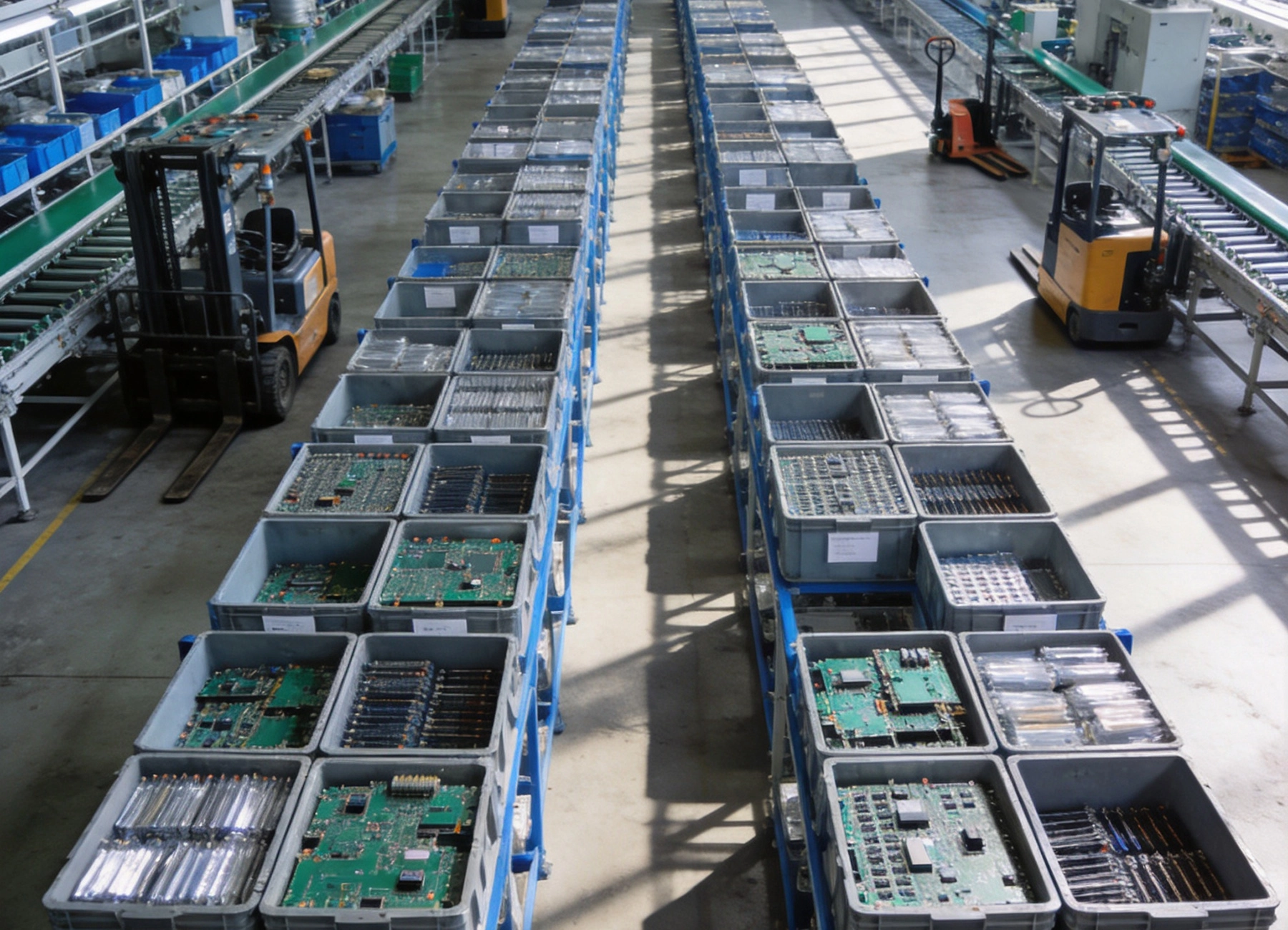
In a consignment arrangement, you—the customer—purchase and own all components required for your Pcb assemblies. You maintain component inventory at the manufacturer's facility or in your own warehouse, releasing materials to production as orders are placed. The manufacturer handles assembly, testing, and sometimes programming, but Component Procurement remains entirely your responsibility.
This model appeals to organizations with established supply chains, Component Sourcing expertise, and preference for direct control over material costs. Companies that purchase components in high volumes for multiple products may negotiate better pricing through consolidated buying, then allocate those components across various Manufacturing partners.
Consignment places inventory ownership squarely with you. While components sit in consignment stock awaiting production, your capital remains tied up in materials that haven't yet generated revenue. This carrying cost includes not just the component price but also storage expenses, insurance, and the opportunity cost of capital that could otherwise fund operations or growth.
For startups and smaller organizations, these carrying costs can strain limited budgets. For larger enterprises with access to cheaper capital and existing warehouse infrastructure, consignment might offer net cost advantages that outweigh the operational complexity.
When you source components directly, you control supplier selection and incoming inspection rigor. This direct relationship enables tight Quality Control—you can specify exact manufacturers, lot numbers, and environmental ratings that match your application requirements. Traceability from component lot to finished assembly remains straightforward since you control the entire Supply Chain upstream of assembly.
The tradeoff involves responsibility for component quality issues. If counterfeit parts enter your inventory or supplier quality problems emerge, you're accountable for resolving these issues without the buffer that manufacturing partners might otherwise provide. Robust incoming inspection protocols and supplier qualification processes become essential investments.
Turnkey Assembly places Component Procurement responsibility with your manufacturing partner. You provide Bill Of Materials specifications, and the manufacturer sources, kitting, and assembles all components as part of their service. Pricing typically includes component costs plus assembly fees, simplifying billing and reducing your administrative burden.
This model dramatically reduces your operational involvement in Supply Chain Management. Instead of tracking component availability, managing purchase orders, and monitoring lead times, you submit build instructions and receive finished assemblies ready for your next manufacturing stage or end customer shipment.
Turnkey pricing varies in transparency across manufacturers. Some provide detailed component cost breakdowns showing exactly what you pay for each part plus markup, while others bundle components into a single unit price without itemization. Understanding the pricing structure helps you evaluate whether turnkey costs align with your component procurement alternatives.
For straightforward assemblies with standard components, turnkey pricing often approaches direct procurement costs when you factor in your own procurement overhead. For complex assemblies with specialized or long-lead components, manufacturer volume relationships may deliver genuine cost advantages.
Established contract manufacturers have cultivated supplier relationships over years of operation. These relationships translate into better pricing, faster lead times, and priority allocation during component shortages. When semiconductor crises or logistics disruptions constrain availability, manufacturers with strong supplier networks often secure allocations that individual companies cannot.
Beyond relationships, manufacturers develop expertise in component lifecycle management. They recognize end-of-life announcements earlier, identify second sources for at-risk parts, and navigate allocation constraints more effectively than organizations that purchase sporadically. This expertise becomes increasingly valuable as products mature and component availability becomes less certain.
If your organization has procurement expertise and volume purchasing power, consignment may offer genuine cost advantages. Large companies often negotiate pricing tiers that smaller contract manufacturers cannot match, especially for commodity components like passives and connectors where volume discounts are substantial.
However, many organizations overestimate their procurement efficiency. True cost comparison must include procurement staff salaries, supplier management overhead, incoming inspection resources, and inventory carrying costs. When these hidden costs enter the analysis, turnkey pricing often proves competitive despite manufacturer markup.
Component shortages and long lead times create asymmetric risks between the two models. Under consignment, shortages affect your production schedule directly—you bear the full impact of supply disruptions. Under turnkey, your manufacturer shares some of this risk through their supplier relationships and buffer stock practices.
The global semiconductor shortages of recent years highlighted these risk dynamics. Companies with Turnkey Manufacturing relationships often maintained production continuity while consignment customers faced extended delays. Conversely, organizations with strong component allocation agreements through their own procurement sometimes secured parts that their contract manufacturers couldn't obtain.
Turnkey simplifies production planning by eliminating component procurement from your critical path. Once you release a build order with approved documentation, manufacturing begins without waiting for component deliveries. This predictability accelerates production scheduling and improves delivery reliability.
Consignment requires coordination between your procurement team and manufacturing schedule. Component lead times must align with production windows, requiring forecasting accuracy that proves challenging for products with unpredictable demand patterns. Missed forecasts create either inventory waste or production delays.
Early-stage startups typically lack procurement infrastructure, supply chain relationships, and capital for component inventory investment. Turnkey Manufacturing removes these operational burdens, enabling founders to concentrate on product development, customer acquisition, and fundraising rather than parts purchasing.
For prototypes and low-volume production runs common to startup development cycles, turnkey pricing often proves more economical than building procurement capabilities. As startups scale and volumes increase, the cost-benefit calculation may shift toward consignment or hybrid models.
Companies with established products and predictable demand patterns often benefit from consignment or hybrid approaches. These organizations typically have procurement teams, warehouse space, and supplier relationships that enable efficient component management. They may also have corporate agreements with distributors that provide pricing advantages unavailable to contract manufacturers.
Hybrid models emerge naturally in this segment. Companies might consignment high-value or specialized components while allowing manufacturers to source standard parts. This approach captures benefits of both models while managing their respective limitations.
Enterprise organizations with global supply chain operations often prefer consignment for strategic reasons beyond pure economics. Corporate procurement policies, supplier diversity requirements, and component standardization initiatives drive consignment decisions that optimize enterprise-wide objectives rather than individual product costs.
However, even large enterprises recognize turnkey advantages for specific product categories. New product introductions, low-volume specialized assemblies, and products entering end-of-life phases often shift to turnkey to reduce obsolescence risk and administrative overhead.
Most sophisticated manufacturing relationships incorporate hybrid approaches that allocate component categories based on strategic considerations. High-value components, customized parts, and items with strict traceability requirements often remain in consignment, while standard components, consumables, and items with volatile pricing fall to manufacturer sourcing.
This segregation requires analysis of component characteristics and negotiation with manufacturing partners willing to support split-responsibility arrangements. Not all manufacturers offer this flexibility—some prefer single-model relationships for administrative simplicity.
Some companies maintain consignment inventory for baseline production requirements while relying on turnkey for demand exceeding buffer stock levels. This approach ensures component availability for predictable volumes while retaining flexibility for demand variability without accumulating excess inventory.
Buffer sizing requires careful analysis of demand patterns, lead times, and component criticality. Insufficient buffers create shortages; excessive buffers consume capital and storage space. Regular buffer reviews based on actual demand data keep inventories optimized as products evolve.
When components transfer between ownership models—perhaps moving from consignment to turnkey as products mature—transfer pricing affects both parties' financial reporting. Clear agreements on valuation methods, timing of ownership transfer, and treatment of existing inventory prevent disputes and accounting complications.
For products moving into volume production, negotiating these transitions proactively avoids surprises. Manufacturers may prefer taking ownership of existing consignment stock to integrate into their procurement systems, while customers may prefer liquidating inventory before shifting responsibility.
Under consignment, you bear responsibility for component quality entering your supply chain. Effective incoming inspection programs verify Component Authenticity, electrical specifications, and physical condition. The investment in inspection infrastructure and staff represents a real cost that must be included in model comparisons.
Turnkey arrangements typically place incoming inspection responsibility with the manufacturer. Quality contractors assume liability for component defects that escape detection, providing a buffer against supplier quality problems. However, inspection rigor varies between manufacturers—you should verify their quality processes rather than assuming defects won't reach assembly.
Counterfeit components pose significant risks in both models, but mitigation responsibilities differ. Consignment customers must implement counterfeit prevention programs throughout their procurement process, verifying supplier authenticity through authorized channels, certificate of conformance documentation, and physical inspection techniques.
Reputable turnkey manufacturers implement counterfeit prevention as part of their standard operations. ISO 9001 and AS9100 certified facilities typically maintain counterfeit mitigation programs that satisfy aerospace and defense requirements. When sourcing for safety-critical applications, verify that your manufacturing partner's counterfeit prevention meets your specific standards.
When field failures occur, determining whether root cause traces to component quality, assembly process, or design issues requires collaboration between customer and manufacturer. Turnkey relationships may simplify this investigation since the manufacturer controls both procurement and assembly—responsibility boundaries are clearer.
Consignment arrangements create more complex fault lines. Was a premature failure caused by a marginal component from your supplier, inadequate incoming inspection that missed a defect, or an assembly process issue that the manufacturer should have detected? Clear contractual provisions for defect responsibility prevent finger-pointing during challenging quality investigations.
Contracts should clearly allocate liability for component-related failures. Under turnkey, manufacturers typically accept responsibility for component defects unless you specified exact components that proved inadequate. Under consignment, defect liability may remain with you unless the manufacturer contributed through improper handling or storage.
For products with safety implications, liability clarity becomes essential. Medical devices, Automotive Electronics, and aerospace systems carry regulatory requirements for component traceability and defect accountability. Contracts should address these requirements explicitly.
Component obsolescence affects both models but with different consequences. Consignment leaves you holding obsolete inventory that may require write-offs or expensive lifetime buys. Turnkey shifts obsolescence risk to the manufacturer, though they typically recover this risk through pricing or contractual provisions requiring you to approve component substitutions.
Long-term products benefit from obsolescence planning regardless of assembly model. Design practices that accommodate component substitutions, modular architectures that isolate obsolete sections, and proactive EOL monitoring all reduce obsolescence impact under either procurement model.
If your current model isn't working—excessive inventory costs, frequent shortages, or quality issues traced to components—transitioning to the alternative model may improve performance. Begin with honest assessment of your current capabilities and costs before assuming that the grass is greener elsewhere.
Calculate your true procurement cost including all overhead. Interview your manufacturing partners about their experiences with your current practices. Review quality records to identify component-related issues and their sources. This evidence base informs the transition analysis.
Transitions rarely happen instantaneously. Phased approaches that migrate product lines gradually allow both parties to learn and adjust. Pilot programs with single products before enterprise-wide adoption reduce risk and build confidence in new processes.
Communication between customer and manufacturer becomes critical during transitions. Clear documentation of expectations, responsibilities, and交接 protocols prevents confusion that could disrupt production. Regular review meetings during the transition period address issues before they escalate.
Turnkey assembly includes component procurement as part of the manufacturer's service—you pay for finished assemblies including all materials. Consignment assembly separates these responsibilities—you purchase and own components, paying only for assembly services. The key distinction is who owns and manages component inventory.
Neither model universally offers lower costs. Consignment can provide cost advantages for organizations with strong procurement volume, existing supplier relationships, and efficient Inventory Management. Turnkey often proves cost-competitive when accounting for procurement overhead that organizations overlook. The comparison requires detailed analysis of your specific situation.
Yes, many companies use different models for different products based on volume, complexity, and strategic considerations. High-volume established products may suit consignment while new products or specialized assemblies use turnkey. Hybrid approaches also work well for products with mixed component characteristics.
Component shortages create different impacts. Under consignment, shortages directly affect your production—you bear full responsibility for securing alternate sources. Under turnkey, your manufacturer shares shortage risk and can leverage their supplier relationships to find alternatives. However, turnkey customers may face last-time-buy pressure or expedited shipping costs passed through as higher component pricing.
ISO 9001 provides baseline Quality Management system verification. Automotive applications require Iatf 16949, medical devices need Iso 13485, and aerospace applications specify AS9100. These certifications verify that manufacturers maintain processes for Component Handling, inspection, traceability, and defect management regardless of procurement model.
Evaluate your current capabilities and priorities. If you lack procurement expertise, have limited capital for inventory, or are scaling rapidly, turnkey likely suits you better. If you have established supply chains, volume purchasing advantages, or require specific component sources, consignment or hybrid approaches may optimize costs and control.
Choosing between turnkey and consignment pcb assembly fundamentally shapes your manufacturing partnership and operational requirements. Turnkey offers simplicity, shared supply chain risk, and reduced administrative burden—advantages that particularly benefit startups and organizations without procurement infrastructure. Consignment provides greater control, potentially lower component costs, and direct supplier relationships—benefits that appeal to larger organizations with established supply chain capabilities.
The decision shouldn't rest on assumptions or industry惯例. Calculate your true procurement costs including overhead, evaluate your supply chain capabilities honestly, and project how each model scales with your growth trajectory. Consider hybrid approaches that capture benefits from both models rather than forcing an either/or choice.
Whatever model you choose, strong manufacturing partnerships require clear communication, mutual understanding of responsibilities, and aligned incentives for quality and efficiency. The best model is the one that supports your product strategy, fits your organizational capabilities, and enables competitive pricing as your business evolves.
What is PCB Assembly? A Beginner's Guide to the BasicsMay/22/2026
What is the difference between Surface Mount Technology (SMT) and through-hole assembly?June/04/2026

What is Reflow Soldering and Why Does the Temperature Profile Matter?July/14/2026
Common PCB Assembly Defects and How to Spot Them VisuallyJuly/30/2026
PCB Fabrication and Assembly: What's the Difference?September/30/2026
A Simple Explanation of Wave Soldering for Mixed-Technology BoardsJuly/22/2026

The Role of Conformal Coating in Protecting Your ElectronicsAugust/14/2026
Custom Box Build Assembly: Integrating Mechanics and Electronics SeamlesslySeptember/03/2026