Open Nav


When hardware development teams need circuit boards assembled, the choice between quick turn assembly and standard production is rarely straightforward. Both approaches produce functional, reliable assemblies, but they serve fundamentally different purposes in the product development lifecycle. Making the right choice impacts timelines, budgets, and ultimately the quality of the final product. Understanding what distinguishes these two Manufacturing paradigms enables engineering teams to align their sourcing strategy with their actual needs at each stage of development.
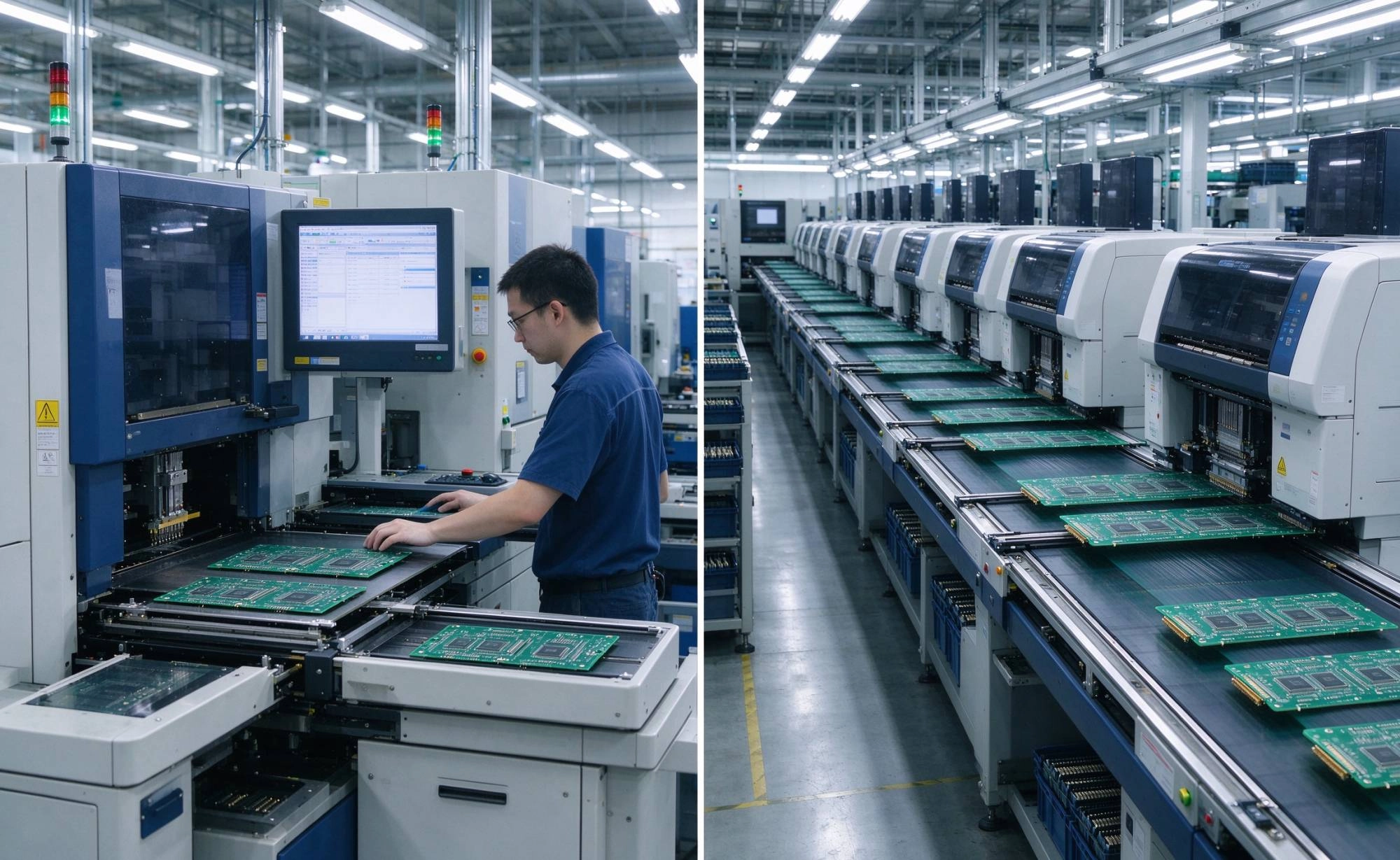
quick turn pcb assembly prioritizes speed above all other factors. Where standard production lead times are measured in weeks, quick turn services deliver assembled boards in days. The typical quick turn window ranges from 24 hours to 10 business days depending on board complexity and the specific service tier selected. This accelerated timeline serves engineers who need functional prototypes to validate designs, demonstrate concepts to stakeholders, or test hardware-software integration before committing to volume production.
The quick turn model works by accepting certain tradeoffs that enable faster throughput. Component inventory is typically limited to common passives and frequently-used ICs available from in-house stock. Boards are processed in small batches through dedicated expedited queues rather than waiting for production slots alongside larger orders. Engineering review steps are streamlined, and change orders after board release are handled with minimal disruption because the Manufacturing schedule has been designed for flexibility.
This model has become essential for modern hardware development. In an era where software iteration cycles compress monthly or weekly, hardware teams that must wait months for prototypes create bottlenecks that compound throughout the development process. Quick turn assembly bridges the gap between design completion and market feedback, enabling the iterative cadence that competitive product development demands.
Standard production assembly, sometimes called volume or mass production assembly, optimizes for cost efficiency and scale rather than speed. Lead times typically range from three to six weeks depending on component availability and production scheduling. This extended timeline reflects the different priorities of volume manufacturing: maximizing equipment utilization, minimizing setup overhead, and achieving the lowest possible per-unit cost through batch efficiency.
Standard production requires more extensive preparation before manufacturing begins. Component Procurement for volume orders may involve forecasting demand months in advance, qualifying alternate suppliers for critical parts, and building buffer inventory to protect against Supply Chain disruptions. Design data undergoes thorough Dfm Review, and manufacturing tooling such as stencils, fixtures, and test programs are created and validated before production commences. These investments in preparation amortize across larger order quantities, making them economically sensible for production volumes starting at approximately 100 units.
The Quality Management systems applied to standard production also tend to be more rigorous than those for prototype runs. Incoming inspection of components verifies that supplier lots meet specification before assembly. Statistical process control during manufacturing tracks key quality indicators and triggers corrective action when trends deviate from targets. End-of-line testing including ICT, AOI, and functional test generates data that feeds continuous improvement programs. For products where field reliability directly impacts business outcomes, these quality investments are not optional.
Lead time is the most visible difference between quick turn and standard production, but the actual time gap is more nuanced than simple calendar days. Quick turn services typically deliver assembled boards in 3 to 10 business days for standard complexity. Some providers offer 24-hour or 48-hour express service for simple boards with readily available components, though these premium tiers carry substantial cost premiums and limited availability.
Standard production lead times from Chinese contract manufacturers commonly range from 15 to 30 business days for orders of 100 to 500 units, plus shipping time which adds another 5 to 15 days for air freight or 25 to 40 days for ocean freight. Total elapsed time from order placement to boards-in-hand for standard production therefore often spans 6 to 12 weeks, a timeframe that is entirely reasonable for volume production but unacceptable for prototype-dependent development workflows.
It is worth noting that component lead times have become increasingly unpredictable in recent years. Components specified for standard production orders may carry lead times of 20 weeks or more, particularly for specialized ICs, certain MLCC capacitors, and memory devices. Quick turn services can sometimes source from existing inventory, but they face the same supply constraints for long-lead components. Both models benefit from early engagement with manufacturers to identify potential bottlenecks before they derail project schedules.
The per-unit economics of quick turn assembly are substantially different from standard production, and the comparison requires understanding what drives these differences. Quick turn services carry premium pricing that reflects the cost of maintaining expedited manufacturing capacity, keeping component inventory on hand, and processing small orders through streamlined workflows. Setup costs that would be amortized across hundreds of units in volume production are instead absorbed in quick turn pricing because the order quantities are small.
A single assembled prototype board from a quick turn service might cost 5 to 20 times the per-unit cost of the same board produced in volume. A 50-unit quick turn assembly run might carry a 2x to 5x cost premium per board compared to volume pricing. These multiples narrow as order quantities increase, but quick turn services remain more expensive on a per-unit basis than dedicated production runs for any quantity.
The true cost comparison, however, must account for total program economics rather than unit price alone. The cost of delayed prototypes measured in engineering time, missed market windows, and accumulated interest on capital invested in unused inventory dwarfs the per-unit cost premium of quick turn services during development. A prototype program that takes 12 weeks instead of 3 weeks to complete delays the identification of design flaws, extends the total development timeline, and pushes revenue recognition correspondingly later. When these program-level costs are included in the analysis, quick turn pricing is often the more economical choice for development-stage work.
How components are sourced represents one of the most consequential differences between the two models. Quick turn assembly services maintain inventories of commonly-used components specifically to enable rapid fulfillment. Resistors, capacitors, and inductors in standard EIA sizes are typically stocked in large quantities covering the full value ranges used in most designs. Popular microcontrollers, voltage regulators, memory devices, and discrete semiconductors are carried as well, though inventory breadth varies significantly between providers.
When a quick turn design requires components not in stock, the service either identifies substitutes that meet functional requirements or quotes the order with extended lead time while sourcing the specific part. Some quick turn providers maintain relationships with distributors that enable same-day component fulfillment for common parts, while others are more limited. Understanding a provider's component inventory before committing to a quote prevents unpleasant surprises when designs require unavailable parts.
Standard production assembly typically involves dedicated Component Procurement as a line item in the production quote. The manufacturer may source all components from approved vendor lists, or the customer may supply components directly. Dfm Review often includes BOM analysis that identifies components with long lead times or single-source dependencies, enabling proactive qualification of alternates before production begins. This deliberate procurement approach eliminates the substitution risk inherent in quick turn inventory-based sourcing but requires more planning and lead time.
Hardware development is inherently iterative, and the manufacturing model should accommodate design changes without excessive friction. Quick turn services excel at handling design revisions because their streamlined processes are designed for exactly this scenario. A schematic change that requires a board respin can often be accommodated within days if the new components are in stock, enabling design iterations that would be impossible on standard production timelines.
Change orders on standard production runs are more problematic. Once a production order has been released to the manufacturing floor, changes may require cancellation of the existing order, re-procurement of components, re-tooling of fixtures, and rescheduling of production slots. These disruptions carry real costs that manufacturers appropriately pass on to customers. Design changes on production orders should be considered exceptional circumstances rather than routine occurrences, which means standard production works best for designs that have been validated through prototyping.
The practical implication is that quick turn and standard production serve different phases of the development lifecycle. Quick turn assembly is the right choice for initial prototypes, design iterations, and small pilot builds. Standard production is the right choice for designs that have completed validation and are ready for market launch or volume deployment. Using the wrong model in either direction — whether waiting 8 weeks for initial prototypes or paying quick turn premiums for production orders — degrades either development velocity or program economics.
Both quick turn and standard production assemblies can meet high quality standards when manufactured by competent providers. The quality of the assembly process itself — Solder Paste Printing, component placement accuracy, reflow profile control — is determined by the equipment and process discipline of the manufacturer, not by whether the service is labeled quick turn or standard production. A well-run quick turn facility produces assemblies that are electrically and mechanically equivalent to those from a well-run production facility.
Where quality systems diverge is in the comprehensiveness of inspection and testing. Standard production assemblies typically include full Aoi Inspection, in-circuit testing, and functional testing as standard process steps. These tests add time and cost but catch assembly defects before boards ship to customers. Quick turn assemblies may include only basic inspection or may offer these tests as optional add-ons that extend delivery time and cost.
For prototypes intended to validate design functionality rather than qualify manufacturing processes, the reduced testing on quick turn assemblies is often acceptable. Prototype boards that will be probed, modified, and reworked may not benefit from the same test rigor as production boards destined for end users. Understanding which testing level is appropriate for each build prevents paying for unnecessary inspection while ensuring that boards used for design validation meet the functional requirements of their purpose.
Quick turn assembly is the appropriate choice in several scenarios that are common in hardware development. New product development requiring functional prototypes benefits enormously from quick turn services because every design iteration cycle shortened is a week or more saved in the overall schedule. Prototypes for firmware development must arrive quickly enough to keep software engineers productively engaged rather than waiting idly for hardware. Design verification testing that requires multiple hardware variants to identify optimal solutions benefits from the iteration speed that quick turn enables.
Engineering samples for customer demonstrations, trade show exhibits, and investor presentations create legitimate urgency that standard production timelines cannot accommodate. Even when the production design is not finalized, having functional hardware that represents the product direction enables stakeholder feedback that shapes final specifications. Similarly, replacement boards for field failures or emergency repairs benefit from quick turn availability when the alternative is extended system downtime.
Low-volume production for niche markets, custom configurations, or limited edition products may never justify the tooling and setup costs of standard production. Quick turn services provide a path to production for these applications without requiring large upfront inventory commitments. The per-unit cost premium is acceptable when the alternative is zero production or excessive dead inventory.
Standard production becomes the appropriate choice when design stability has been established and volume commitments have been made. Transitioning from Prototype To Production is a significant milestone that should not be taken lightly. Only after design validation testing has confirmed that the hardware meets functional, thermal, and reliability requirements should standard production be considered. Premature production release before design validation invites expensive field failures, customer returns, and potentially damaging recalls.
Volume requirements that exceed approximately 100 to 200 units generally favor standard production economics even after accounting for the higher per-unit pricing of smaller runs. The total cost savings from volume pricing, more comprehensive testing, and reduced labor overhead per unit accumulate rapidly at scale. For products with projected lifetimes measured in years and production volumes in the thousands, the investment in standard production qualification pays for itself many times over.
Products requiring regulatory certification benefit from standard production because certification testing requires consistent manufacturing processes and documented production controls. Certifications such as UL, CE, and FCC involve testing of production-equivalent units under conditions that simulate normal use. Boards assembled on quick turn timelines with non-standard processes may not meet the manufacturing consistency requirements that certification bodies expect.
The transition from Prototype To Production is a critical inflection point in any hardware program that deserves careful planning. The transition should begin before the final prototype has been fully validated, while there is still time to address any design changes that the transition process reveals. Identifying production bottlenecks, qualifying alternate component sources, and building relationships with production partners are activities that require lead time and should begin during the prototype phase.
First Article Inspection (FAI) is a standard practice for validating that production processes can manufacture the design to specification. FAI involves detailed comparison of initial production units against design requirements, documenting any deviations and their root causes. A successful FAI provides confidence that the design is production-ready. A failed FAI that identifies manufacturing issues is far better discovered before committing to volume production.
Gradual ramp-up rather than immediate full-scale production is advisable for most new products. Starting with a pilot run of 100 to 500 units validates the production process at limited risk before scaling to the full production volumes required for market launch. This cautious approach catches early production issues while the cost impact of any necessary corrections remains manageable.
What is the typical lead time for quick turn pcb assembly?
Quick turn assembly typically ranges from 3 to 10 business days for standard complexity boards with in-stock components. Express options of 24 to 48 hours are available from select providers at significant premium pricing. More complex boards or components requiring procurement extend these timelines correspondingly.
How much does quick turn assembly cost compared to standard production?
Quick turn assembly typically carries a 2x to 10x cost premium per unit compared to standard production pricing, depending on order quantity and complexity. For single prototypes, this premium is unavoidable but acceptable given the development velocity it enables. For 10 to 50 unit runs, the premium narrows to approximately 2x to 5x.
Can quick turn assembly match the quality of standard production?
Yes, when performed by qualified manufacturers. The assembly process quality depends on equipment, process control, and operator expertise rather than on whether the service is labeled quick turn or standard production. However, standard production assemblies typically include more comprehensive testing as standard procedure, which quick turn may offer as optional upgrades.
When should a project transition from quick turn to standard production?
Transition to standard production only after design validation testing confirms that the hardware meets all functional, thermal, and reliability requirements. Any design changes identified during validation must be resolved before production release. Premature production release risks expensive field failures and potential recalls.
Do quick turn services support Bga and fine-pitch components?
Many quick turn providers support Bga and fine-pitch assembly, though capability varies significantly between providers. When fine-pitch components are required, confirm the provider's experience with specific package types and pitch dimensions before placing orders. Some quick turn services may have limitations on the smallest pitch they can reliably assemble.
Contact us to discuss your requirements.
What is Turnkey PCB Assembly? A Beginner's GuideSeptember/23/2026
Designing for Testability (DFT): Placing Test Points for ICT and FCTJuly/31/2026

China's Role in the Global PCB Assembly Ecosystem: A 2026 UpdateAugust/11/2026
How to Read an IPC-A-610 Standard for Electronic AssembliesSeptember/08/2026
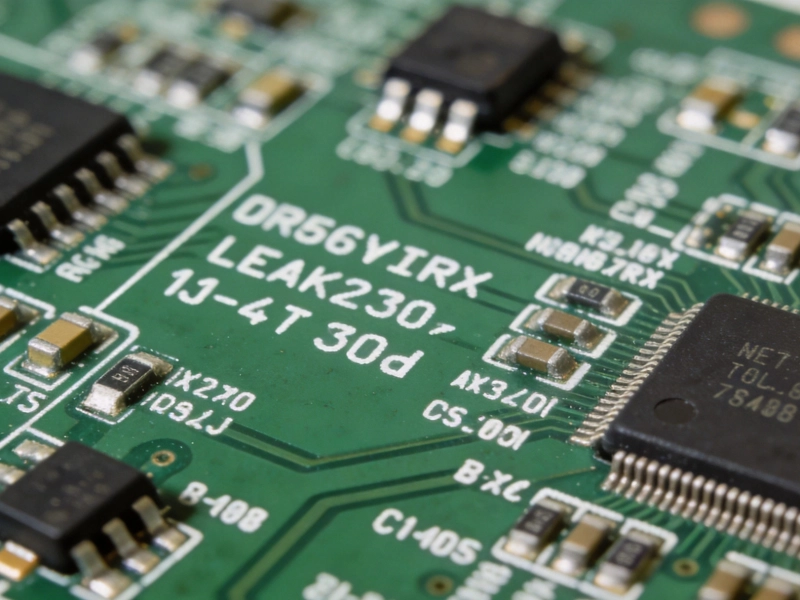
Silk Screen Best Practices: Improving Readability and Assembly EfficiencySeptember/15/2026
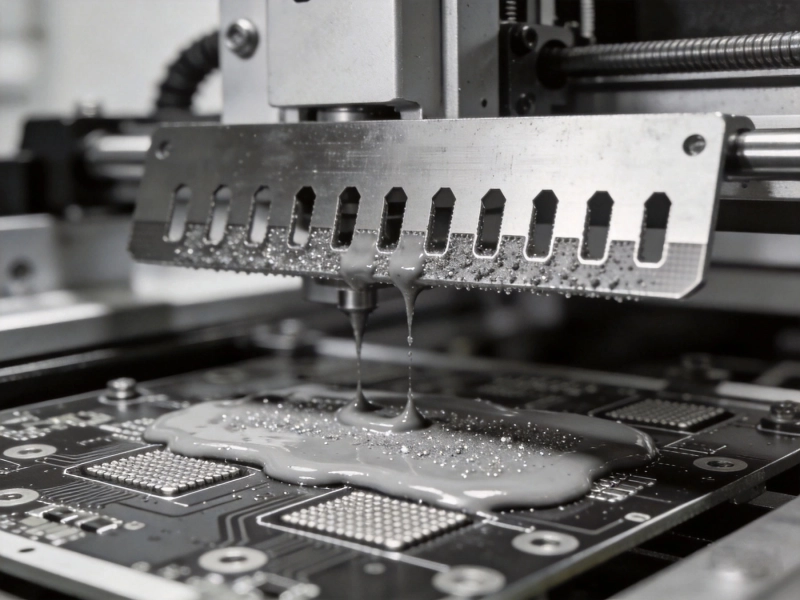
The Science of Solder Paste Printing: Stencil Design Best PracticesJune/17/2026
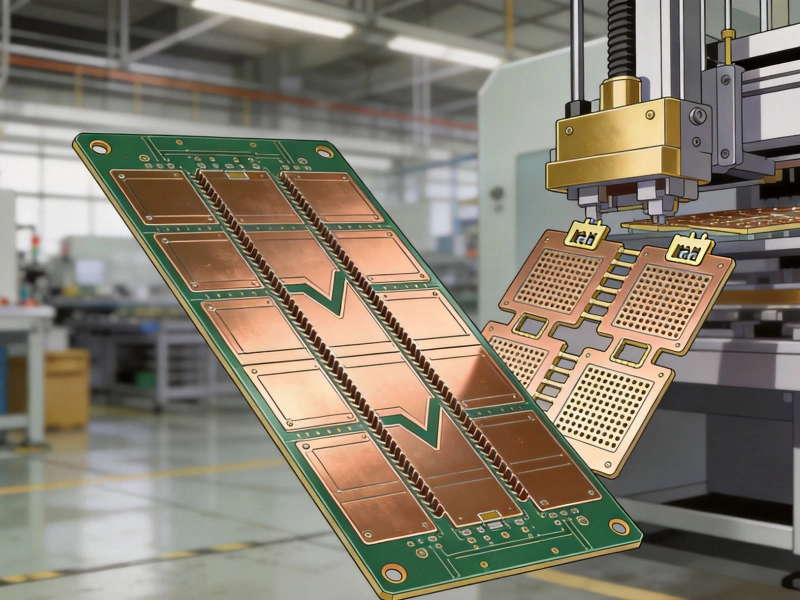
Panelization Strategies: V-Scoring vs. Tab Routing for Efficient DepanelingJuly/07/2026

Thermal Relief Design: Balancing Heat Dissipation and SolderabilityJuly/23/2026