

In today's fiercely competitive electronics market, the gap between product conception and market availability often determines commercial success or failure. Companies that deliver innovative products quickly capture market share, establish brand recognition, and achieve sustainable competitive advantages. Those caught in lengthy development cycles watch opportunities slip away to faster-moving competitors who reach customers first with comparable offerings. This market reality has transformed time-to-market from a nice-to-have into a critical strategic imperative that shapes every aspect of product development—including how companies approach Electronics Manufacturing.
One-stop Pcb Assembly solutions have emerged as a powerful tool for compressing product development timelines. By consolidating fabrication, Component Sourcing, assembly, and testing under a single provider, these services eliminate the coordination overhead, communication delays, and process gaps that fragment traditional multi-vendor approaches. Understanding how to leverage one-stop assembly effectively—and avoiding the pitfalls that can undermine its time-to-market benefits—provides hardware development teams with a significant competitive advantage.

Before exploring one-stop solutions, understanding why traditional approaches slow product development helps clarify the value proposition. The conventional Electronics Manufacturing model involves separate relationships with multiple specialized suppliers: a Pcb fabricator for bare boards, one or more component distributors for parts, an assembly house for soldering and placement, and possibly additional vendors for testing and inspection.
Each supplier relationship carries inherent coordination overhead. Purchase orders must be issued, specifications communicated, delivery schedules coordinated, and quality standards aligned. When problems arise—and they always do in product development—resolution requires communication across multiple organizations, each with their own priorities, processes, and constraints.
Timeline dependencies create cascading delays. Bare boards must arrive before assembly can begin. Components must be available when assembly lines are ready. Testing equipment must be configured before finished boards can be validated. Any delay in one stage cascades through subsequent stages, multiplying the impact of single-source problems.
Quality accountability becomes ambiguous when multiple suppliers contribute to the final product. A field failure might stem from fabrication defects, component quality issues, assembly problems, or design errors. Determining root cause requires investigation across supplier boundaries, with each vendor naturally inclined to deflect blame elsewhere. Resolution takes longer, and preventive action remains uncertain.
Inventory Management complexity increases with supplier count. Each vendor maintains their own lead times, minimum order quantities, and delivery schedules. Stocking components across multiple suppliers while coordinating with fabrication and assembly creates Inventory Management challenges that consume management attention and working capital.
One-stop Pcb Assembly addresses these friction points by consolidating responsibility under a single provider. The time-to-market benefits emerge through several interconnected mechanisms.
Eliminated Coordination Overhead
With a single provider managing the complete Manufacturing chain, the coordination burden shifts from the customer's organization to the provider's internal processes. One purchase order triggers the entire Manufacturing sequence. One specification document communicates requirements across all manufacturing stages. One point of contact handles questions, problems, and change requests.
This consolidation dramatically reduces the management time required to bring a product to manufacturing. Engineering teams can focus on design optimization rather than supplier management. Procurement staff handle fewer transactions and relationships. Project managers track fewer critical paths and dependencies.
Parallel Processing Capabilities
Sophisticated one-stop providers can execute manufacturing stages in parallel that would be sequential under multi-vendor arrangements. While bare boards are being fabricated, Component Procurement proceeds simultaneously. Assembly programming and fixture preparation occur before boards arrive, rather than after. Testing protocols are developed while earlier stages progress.
This parallelization can compress total manufacturing time by 30% to 50% compared to sequential approaches. A product that might take twelve weeks through traditional channels could be ready in six to eight weeks through an optimized one-stop provider.
Reduced Interface Delays
Every handoff between suppliers introduces delay. Boards must be packaged, shipped, received, and inspected at each transfer point. Documentation must be verified. Quality must be confirmed. Each interface adds days to the timeline, often for activities that add no value to the final product.
One-stop providers internalize these transfers. Boards move from fabrication to assembly within the same facility or logistics network, often without leaving the provider's control. The time saved from eliminating inter-supplier transfers directly reduces total development time.
Integrated Quality Systems
Quality problems detected late in the manufacturing process cause disproportionate delays. A fabrication defect discovered during assembly testing requires not just rework of the affected boards, but potentially reorder of bare boards, rescheduling of assembly capacity, and coordination with component suppliers who may have already committed inventory.
Integrated one-stop quality systems catch problems earlier, when correction is faster and less expensive. Fabrication quality issues are identified before assembly begins. Component quality problems are caught before they enter the assembly process. Assembly defects are detected through in-process inspection rather than final test. Earlier detection means faster resolution and less timeline impact.
Simply selecting a one-stop provider doesn't automatically deliver time-to-market benefits. Maximizing the advantages requires strategic approaches to the relationship.
Early Engagement During Design
The most effective one-stop relationships begin during product design, not after design completion. Early engagement allows the manufacturing partner to provide design-for-manufacturability feedback that prevents problems rather than solving them after they occur. Component selection guidance, layout recommendations, and process capability insights all contribute to designs that move smoothly through manufacturing.
Engagement during design also enables parallel preparation. While design proceeds, the one-stop provider can prepare assembly programs, procure long-lead components, and develop testing protocols. When the design is finalized, manufacturing can begin immediately rather than waiting for preparation activities that could have proceeded in parallel.
Component Strategy Integration
Component selection significantly affects both design performance and manufacturing timeline. Components with long lead times, single-source availability, or complex procurement requirements can extend manufacturing schedules regardless of how efficient the assembly process might be.
One-stop providers with strong Component Sourcing capabilities can guide component selection toward parts with reliable availability and shorter lead times. They can identify second-source alternatives that maintain design performance while improving supply security. For components with extended lead times, they can manage buffer inventory that protects against stockout delays.
This sourcing guidance should inform design decisions from the beginning. Selecting components based on availability and supply reliability—not just electrical specifications—prevents the procurement delays that derail accelerated timelines.
Testing Strategy Alignment
Testing represents a significant portion of total manufacturing time and a frequent source of delays when requirements aren't clear. One-stop providers need clear testing specifications that define what must be verified, how it will be verified, and what acceptance criteria apply.
Developing testing strategy in collaboration with the manufacturing partner ensures that test coverage requirements are achievable with available equipment and within reasonable timeframes. Unrealistic testing requirements—100% functional testing of every possible operating mode, for example—may be theoretically desirable but practically infeasible within compressed timelines.
Test fixture design, programming, and validation should proceed in parallel with other manufacturing preparation activities. Waiting until boards are ready to begin test development extends the timeline unnecessarily.
Even with one-stop providers, certain mistakes can eliminate the time-to-market advantages that should flow from consolidated manufacturing.
Poor Communication of Requirements
One-stop providers can only deliver what they're asked to deliver. Vague specifications, incomplete documentation, and unstated assumptions create the same problems that plague multi-vendor relationships. A provider who receives unclear requirements must either make assumptions that may not match customer expectations, or stop work to seek clarification—both of which consume time.
Effective communication requires complete documentation: complete design files, detailed bills of materials with manufacturer part numbers and approved alternates, assembly drawings with clear orientation indicators, and test specifications with explicit acceptance criteria. The time invested in thorough documentation pays dividends in reduced clarification cycles and faster manufacturing progress.
Design Changes After Commitment
Product development involves iteration, and design changes are often necessary as learning accumulates. However, changes after manufacturing commitment create delays that one-stop consolidation cannot prevent. A design change after bare boards have been fabricated may require new board fabrication. A component change after procurement has begun may require component returns and re-procurement.
Minimizing post-commitment changes requires disciplined design freeze processes and realistic assessment of design maturity before manufacturing commitment. Early engagement with manufacturing partners helps identify design issues before commitment, reducing the need for later changes.
Unrealistic Timeline Expectations
One-stop assembly accelerates manufacturing, but it doesn't eliminate manufacturing time. Bare boards still require fabrication cycles. Components still have procurement lead times. Assembly still requires process time. Testing still takes time to execute properly.
Unrealistic expectations—expecting one-week delivery for a product that requires four weeks of manufacturing—create friction and disappointment regardless of how efficient the provider might be. Understanding realistic manufacturing timelines and building appropriate schedule margins prevents the crisis management that often accompanies unrealistic commitments.
Inadequate Supplier Qualification
Not all one-stop providers deliver equivalent capabilities. Providers vary significantly in their technical capabilities, quality systems, equipment capacity, and process maturity. Selecting a provider based solely on price or marketing claims, without adequate qualification, risks the quality problems and delays that consolidation was intended to prevent.
Thorough supplier qualification—including capability audits, process capability verification, quality system assessment, and reference checks—identifies providers who can actually deliver the time-to-market benefits promised. Cutting corners on qualification to save time typically costs more time when problems emerge during production.
Effective time-to-market improvement requires measurement—understanding current performance, setting improvement targets, and tracking progress against those targets.
Manufacturing Cycle Time
The most direct measure is manufacturing cycle time: elapsed time from design release to finished product availability. This metric captures the consolidated manufacturing efficiency that one-stop solutions should improve. Track cycle time by product family, product complexity, and manufacturing partner to identify patterns and improvement opportunities.
First-Pass Yield
First-pass yield—the percentage of boards that pass all tests without rework—directly affects effective manufacturing time. Low first-pass yield creates rework loops that extend delivery schedules. One-stop providers should demonstrate higher first-pass yield through integrated quality systems and process control.
Design-to-Delivery Time
A broader metric captures the complete development cycle from initial concept to market availability. While manufacturing is only one component of this timeline, manufacturing efficiency contributes significantly to overall time-to-market. Understanding how manufacturing time fits into the larger development picture helps prioritize improvement investments.
Schedule Variance
Tracking actual delivery dates against committed delivery dates reveals the reliability of time estimates. Providers who consistently miss commitments, even by small margins, create planning uncertainty that undermines time-to-market benefits. Schedule adherence matters as much as cycle time reduction.
Several technological capabilities distinguish one-stop providers who can truly accelerate time-to-market from those who merely claim to.
Advanced SMT Equipment
Modern pick-and-place machines achieve placement rates exceeding 100,000 components per hour with micron-level accuracy. This speed enables high-throughput assembly that compresses manufacturing time without sacrificing quality. Equipment capabilities directly affect how quickly large production runs can be completed.
AOI systems provide rapid, consistent defect detection that enables immediate correction rather than discovering problems at final test. High-speed Aoi Inspection adds minimal time to the assembly process while significantly improving first-pass yield through early defect detection.
X-Ray Inspection Capability
BGAs, QFNs, and other bottom-terminated packages require X-ray inspection to verify solder joint quality. One-stop providers with in-house X-ray capability can complete inspection without outsourcing delays, maintaining the integrated timeline that makes one-stop approaches attractive.
Flexible Manufacturing Systems
Modern SMT lines with quick-changeover capabilities can switch between products rapidly, reducing setup time that would otherwise extend manufacturing schedules. Flexibility to handle varying product mixes without lengthy changeover delays improves responsiveness to customer needs.
Digital Integration and Visibility
Providers with digital manufacturing systems offer customers visibility into production status, quality data, and delivery schedules. This transparency enables proactive management and early identification of potential delays. Digital integration between customer systems and provider systems can streamline order processing, documentation exchange, and status reporting.
The time-to-market benefits of one-stop assembly compound over multiple product generations as the customer-provider relationship matures. Sustainable partnerships deliver better outcomes than transactional relationships that reset with each new product.
Relationship Investment
Strong relationships enable the trust and communication efficiency that accelerate product development. Providers who understand a customer's products, processes, and priorities can respond more quickly and effectively than providers who treat every order as a new engagement. Invest relationship-building time with key manufacturing partners.
Process Alignment
Over time, customer and provider processes can align to eliminate friction and accelerate collaboration. Standardized documentation formats, established communication protocols, and familiar quality requirements all reduce the coordination overhead that consumes time in new relationships.
Continuous Improvement Collaboration
The most productive partnerships involve continuous improvement initiatives that systematically reduce cycle times, improve quality, and lower costs. Joint process improvement projects, regular performance reviews, and shared learning from both successes and failures all contribute to accelerating time-to-market across product generations.
Capacity Planning Coordination
For products with predictable demand patterns, capacity planning coordination with manufacturing partners prevents the capacity constraints that cause delays. Understanding each other's capacity requirements, demand forecasts, and expansion plans enables proactive planning that maintains schedule reliability even as volumes grow.
One-stop assembly delivers maximum value for certain product and business situations. Understanding when the approach excels helps prioritize its application.
First-time manufacturing of new products involves significant learning and coordination that one-stop approaches streamline. The unified responsibility and integrated processes help navigate the uncertainties that accompany New Product Introduction. Once products mature and volumes stabilize, evaluation of continued one-stop versus component approaches may be appropriate.
Time-Critical Development
When schedule pressure is intense—competitive windows, customer commitments, or market opportunities with expiration dates—the coordination efficiency of one-stop approaches provides clear advantages. The time saved from eliminating supplier coordination can be decisive in meeting critical deadlines.
Moderate to High Complexity
Products with moderate to high complexity—multiple component types, mixed SMT/Through-hole Assembly, complex testing requirements—benefit most from integrated manufacturing. Simple products with few components and straightforward assembly may not justify the premium pricing that one-stop services typically command.
Limited Internal Manufacturing Resources
Organizations without extensive manufacturing engineering expertise gain particular value from one-stop providers who bring that expertise to the relationship. Small companies, startups, and organizations focused on design rather than manufacturing often find one-stop approaches more effective than building internal manufacturing capabilities.
Accelerating time-to-market through one-stop PCB assembly isn't simply about choosing the right manufacturing partner—it's about strategically integrating manufacturing considerations into product development from the earliest stages. The most successful implementations treat the manufacturing partner as an extension of the development team rather than an external vendor, leveraging their expertise to compress timelines while maintaining the quality that market success requires. In an industry where first-mover advantages often determine long-term market position, the time saved through effective one-stop assembly can be the difference between market leadership and also-ran status.
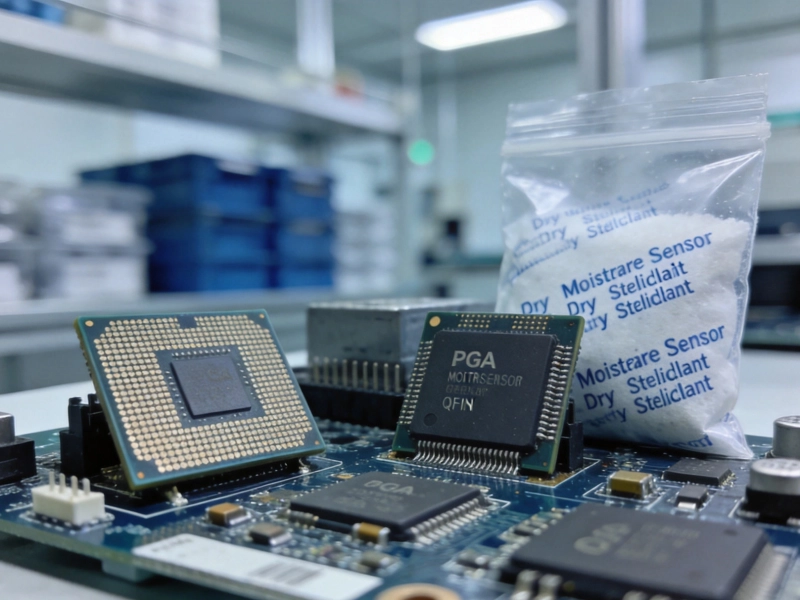
Managing Moisture Sensitivity Levels (MSL) for BGA and QFN PackagesAugust/15/2026

What to Look for in a Reliable Turnkey PCB Assembly PartnerAugust/03/2026
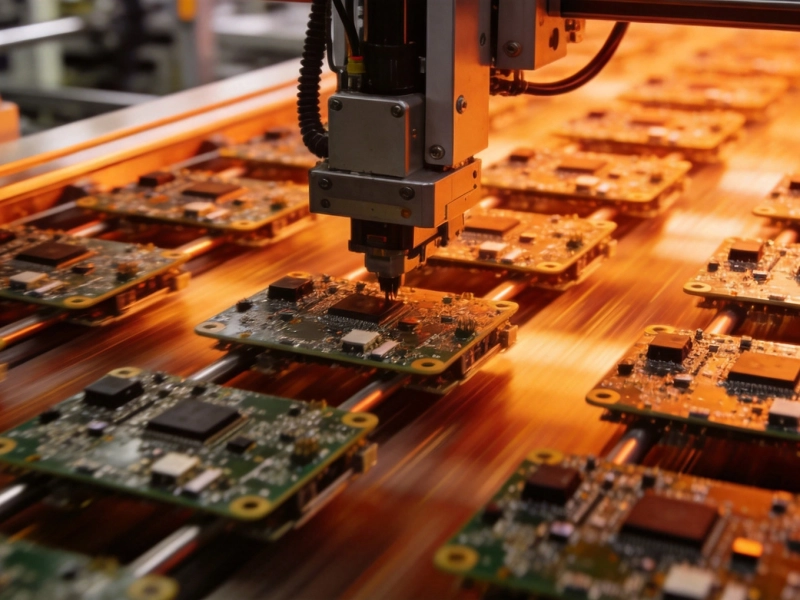
Scaling from 10 Prototypes to 10,000 Units: A Turnkey PCBA Success StoryJuly/24/2026
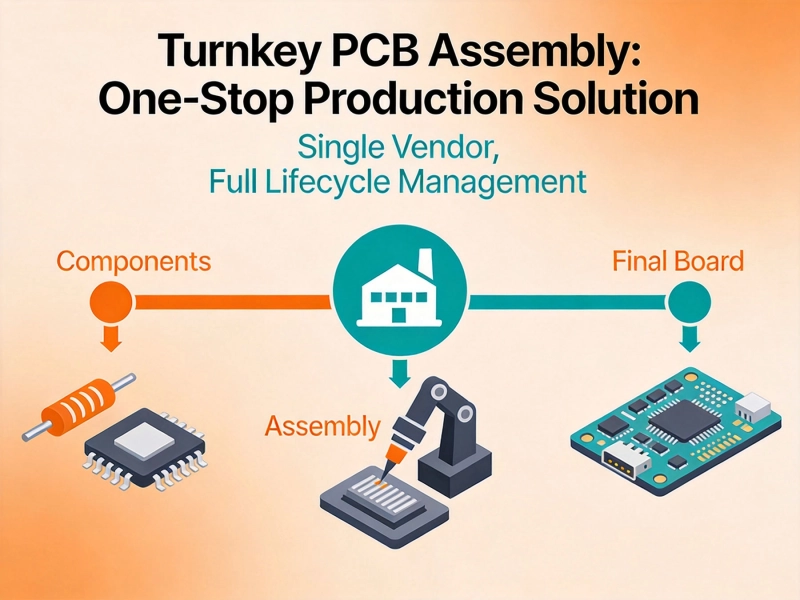
Why Choose Turnkey PCB Assembly for Your Next Product Launch?May/22/2026

Risk Mitigation: How Turnkey Services Handle Obsolete ComponentsJuly/16/2026

How Turnkey Providers Streamline Component Procurement and LogisticsJune/18/2026
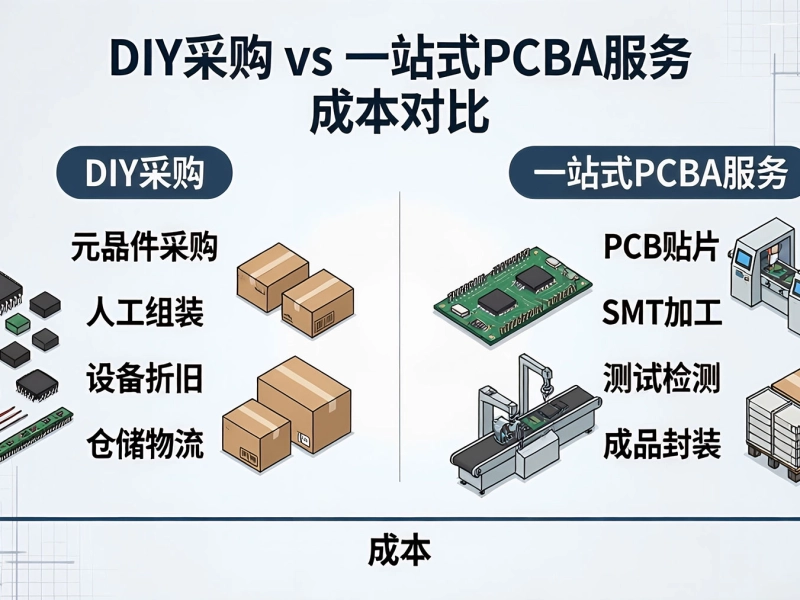
The Hidden Costs of DIY Sourcing vs. Turnkey PCBA ServicesJune/08/2026
Turnkey vs. Consignment PCB Assembly: Which Model Fits Your Project?August/08/2026