Open Nav


The Electronics Manufacturing world looks very different in 2026 than it did five years ago. Supply Chain cracks that started showing in 2020 didn't get patched—they got structurally redesigned. Factory floors that once relied on manual inspection now run AI-powered quality systems. Geopolitical realignments have permanently altered which regions handle which parts of the Supply Chain. If your company makes, specifies, or sources assembled PCBs, understanding these shifts isn't optional—it's survival.

Printed Circuit Board Assembly—Pcba—sits at the backbone of virtually every electronics product on the planet. From the sensors in your car's engine control unit to the medical monitor keeping track of a patient in the ICU, assembled PCBs are what make modern technology function. And in 2026, this critical industry is undergoing its most significant transformation since the shift to Surface Mount Technology in the 1980s.
This article breaks down where global PCBA Manufacturing stands right now, what forces are reshaping it, and what it means for the companies and engineers navigating this space. Whether you're a procurement manager trying to future-proof your supply chain, a hardware designer making build decisions, or an executive assessing Manufacturing Strategy, the takeaways here are meant to be actionable and direct.
The global PCBA market is valued at approximately $85 billion USD in 2026, up from roughly $63 billion in 2022. That's a compound annual growth rate (CAGR) of about 6.8%, driven primarily by continued adoption in Automotive Electronics, medical devices, industrial IoT, and the persistent expansion of consumer devices despite economic headwinds in some regions.
But raw growth numbers mask an important truth: not all segments are growing equally, and not all geographies are capturing value at the same rate. The market is concentrating in certain areas while fragmenting in others—a pattern that's been accelerating since 2021 and shows no signs of reversing.
Segment growth breakdown (2024–2026):
The single-source, everything-in-China model that dominated Electronics Manufacturing for two decades has fundamentally shifted. In its place, a "China Plus One" or multi-shoring approach has become the default strategy for mid-to-large enterprises—and for good reason.
The tariff structures introduced in 2018 and escalated through subsequent trade actions forced companies to stress-test single-country supply chains. Then the pandemic revealed that global just-in-time logistics, while efficient on paper, had zero tolerance for disruption. Factory closures, port congestion, and shipping chaos made it painfully clear that Supply Chain Resilience wasn't a nice-to-have—it was existential.
By 2026, companies have broadly redistributed their PCBA sourcing across multiple regions. Vietnam, Thailand, Malaysia, India, and Mexico have absorbed significant volume, while some advanced and high-mix work has returned to or stayed in the US and Europe for proximity to end markets and IP protection reasons.
The numbers tell the story: in 2020, approximately 42% of global PCBA volume passed through China-based facilities. By 2026, that figure has declined to around 31%—still dominant, but no longer the overwhelming default. More tellingly, the mix of what's being assembled in China has shifted toward higher-complexity, higher-value products, while commoditized PCBA has migrated to lower-cost Asian alternatives.
Walk onto a modern PCBA facility in 2026 and the difference from 2020 is stark. AOI (Automated Optical Inspection) stations that once relied on rule-based algorithms are now running Machine Learning models trained on millions of solder joint images. X-ray inspection systems powered by computer vision catch micro-via voids and Bga defects that human eyes simply cannot reliably detect.
But AI's influence extends far beyond inspection. Machine Learning algorithms now optimize pick-and-place feeder configurations, predict machine maintenance windows before failures occur, and dynamically adjust reflow oven profiles based on real-time thermal data. The factory floor in 2026 is a data-intensive environment where decisions that used to require human experience are increasingly automated.
The impact on quality and throughput is measurable. Top-tier PCBA manufacturers are reporting first-pass yield rates above 99.2%, up from averages in the 97–98% range just a few years ago. Defect escape rates—defects that make it past the factory and into the field—have dropped by over 40% at leading facilities that have fully deployed AI-driven quality systems.
For buyers and specifiers, this has a direct implication: the gap between best-in-class and average PCBA providers has widened considerably. Choosing a manufacturer based solely on price, without factoring in their quality systems and technology stack, is a much riskier bet than it used to be.
The great semiconductor shortage of 2021–2023 is officially over in most categories. Lead times for standard logic ICs, passives, and most connectors have returned to historical norms. But the experience left permanent marks on how companies manage Component Procurement.
Buffer stocking is now standard practice. The days of running with two to four weeks of component inventory are gone for anything critical. Companies that survived the shortage by building strategic buffers have largely kept those inventory policies, reasoning that the carrying cost—typically 15–25% annually—is justified by the resilience it provides.
Second-source verification is no longer optional. Design teams are now actively qualifying alternative components and alternative suppliers as part of the standard design process, rather than treating it as an afterthought. This "design for dual-sourcing" approach adds engineering time upfront but dramatically reduces exposure to single-supplier risk.
Long-lead components are tracked from concept. Leading electronics companies now flag long-lead components in their design review process and begin procurement conversations with distributors and manufacturers during the prototype phase, not after NPI is complete. This shift has compressed the gap between design freeze and Production Ramp significantly.
"The shortage taught us that our component supply chain was someone else's problem until it became our emergency. Now procurement is at the design table from day one, not three months before we need to ship. It's a cultural shift, and it sticks."
— VP of Operations, Consumer IoT Company, Shenzhen
The relentless drive toward miniaturization and performance in end products is pushing PCBA complexity to new levels. Fine-pitch Bga packages with 0.4mm and 0.3mm ball pitches are now common in consumer and industrial products. High-density Interconnect (HDI) boards with 10 or more layers are increasingly the norm for compact designs. RF and mmWave assemblies require specialized expertise and controlled impedance management that wasn't mainstream five years ago.
What this means for the industry: not all PCBA providers can handle this level of complexity. The gap between capable and incapable manufacturers has widened. Shops that invested in laser drilling, advanced lamination, and RF testing capabilities are thriving and commanding premium pricing. Those that didn't are competing on commoditized, lower-complexity work where margins are thin and pressure is constant.
For companies specifying PCBA work, this complexity escalation has a direct implication: your manufacturing partner matters more than ever. A board that's 90% functionally complete but fails at the RF testing stage because your assembler lacked the right equipment is an expensive problem to solve mid-production.
Environmental Compliance in electronics manufacturing was once a checkbox exercise—get your RoHS documentation in order, maybe Iso 14001 certified, and move on. In 2026, it's become a genuine strategic consideration with real commercial implications.
Carbon Footprint reporting is entering the procurement process. Large OEMs—particularly in automotive, consumer electronics, and industrial sectors—are increasingly requiring Scope 1 and Scope 2 carbon data from their supply chain as part of vendor qualification. Some are going further, tying purchase volumes to carbon reduction commitments.
Waste and chemical management standards have tightened. The EU's updated RoHS and WEEE directives, plus similar regulations emerging in the US and Asia, have raised the bar on chemical management, recycling programs, and end-of-life processing. PCBA manufacturers who haven't kept pace face growing barriers to serving European and North American markets.
Energy efficiency in manufacturing is being measured. Factories with Renewable Energy procurement, waste heat recovery, and efficient SMT equipment are increasingly differentiating on Sustainability metrics. Several tier-1 automotive OEMs now require their EMS partners to publish annual Sustainability reports as a condition of continued business.
A persistent challenge in PCBA manufacturing is the skilled workforce. Soldering under a microscope, operating SMT lines, programming AOI systems—these skills take years to develop and aren't easily replaced by automation, at least not entirely.
The industry is navigating this through a combination of approaches:
| Region | Role in Global PCBA | Key Strengths | Growth Outlook |
|---|---|---|---|
| China | Still the dominant high-volume hub, but shifting toward advanced and complex PCBA | Scale, supply chain depth, advanced capability in major cities | Moderate — growth in higher-value segments |
| Vietnam | Fastest-growing alternative destination for mid-complexity PCBA | Labor cost advantage, improving infrastructure, favorable trade terms | High — strong momentum through 2030 |
| Thailand | Established alternative for automotive and industrial PCBA | Strong industrial base, government incentives, automotive cluster | Moderate-High |
| Malaysia | EMS hub with strong semiconductor backend and growing PCBA | Mature industrial ecosystem, English-speaking workforce | Moderate |
| India | Emerging as domestic production hub for India-market electronics | Large domestic market, government PLI incentives, growing talent | High — driven by domestic demand |
| Mexico | Strategic nearshoring choice for US market, growing EMS presence | USMCA benefits, proximity to US OEMs,缩短 lead times | High — nearshoring trend accelerating |
| Eastern Europe | Serving EU market, strong in automotive and industrial sectors | EU market proximity, competitive labor, established industrial base | Moderate |
| USA / Western Europe | High-complexity, high-value PCBA, defense and medical specialties | IP protection, regulatory compliance, advanced technology | Stable — premium niche growing |
Several forces will continue reshaping the global PCBA landscape beyond 2026:
Global PCBA manufacturing in 2026 rewards companies that think strategically—about geography, technology, supplier relationships, and risk. Whether you're establishing a new manufacturing partnership, restructuring an existing supply chain, or simply trying to understand where the industry is heading, the decisions you make today will shape your competitiveness for years to come. Choose deliberately, qualify thoroughly, and invest in relationships that will hold up when conditions get difficult—because they will.
Absolutely—for the right products. China remains the world's most capable and scale-efficient PCBA hub, particularly for complex, high-mix, and high-volume assemblies. The key change is that it's no longer the default for everything. Smart companies are reserving their China capacity for products where the scale advantages and supply chain depth genuinely justify it, while routing simpler or geopolitically sensitive products through alternative regions.
Typically 8–15% above single-source pricing, depending on complexity, volume, and the regions involved. However, this figure should be compared against the cost of the next major disruption—which the past five years have demonstrated can easily exceed 20–30% of annual procurement value in impact. Think of geographic diversification as paying a predictable premium instead of playing roulette with an unpredictable one.
Defect escape rate (DER)—the number of defects per million boards that make it past the factory floor and into the field—is the most commercially relevant metric. First-pass yield is important, but a manufacturer can have great FPY while still shipping defects downstream if their inspection coverage is poor. Ask specifically how they detect BGA defects, whether they use X-ray for all relevant assemblies, and what their historical field failure rate is for products similar to yours.
Increasingly significantly, particularly for companies serving automotive, consumer, and industrial OEM customers in Europe and North America. Carbon Footprint reporting, chemical compliance documentation, and Waste Recycling capabilities are becoming procurement requirements rather than differentiators. If you source from manufacturers who haven't invested in these areas, you may find yourself explaining gaps to your customers—or worse, losing business to competitors who have cleaner supply chains.
The more accurate framing is augmentation, not replacement—at least for the foreseeable future. AI excels at pattern recognition, defect detection, and process optimization. Humans remain essential for complex troubleshooting, process development, equipment programming, and the judgment calls that come up constantly in manufacturing. The companies investing in AI are using it to make their skilled workers more effective, not to eliminate them.
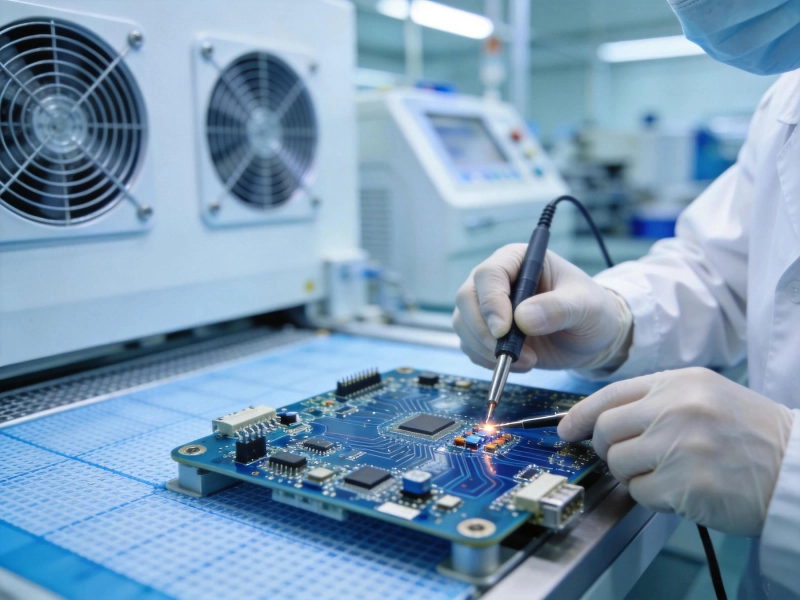
Why High-Reliability PCB Assembly is Critical for Medical DevicesMay/22/2026
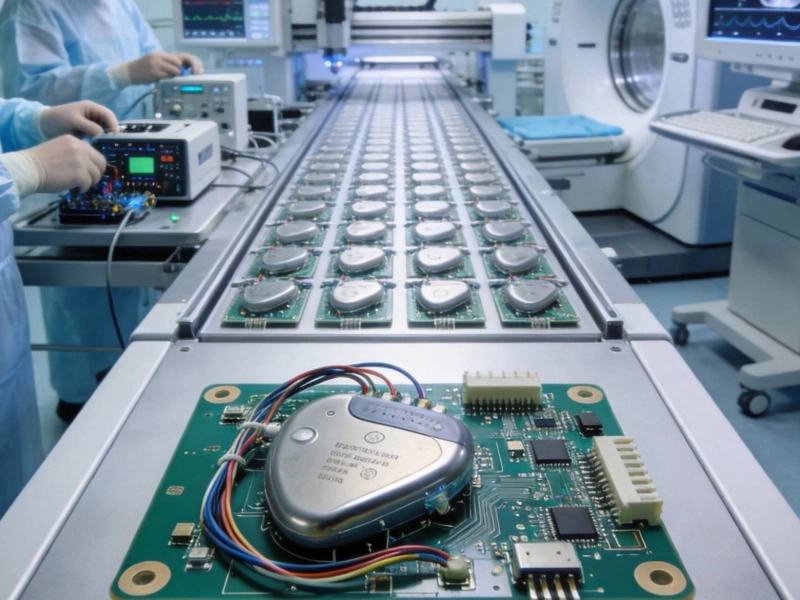
Why High-Reliability PCB Assembly is Critical for Medical DevicesJune/02/2026

The Rise of AI Servers and Their Impact on HDI PCB AssemblyJuly/10/2026
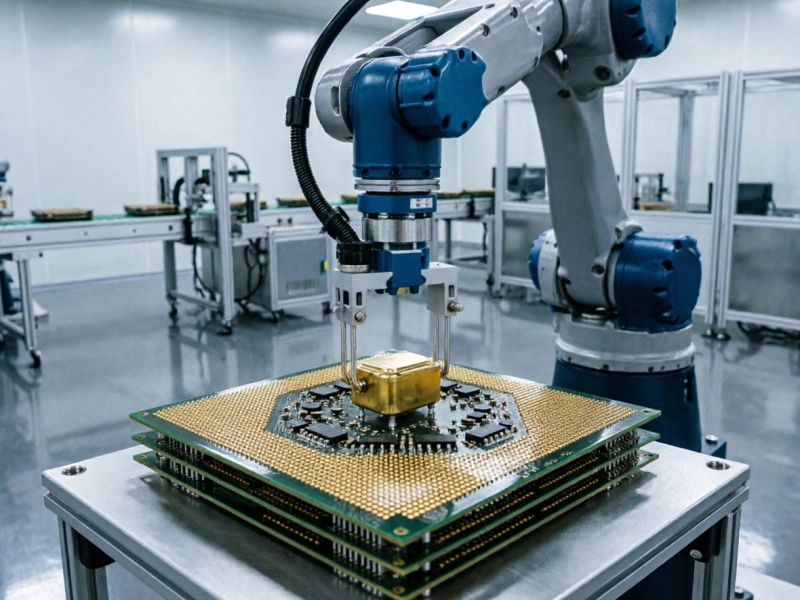
Understanding the True Cost Drivers in Modern Electronics ManufacturingJuly/20/2026
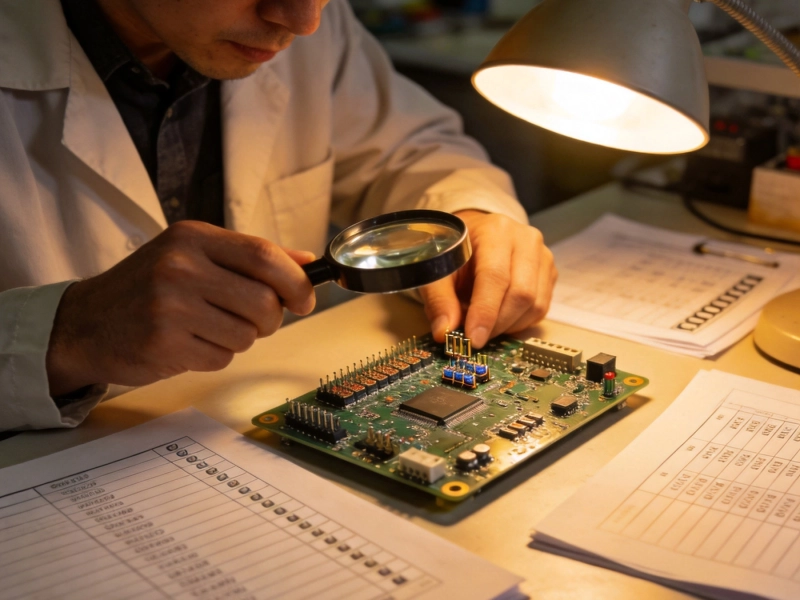
A Complete Checklist for Ordering Prototype PCB AssemblyOctober/10/2026
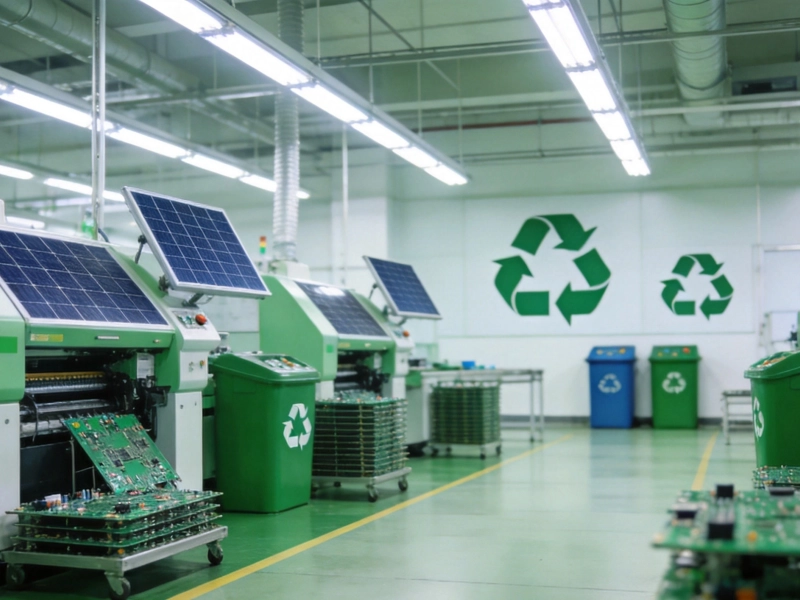
Sustainability in PCBA: The Push for Green and Lead-Free ProcessesJuly/28/2026
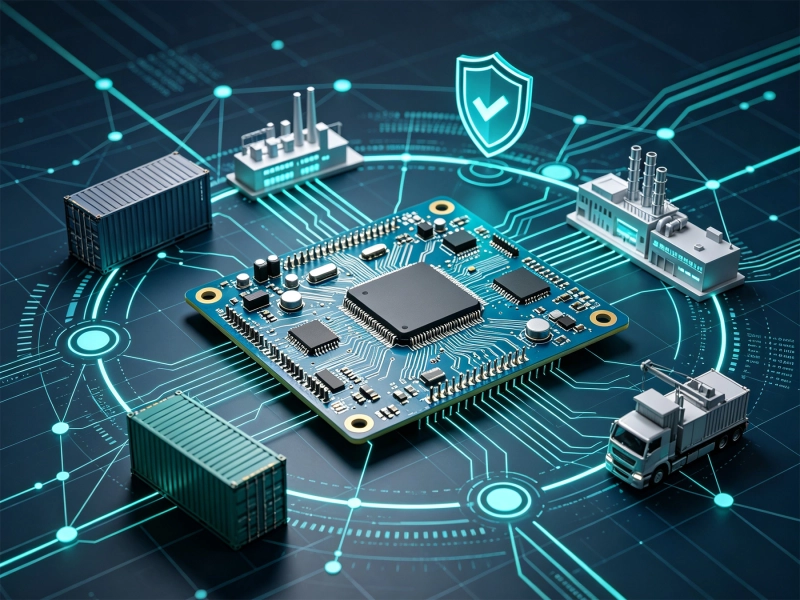
Supply Chain Resilience: Lessons Learned for PCB Assembly BuyersAugust/06/2026
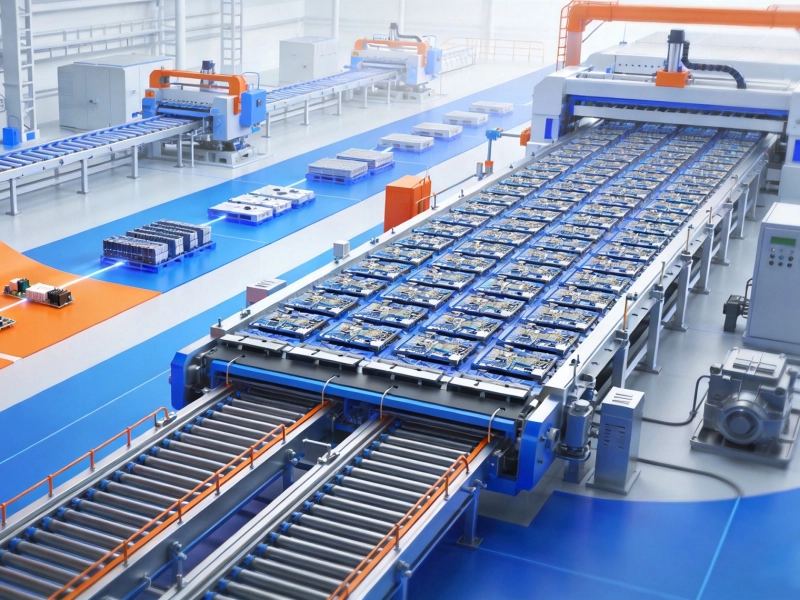
From Prototype to Mass Production: Scaling Your Hardware StartupSeptember/04/2026