Open Nav


Moisture inside electronic packages creates serious reliability risks during Surface Mount Assembly. When moisture-sensitive components absorb humidity from the environment and then encounter rapid heating during Reflow Soldering, the resulting steam pressure can crack package bodies, delaminate interfaces, or destroy internal wire bonds. Bga and Qfn packages prove particularly vulnerable due to their construction and thermal characteristics. Understanding and managing Moisture Sensitivity Levels (Msl) prevents costly failures and ensures production reliability.
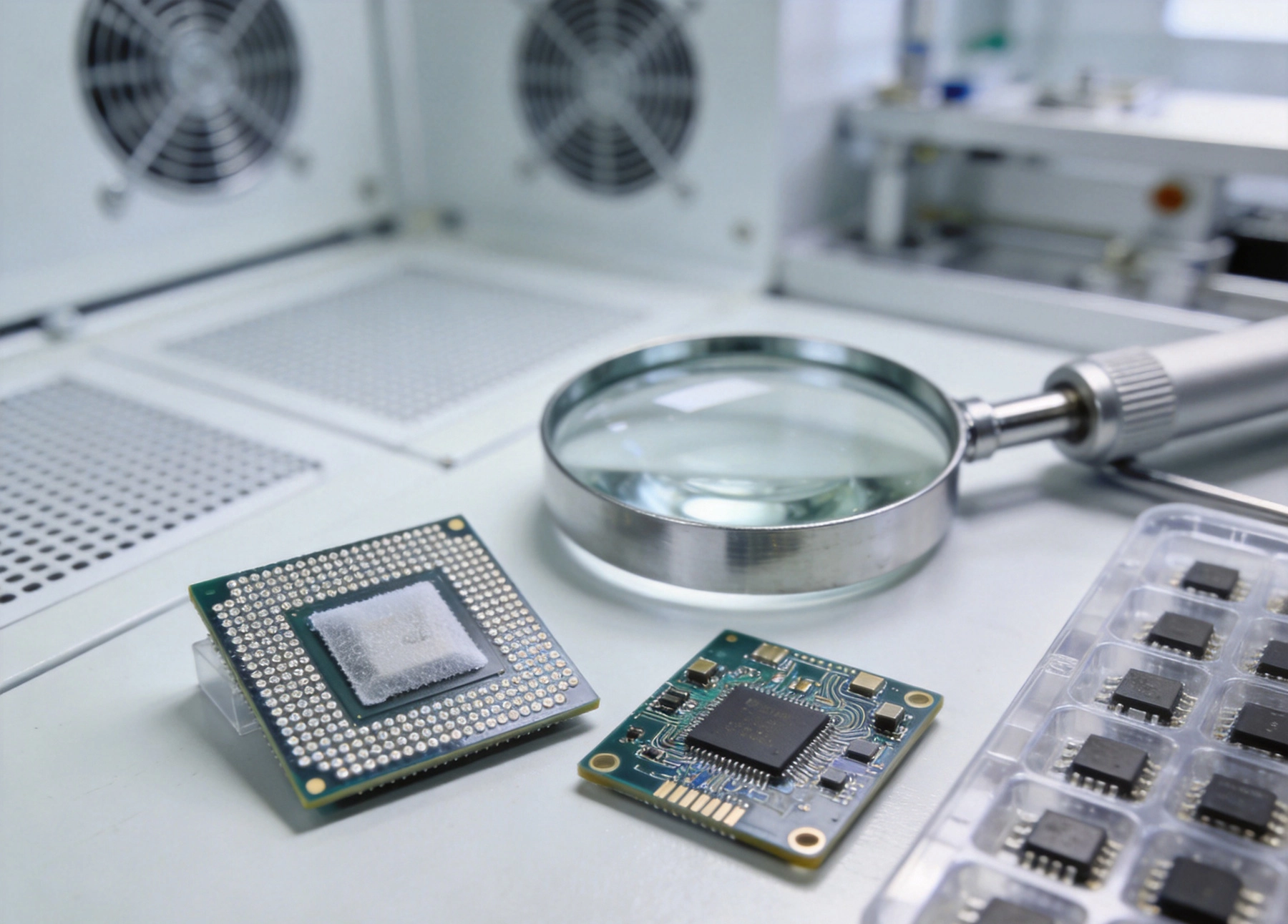
Electronic packages contain multiple materials with different coefficients of thermal expansion (CTE). Plastics, silicon dies, metal heat spreaders, and solder bumps expand at different rates when heated. When moisture penetrates package interfaces and converts to steam during reflow, pressure builds rapidly within confined spaces.
The J-STD-020 standard classifies components by Moisture Sensitivity Level, establishing handling requirements and storage conditions. Manufacturers specify Msl ratings to ensure assemblies survive expected environmental exposures without damage. Ignoring these ratings risks popcorn failure, named for the characteristic damage pattern resembling popped corn kernels.
Modern Bga and Qfn packages often carry MSL ratings of Level 3 or higher, reflecting their sensitivity to moisture-induced stress. Level 1 represents the most tolerant components, while Level 6 indicates extreme sensitivity requiring immediate processing after floor life exposure.
The Joint IPC/JEDEC Standard J-STD-020 defines eight moisture sensitivity levels, each associated with a maximum floor life and recommended storage conditions. Understanding these levels helps procurement and production teams establish appropriate handling procedures.
Level 1 components tolerate unlimited floor life at 30°C/85% relative humidity. These typically include ceramic packages and large plastic components with robust construction. Storage at room temperature and ambient humidity requires minimal controls.
Level 2 allows 1 year floor life at 30°C/85% RH or unlimited time below 25°C/60% RH. Many discrete components and larger packages fall into this category, offering reasonable handling flexibility.
Level 2a permits 4 weeks floor life under the same conditions. This intermediate sensitivity requires tighter production scheduling but remains manageable for most assembly operations.
Level 3 specifies 168 hours (1 week) floor life at 30°C/85% RH. This sensitivity level covers many modern BGA and QFN packages, demanding careful production planning and component tracking.
Level 4 reduces floor life to 72 hours, requiring more aggressive handling procedures. Level 5 allows only 48 hours, while Level 5a permits just 24 hours. Level 6 represents the most sensitive classification, demanding immediate processing after bake with no extended floor life allowed.
BGA packages present particular moisture sensitivity challenges due to their construction and thermal profile during assembly.
Package architecture creates multiple interfaces where moisture accumulates. The mold compound encapsulating the silicon die, the die attach adhesive, the substrate or leadframe, and the solder ball attach all present potential moisture trap sites. Each interface can harbor moisture that later causes delamination.
Thermal mass distribution in BGAs creates uneven heating during reflow. The relatively thick substrate and large body size mean interior temperatures lag behind surface readings. Moisture in deep package layers converts to steam after surface areas have reached reflow temperature, generating pressure against already-softened interfaces.
Solder ball attachment requires higher reflow temperatures for lead-free assemblies, typically 260°C peak compared to 235°C for tin-lead processes. These elevated temperatures increase Thermal Stress and steam generation pressure within packages.
Substrate materials in BT resin (BT resin) or similar organic substrates absorb moisture more readily than ceramic alternatives. The CTE mismatch between substrate and mold compound creates stress at interfaces that moisture-induced pressure can exacerbate.
QFN (Quad Flat No-leads) packages share many moisture sensitivity characteristics with BGAs while presenting unique challenges of their own.
Exposed thermal pads create direct pathways for moisture ingress. Unlike packages with full bottom coverage, QFN thermal pads can absorb moisture through the Pcb interface if Conformal Coating or underfill is not properly applied.
Thin package profiles reduce thermal mass but can concentrate stress in smaller interface areas. The absence of leads means mechanical stress from thermal cycling concentrates at the thermal pad and signal pad interfaces.
Direct die attachment to thermal pads in many QFN designs places the silicon die close to moisture ingress routes. While this improves thermal performance, it creates vulnerability to moisture-related failures if package integrity is compromised.
Epichlorohydrin (Epoxy) encapsulation in some QFN variants provides moisture barriers, but Manufacturing variations and long-term environmental exposure can degrade protection over product lifetime.
Proper storage extends component floor life and prevents moisture-related failures. Establishing appropriate storage infrastructure protects component investments and ensures assembly reliability.
Dry storage for moisture-sensitive components requires environments below 10% relative humidity. Desiccant cabinets provide this environment for components awaiting assembly, allowing indefinite storage regardless of MSL rating. Cabinet cost scales with capacity, from desktop units for small quantities to large storage systems for production volumes.
Dry bags offer portable dry storage for components removed from cabinets. Heat-sealed bags with desiccant and humidity indicator cards protect components during transport between storage and production. Once opened, components must be processed within their floor life or returned to dry storage.
Temperature considerations affect moisture absorption rates. While J-STD-020 specifies floor life at 30°C, storage at lower temperatures reduces moisture uptake. Refrigerated storage at 5-10°C further slows absorption but requires temperature equilibration before opening to prevent condensation.
Inventory Management systems should track component MSL ratings, storage conditions, and exposure times. First-in-first-out (FIFO) practices ensure older components process before floor life expiration.
Floor life represents the allowable time between removing components from dry storage and completing Reflow Soldering. Managing this constraint requires production planning and execution discipline.
Production scheduling should group moisture-sensitive components together, assembling them during dedicated production windows. This concentrates handling efforts and reduces the risk of inadvertently exceeding floor life limits.
Component staging prepares components for production runs based on line capacity. Staging the correct quantity prevents opening more components than the line can process within floor life constraints.
Tracking documentation records when component packages are opened, tracking elapsed time against floor life limits. Production records should document compliance with handling requirements.
Escalation procedures address situations where floor life limits approach or expire. Options include returning components to dry storage for bakeout, prioritizing assembly to meet limits, or scrapping components that exceed exposure thresholds.
Components that exceed floor life limits or show excessive moisture exposure can sometimes be recovered through bake out procedures. However, bake out requires careful temperature control to prevent damage.
Bake temperature must remain below the package glass transition temperature (Tg) to prevent internal stress damage. Standard bake conditions for laminated (plastic) packages range from 125°C to 150°C depending on package type and exposure level.
Bake duration depends on moisture content removal requirements. A general guideline calculates 24 hours per 1% moisture content removal at 125°C. Heavily exposed components might require 48-72 hours of baking.
Tray compatibility must be verified before baking. Some component trays and tubes tolerate high-temperature baking while others deform or release contaminants. Refer to manufacturer specifications for approved bake conditions and tray compatibility.
Post-bake handling requires returning components to dry storage immediately after baking if they will not be assembled immediately. Cool components absorb moisture rapidly, potentially negating bake out benefits.
Reflow profile settings significantly affect moisture-induced failure risk. Optimizing profiles balances solder joint quality against Thermal Stress to components.
Preheat ramp rate should remain below 3°C per second to allow moisture to escape gradually rather than generating sudden steam pressure. Faster ramp rates concentrate heating in package interiors before surface temperatures equalize.
Preheat soak duration at temperatures below 150°C allows moisture to migrate toward package surfaces where it can escape. Typical soak periods range from 60-120 seconds, though overly long soaks can cause other problems.
Peak temperature management should target the minimum required for reliable solder joint formation. While lead-free solders require approximately 260°C peak temperatures, some component packages specify derating peak temperature to 255°C or 250°C for moisture sensitivity reasons.
Cooling rate affects residual stress in packages. Controlled cooling at 4-6°C per second reduces thermal gradients that combine with moisture-induced stress. Rapid quench cooling can induce package cracking in moisture-sensitive devices.
Managing MSL requires coordination between component manufacturers, distributors, and assembly operations. Clear communication ensures appropriate handling throughout the Supply Chain.
Component datasheets should specify MSL ratings and recommended handling procedures. Procurement specifications should require datasheet confirmation of MSL classification.
Distributor handling practices vary widely. Some distributors maintain dry storage and ship in dry bags, while others provide no moisture protection. Specifying dry storage requirements and verifying distributor practices protects component quality.
Incoming inspection should verify dry packaging integrity and humidity indicator status for moisture-sensitive components. Opening packages and finding triggered humidity indicators might indicate the need for bake out before assembly.
Manufacturer partnerships provide access to technical support for handling questions and problem resolution. Component manufacturers can clarify MSL ratings and recommend appropriate handling procedures for specific applications.
When moisture-related failures occur, systematic investigation identifies root causes and guides corrective actions.
Visual Inspection of failed packages might reveal external cracks, bulges, or discoloration indicating moisture damage. However, many moisture failures appear as internal delamination visible only through cross-sectioning or acoustic imaging.
Acoustic micro-imaging (C-SAM) reveals internal delamination, voiding, and moisture accumulation without destroying packages. This technique effectively identifies moisture-related failures by detecting interface separations and water presence.
Cross-section analysis provides definitive evidence of moisture damage, showing internal cracks, interface delamination, and characteristic popcorn damage patterns. This destructive technique confirms failure modes but prevents further analysis of the specific unit.
Process review examines handling records, storage conditions, reflow profiles, and assembly procedures to identify contributing factors. Often, moisture failures result from cumulative issues rather than single-point failures.
Moisture sensitivity management requires systematic attention from Component Procurement through final assembly. BGA and QFN packages demand particular care due to their construction characteristics and vulnerability to moisture-induced stress.
Understanding MSL classifications establishes the foundation for appropriate handling procedures. Storage infrastructure including dry cabinets and dry bags protects components between procurement and assembly. Production planning ensures floor life limits are respected while meeting delivery schedules.
Reflow profile optimization balances solder joint quality against thermal stress to moisture-sensitive packages. Preheat ramp rates, soak durations, and peak temperatures should be reviewed against component manufacturer recommendations.
Supply Chain communication ensures all partners understand moisture sensitivity requirements and implement appropriate controls. When failures occur, systematic investigation identifies root causes and guides corrective actions.
Investing in moisture sensitivity management prevents costly field failures, rework expenses, and customer satisfaction issues. These failures are entirely preventable with appropriate handling procedures and production discipline.
Components exceeding floor life may require bake out before assembly to remove accumulated moisture. Bake procedures at 125-150°C for 24-72 hours can recover components, though repeated bake cycles eventually degrade package integrity. Components that cannot be baked or that show visual damage should be scrapped.
MSL ratings appear on component packaging labels, in manufacturer datasheets, and in JEDEC J-STD-020 documentation. If MSL information is unavailable, treat components as Level 3 or higher sensitivity until verified otherwise.
Each reflow exposure contributes to cumulative moisture stress. Double-sided assembly requires careful evaluation of component sensitivity to multiple reflow cycles. Bottom-side components experience two reflow profiles, potentially exceeding moisture tolerance limits.
Moisture damage in BGAs manifests as external cracks, internal delamination between package layers, cratering of the die, or wire bond damage. Some failures only appear as intermittent electrical connections that complicate diagnosis. Acoustic imaging effectively detects internal damage without destructive analysis.
Most laminated (plastic) BGA and QFN packages rated Level 2 through Level 5 require dry storage below 10% RH. Ceramic packages typically do not require dry storage. Always verify MSL requirements for specific components rather than assuming sensitivity based on package type alone.

Thermal Relief Design: Balancing Heat Dissipation and SolderabilityJuly/23/2026

Understanding Prototype SMT Assembly China: A Step-by-Step GuideSeptember/26/2026
Silk Screen Best Practices: Improving Readability and Assembly EfficiencySeptember/15/2026
The Science of Solder Paste Printing: Stencil Design Best PracticesJune/17/2026
What is Turnkey PCB Assembly? A Beginner's GuideSeptember/23/2026

Fiducial Marks and Tooling Holes: Ensuring Precision in SMT PlacementJuly/15/2026
Solving Assembly Stress Issues in Large and Thin PCBsSeptember/09/2026

Designing for Testability (DFT): Placing Test Points for ICT and FCTJuly/31/2026